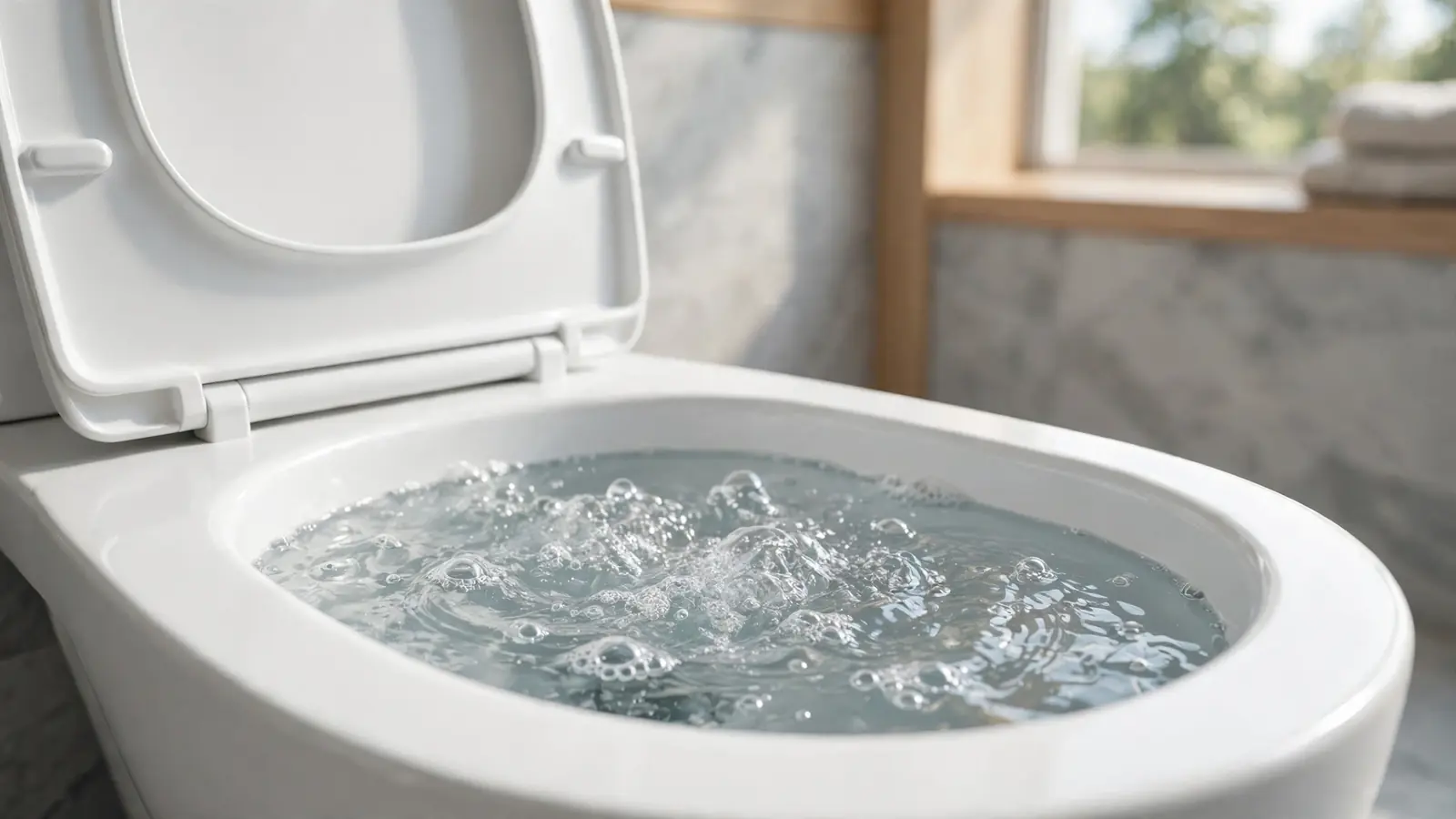
Gurgling Toilet in Rancho Palos Verdes, CA: What It Means
A toilet that gurgles when the washing machine runs or a sink drains is not a toilet problem. It is air trapped in the lateral pushing back through the bowl — and a camera inspection finds why.
Rancho Palos Verdes Sewer Line Pros · 2026-11-17 · Signs & Symptoms
The short version
Problem: A toilet gurgles when air trapped in a partly blocked lateral pushes back through the water in the bowl.
What to do: If the gurgling happens when another fixture runs, the lateral is the likely cause, not the toilet itself.
When to call: Call Now if water is backing up as well, or have the line camera-inspected to find the restriction.
Why a toilet gurgles
A toilet gurgles when air moves through the water in the bowl. The drain system is supposed to carry air and water together, with the vent pipes letting air in and out so the flow stays smooth. When the lateral is partly blocked, water cannot move easily, and air gets trapped behind the blockage. The trapped air pushes back through the nearest water seal, and the nearest seal is often the toilet bowl. A vent pipe that is clear lets air move in and out of the drain system, so water flows smoothly and the toilet bowl stays quiet when other fixtures drain.
The sound is the air escaping in bubbles. It may be a soft gurgle after a flush, or a louder bubbling when the washing machine drains, or a series of gurgles when a shower is running. The timing matters more than the volume. A toilet that gurgles only when another fixture is running is telling the homeowner that the two fixtures share a problem downstream, and the shared pipe is the lateral. A toilet that gurgles after a flush, with no other fixture running, may have a partial blockage in its own short run, and the blockage is worth clearing before the lateral is blamed.
A toilet that gurgles on its own, with no other fixture running, is a different pattern. It may be a local problem in that toilet, a partial blockage in its short run, or a vent problem for that bathroom. Note which pattern fits, because the pattern is what separates a toilet problem from a lateral problem, and the camera inspection follows from it. The sound of air escaping through water is distinct from the sound of water draining, and a homeowner who learns the difference can tell a vent problem from a lateral problem by ear.
Gurgling when another fixture runs
The washing machine is the fixture most likely to make a toilet gurgle. It sends a large volume of water into the lateral in a short time, and a narrowed lateral cannot carry it. The water backs up behind the restriction, air is trapped, and the air pushes back through the toilet bowl. A shower does the same on a smaller scale, and a dishwasher can do it too, because each one adds flow to a line that is already restricted. A washing machine sends water into the lateral in surges, and each surge pushes a bubble of trapped air ahead of it, which is why the gurgling comes in waves rather than as a steady sound.
The lowest toilet in the house is the one most likely to gurgle, because it is closest to the lateral and to the trapped air. A toilet on an upper level may stay quiet while the lower toilet gurgles, because the air finds the lowest opening first. If the gurgling moves from one toilet to another, or if several fixtures gurgle together, the restriction sits further down the lateral, closer to the street. A shower that runs for ten minutes sends a steady flow into the lateral, and a toilet that gurgles throughout the shower is showing a restriction that cannot handle even a steady flow.
This pattern is one of the clearest early warnings a lateral gives. The drains may still work, the lowest level may stay dry, and the only symptom is the sound. A homeowner who hears it and has the line inspected is catching the problem early, before the restriction grows into a backup. A camera inspection shows the roots, the belly, or the corrosion that is trapping the air. A toilet on an upper level may stay quiet while the lower toilet gurgles, because the air finds the lowest opening first and escapes there before it can reach the upper bowl.
Gurgling and slow drains together
Gurgling rarely arrives alone. It usually comes with slow drains, because the same restriction that traps air also slows water. A toilet that gurgles and a shower that drains slowly are two symptoms of one problem, and the problem sits in the lateral. The water is moving too slowly, the air cannot escape, and both symptoms appear together when the line is under load. Hearing the gurgle early is an advantage, because the restriction is still small enough to fix with a spot repair or lining, rather than a full replacement after a backup.
The combination is worth acting on. A lateral that is slow and gurgling is a lateral that is close to backing up, because the restriction is already affecting the flow the house produces every day. The next step is not to wait for the backup, but to have the line cleared and camera-inspected, so the cause is found while the drains still work. A toilet that gurgles and a shower that drains slowly are two symptoms of one restriction, and the two together are stronger evidence than either one on its own.
Note the details. Which fixtures gurgle, which fixtures are slow, and whether the symptoms appear together or separately. A toilet that gurgles only when the washing machine runs points to a restriction that a large flow overwhelms. A toilet that gurgles with any fixture points to a restriction that is further along. The notes help the crew that inspects the line decide where to look first. A restriction that grows will first slow the drains, then make the toilet gurgle, and then back the line up, so the symptoms arrive in order and the gurgle is the middle warning.
When gurgling is a vent problem
Not every gurgle comes from the lateral. A vent pipe that is blocked can cause gurgling too, because the vent is what lets air into the drain system. When a fixture drains, it needs air behind the water, and if the vent is blocked by leaves, a nest, or debris, the air is pulled through the nearest trap instead. The toilet bowl is the nearest trap for many bathrooms, and it gurgles as the air passes through. Noting whether the gurgling follows the washing machine, the shower, or any fixture at all helps the crew place the restriction, because a large flow overwhelms a restriction that a small flow can still pass.
A vent problem has a different pattern from a lateral problem. The gurgling happens when the fixture in that bathroom drains, not when a fixture elsewhere in the house runs. The drains may work normally, and there may be no slowness at all, because the lateral is clear and the problem is only the air supply. The smell may be present too, because a blocked vent lets gas into the house. A vent blocked by a bird nest can make a toilet gurgle in one bathroom only, and the drains in that bathroom will work normally, because the lateral is clear and only the air supply is blocked.
The roof vents are worth a look, especially after a storm or after leaves have fallen. A vent that is blocked at the roof can sometimes be cleared from above, and the gurgling stops. If the vents are clear and the gurgling persists, the problem sits in the lateral, and a camera inspection is the next step. The camera shows the lateral, and a sound lateral points the search back to the vents. Leaves that fall into a roof vent in autumn can block it completely, and the gurgling that follows will stop as soon as the vent is cleared from above.
What a camera inspection shows for a gurgling toilet
A camera inspection for a gurgling toilet runs the full lateral, from the house to the street main. The camera shows the material, every joint, every root, every belly, and every crack, and the operator notes where each defect sits and how deep it is. A root mat that narrows the line is visible on the monitor, and so is a belly where water stands and air is trapped. A vent problem will not show on a sewer camera, because the camera runs through the lateral and the vent sits above the drains, so a sound lateral points the search back to the roof.
The inspection also shows the connection at the street main, and whether the line is clear all the way through. A problem at the connection can trap air just as a problem in the middle of the line can, and the camera is the only way to see it. The locator marks each defect on the surface above the line, so any digging goes to the right place. A root mat that narrows the lateral by half will trap air behind it, and the camera shows the mat as a dark mass filling the bore, with water standing behind it.
After the inspection, the crew explains what the camera found in plain language, and what the options are. A single root entry may be a spot repair. Roots at many joints may call for lining. A deep belly may call for a larger fix. The gurgle is the symptom, and the camera is what turns it into a diagnosis the homeowner can act on. A collapsed section cannot be lined or cleaned, and the camera locate marks exactly where it sits, so the dig opens the right place and no more ground than necessary.
Related: Who Pays for the Sewer Lateral · Sewer Camera Inspection · sewer line repair across Rancho Palos Verdes
Related guides
 Signs & Symptoms
Slow Drains vs Main Line Problem in Rancho Palos Verdes, CA
One slow drain is usually a local clog. Several slow drains at once mean the lateral. Here is how to tell the difference in a Rancho Palos Verdes home — and what to do next.
 Signs & Symptoms
Sewage Backup in the Lowest Drain in Rancho Palos Verdes, CA
Wastewater coming up through the lowest drain is an urgent problem. Stop using water, keep away from the wastewater, and call for help — then have the cause found on camera.
 Guides
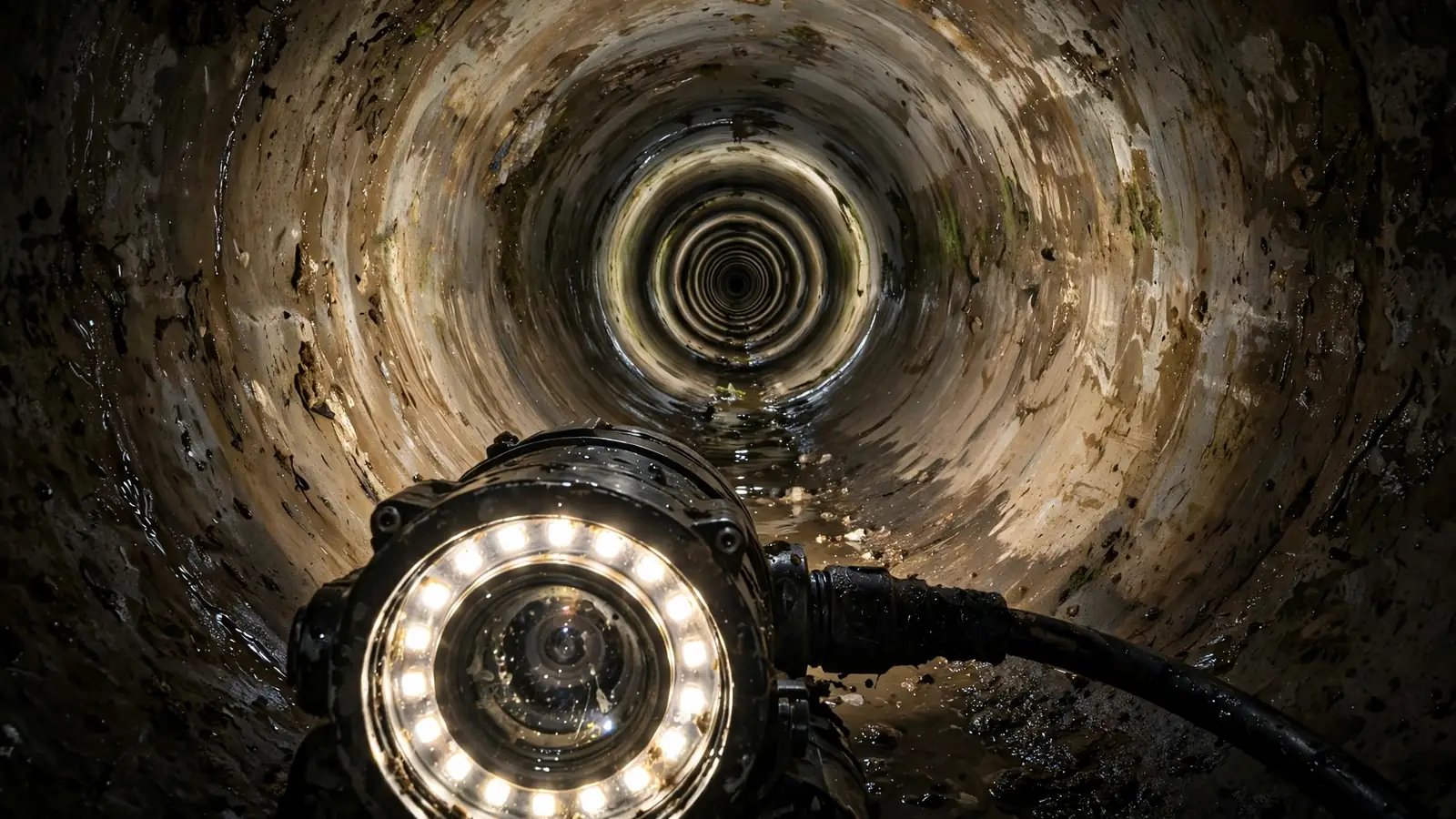
What a Sewer Camera Inspection Shows in Rancho Palos Verdes, CA
A camera inspection shows the inside of your lateral — the material, the damage, and the location — so the fix matches the problem instead of the guess.
Frequently asked questions
Questions people ask about this topic, answered plainly.
A washing machine sends a large, fast flow into the lateral, and a narrowed line cannot carry it. Air gets trapped behind the restriction and pushes back through the toilet bowl. The pattern points to the lateral, and a camera inspection shows the restriction. A washing machine sends a large, fast flow into the lateral, and a narrowed line cannot carry it, so air gets trapped behind the restriction and pushes back through the toilet bowl.
Not on its own, but it is a warning. A toilet that gurgles with slow drains is a lateral that is close to backing up. If water is also backing up, stop using water and call for help. If the drains still work, have the line inspected before the problem grows. A toilet that gurgles with slow drains is a lateral that is close to backing up, so have the line inspected before the problem grows, and stop using water at once if water is also backing up.
Yes. A blocked vent can pull air through the nearest trap, and the toilet bowl is often the nearest trap. A vent problem usually shows when the fixture in that bathroom drains, while a lateral problem shows when a fixture elsewhere in the house runs. The pattern separates the two. A blocked vent can pull air through the nearest trap, and the toilet bowl is often the nearest trap, so a vent problem usually shows when the fixture in that bathroom drains.
Plunging may move water in the bowl, but it will not fix a lateral restriction, because the restriction sits in the line under the yard, not in the toilet. If the gurgling returns after plunging, or if it happens when another fixture runs, the line needs a camera inspection. Plunging may move water in the bowl, but it will not fix a lateral restriction, because the restriction sits in the line under the yard, not in the toilet itself.
The lowest toilet in the house is closest to the lateral and to the trapped air, so it gurgles first. A toilet on an upper level may stay quiet while the lower one gurgles. If the gurgling moves between toilets, the restriction sits further down the lateral. The lowest toilet in the house is closest to the lateral and to the trapped air, so it gurgles first, while a toilet on an upper level may stay quiet until the restriction grows.
Note which fixtures make it gurgle, whether the drains are also slow, and whether the gurgling happens with any fixture or only with a large flow like the washing machine. Those details help the crew decide where the restriction sits and what the camera should look for. Note which fixtures make the toilet gurgle and whether the drains are also slow, because those details help the crew decide where the restriction sits and what the camera should look for.
Still have questions?
Call Now to reach a local sewer professional — describe the problem and what the line has been doing.
Call now for sewer line help
Tap Call Now to reach a local sewer professional. Tell them where the problem is, what the line has been doing, and whether wastewater is coming into the home.
Hours: Mon–Fri 7:00 AM–10:00 PM PT · Sat 8:00 AM–10:00 PM PT · Sun 7:00 AM–9:00 PM PT
Before you call
- Stop using water if the line is backing up.
- Keep people and pets away from any wastewater.
- Note which drains are slow, and which one backs up first.
- Note whether the problem happens in heavy rain, or all the time.
- Have the age of the home ready, if you know it.