Rancho Palos Verdes Sewer Permits: What Triggers a Permit and What Happens Without One
A sewer lateral replacement in Rancho Palos Verdes needs a permit, and starting the work before the permit arrives can triple the fees. Here is how the process works.
Need help with your sewer line?
Call Now to reach a local sewer professional. Describe the problem, where it is, and what the line has been doing.
Hours: Mon–Fri 7:00 AM–10:00 PM PT · Sat 8:00 AM–10:00 PM PT · Sun 7:00 AM–9:00 PM PT
What triggers a permit
A permit is required for work that replaces, alters, or installs a building sewer in Rancho Palos Verdes, and a lateral replacement is the clearest case. Replacing the pipe from the house to the street main changes the sewer system, and the City checks that change before it happens. That check covers the pipe, the grade, the connection at the main, and the restoration of the ground above the line. A spot repair is a smaller job, and whether it needs a permit depends on what the repair involves: a repair that opens the ground and replaces a section of pipe is different from a repair that clears a blockage or seals a joint from inside the pipe, and the City is the source for which side of the line a given job falls on.
The building permit trigger that most homeowners meet is the one tied to larger work on the house. The City recommends a lateral inspection and repair on issuance of a building permit of fifty thousand dollars or more, and a remodel of that scale is the moment the lateral gets looked at. A homeowner planning a remodel should ask about the lateral at the same time as the remodel permit, because the two arrive together, and the lateral inspection is easier to plan before the remodel starts than after the new kitchen or bathroom is finished. The City guidance ties the two together for a reason: a remodel that adds fixtures adds flow to a lateral that may already be at the end of its life.
When in doubt, ask before digging. The cost of asking is a phone call or an eTrakit inquiry. The cost of guessing wrong is a Stop Work Notice, tripled fees, and a job that has to be uncovered for inspection after it has already been buried. A professional working in Rancho Palos Verdes should know the permit triggers, and a homeowner should ask the professional whether a permit is needed and whether it has been obtained before any digging starts. The permit is the record that the work was reviewed, and the inspection is the record that the work was done as reviewed. In California, a building sewer may be installed or repaired by holders of an A, C-36 Plumbing, C-42 Sanitation System, or C-34 Pipeline classification, and a classification is required for jobs of five hundred dollars or more. The homeowner should ask which classification the work will be done under, and should confirm that the permit application names it, because the classification is part of the permit record. A job done under the wrong classification, or without the classification the work requires, is a job whose permit can be questioned, and the homeowner should not authorise digging until the classification and the permit are both clear.
The eTrakit process
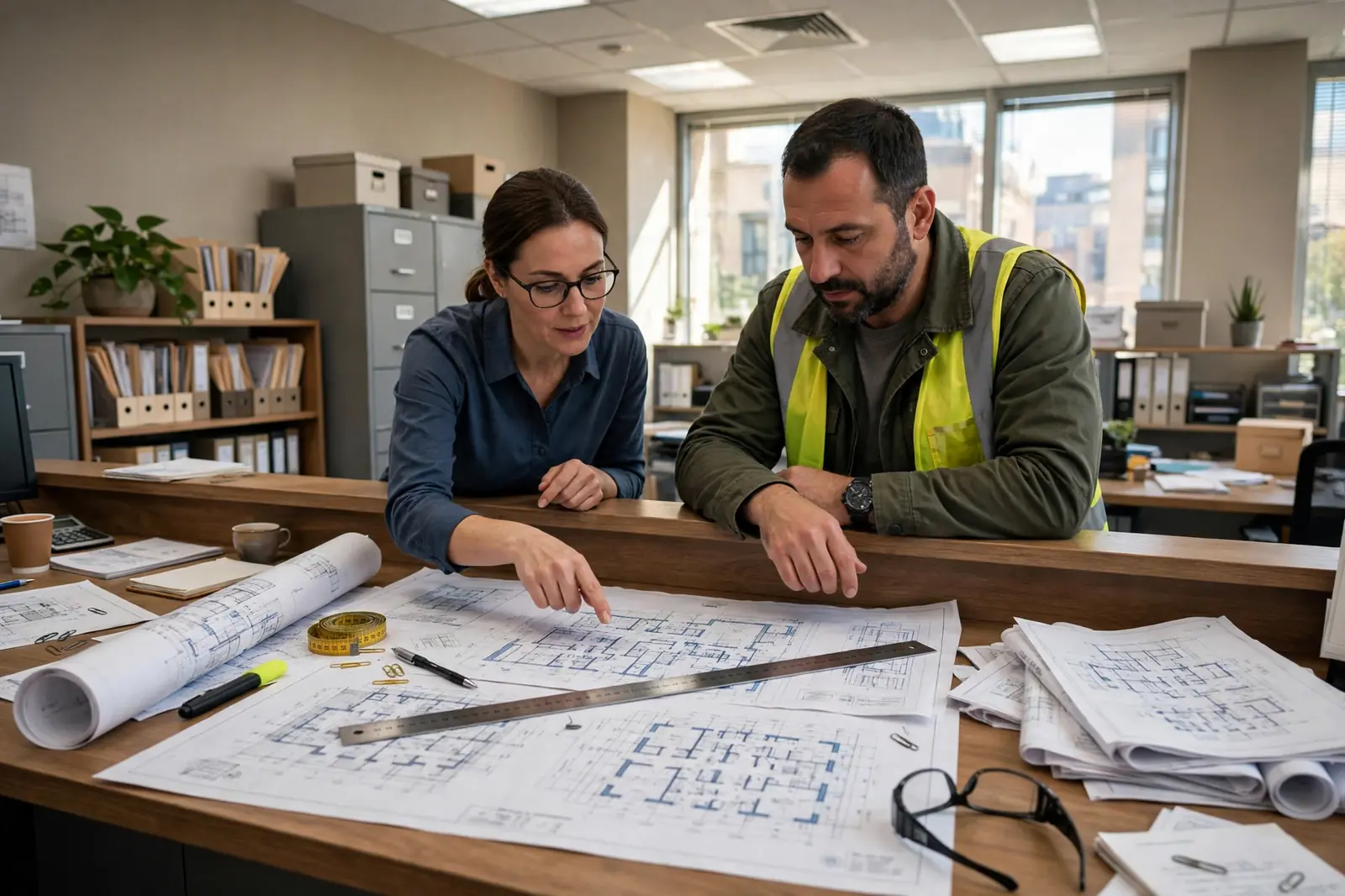
The City of Rancho Palos Verdes runs its permit process through eTrakit, the online system where permit applications are submitted, tracked, and issued. An application for sewer work states what is being done, where the lateral runs, what pipe is being installed, and how the connection at the main will be made. The application is checked by City staff, and the check may ask for more information: a site plan, a detail of the connection, or a clarification of the scope. That check takes time, and the schedule for the work should be built around it, not around the digging.
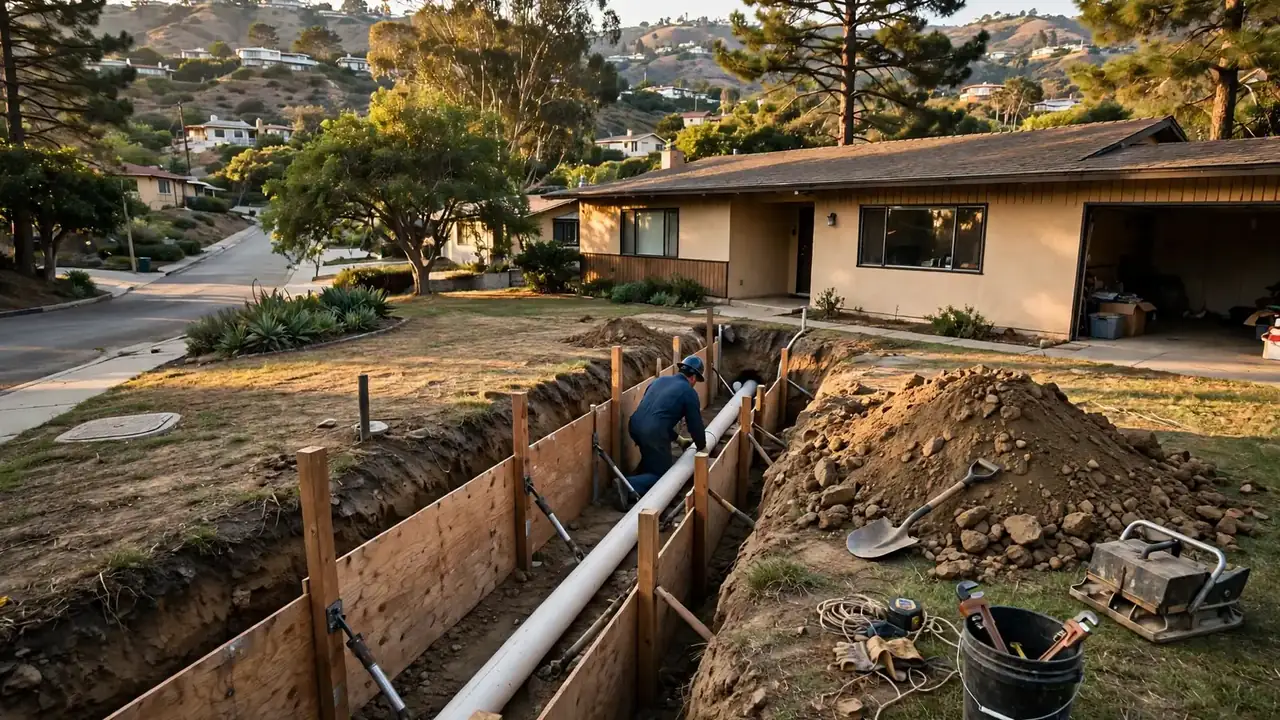
Once the permit is issued, the work can start, and the permit states the inspections that are required along the way. A lateral replacement is typically inspected at stages: the open trench with the new pipe laid and the grade visible, the connection at the main, and the final inspection after backfill. Each inspection has to be scheduled, and the work has to wait for the inspector at each stage. A crew that backfills before the trench inspection has created a problem, because the inspector cannot see what has been buried, and the trench may have to be reopened. The permit and the inspection schedule are part of the job, not an addition to it.
The homeowner should keep the permit and the inspection records with the house file. The permit shows that the work was reviewed and approved. The inspection records show that the work was done as approved. Together with the camera footage of the finished lateral, they are the record of the job, and they are useful for the next owner, for the insurer, and for any later work on the line. A lateral replaced without a permit has no such record, and the next buyer who asks about it will find nothing to show.
The triple-fee rule: RPVMC Title 15, Section 113.5
The rule that matters most is in the Rancho Palos Verdes Municipal Code, Title 15, Section 113.5, adopted by Ordinance 669 as part of the 2022 codes. It states that permit fees and charges shall be tripled, not including fees for nonstructural fixtures, when work requiring a permit has been started, continued, or finished before the permit is obtained. That means a job that starts before its permit arrives does not only risk a Stop Work Notice. It also costs three times the permit fees, and the tripled fees apply whether the work was started, continued, or finished without the permit. The rule is written into the code, and it is confirmed in earlier ordinances as well.
The rule has exceptions, and the exceptions are narrow. Emergency work is excepted, and so is work that preserves the structural integrity of a building, and work that mitigates impacts to adjacent property. Those exceptions cover a genuine emergency — a line that has failed and is damaging the house or a neighbour's property — and they do not cover a planned replacement that simply started early for convenience. A homeowner who believes the work qualifies for an exception should confirm that with the City before starting, because the exception is decided by the City, not by the homeowner or the crew, and a wrong call on the exception is a tripled fee.
The triple-fee rule is the reason the permit comes first, before any digging. A planned lateral replacement is not an emergency, and there is no reason to start it before the permit is in hand. That check takes time, and the schedule should allow for it. A crew that proposes starting before the permit arrives is proposing a job that costs three times the permit fees and risks a Stop Work Notice, and the homeowner should ask why the permit cannot wait. The answer is usually that it can.
Stop Work Notice and what follows
A Stop Work Notice is the City's order to stop work that has started without a permit, or work that is not being done as permitted. It is posted on the property, and work must stop until the notice is resolved. Resolving it means applying for the permit, paying the fees — tripled, under Section 113.5, where the rule applies — and having the work inspected. Work that has already been buried may have to be uncovered for inspection, because the inspector cannot approve what cannot be seen. A Stop Work Notice turns a planned job into an unplanned one, with a longer schedule and a higher cost.
A Stop Work Notice also creates a record on the property. The notice, the permit that follows it, and the inspections that close it become part of the property's permit history, and a future buyer who pulls that history will see them. A clean permit history is worth having, and it is earned by getting the permit first. A homeowner who buys a house with a Stop Work Notice in its history should ask what the work was, whether it was inspected, and whether the permit was closed, because the answers decide whether the sewer work on that house is a known quantity or an open question.
The way to avoid a Stop Work Notice is simple, and it is the same as the way to avoid tripled fees: get the permit before the work starts, follow the permit, and call for each inspection at the stage the permit requires. The crew should know the permit number, the inspection stages, and the inspector's requirements before the first shovel goes in. The homeowner should ask for the permit number and check that it is posted or available on the site. A job with a permit in hand is a job that can proceed, and a job without one is a job that can be stopped at any moment.
Lateral replacement versus spot repair
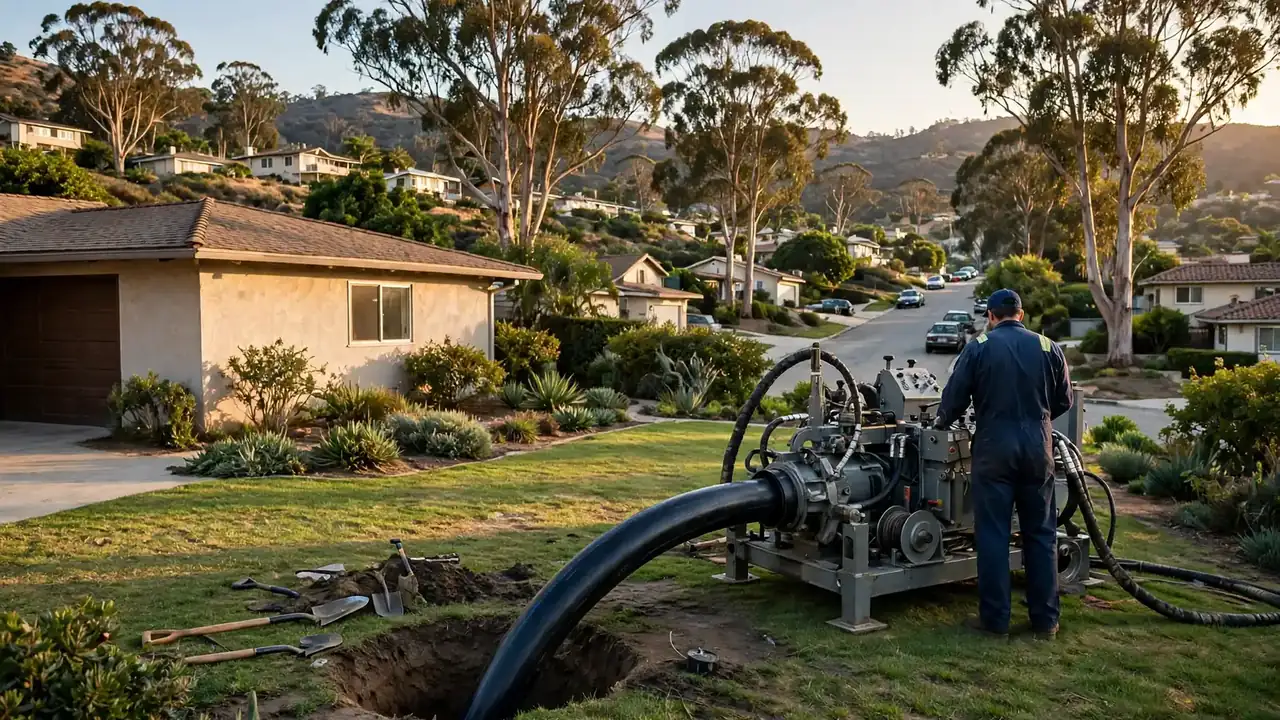
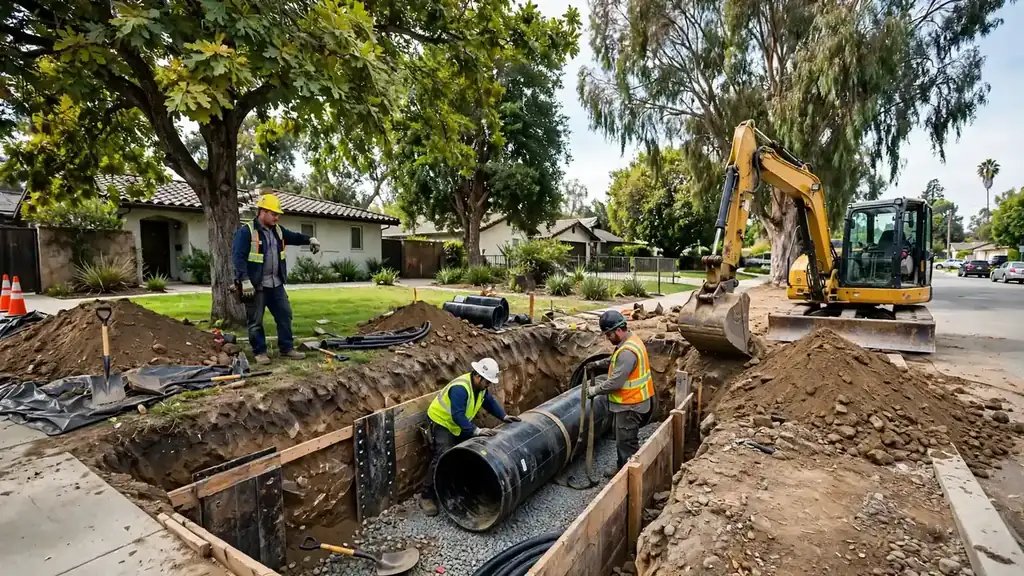
A lateral replacement and a spot repair are different jobs, and the permit question follows the difference. A replacement takes out the old pipe and lays a new one, from the house to the main or along a substantial part of that run, and it changes the sewer system in a way the City reviews. A spot repair fixes a local failure — a single cracked section, a single bad joint, a single offset — and leaves the rest of the line in place. The spot repair is smaller, faster, and less disruptive, and it is the right job when the camera shows a single failure in an otherwise sound line. Whether it needs a permit depends on what it involves, and the City is the source for the answer.
The camera inspection is what separates a replacement from a spot repair. The camera shows the whole lateral, section by section, and the findings decide the scope: one bad joint in a sound line is a spot repair, roots through many joints in a clay line is a lining or replacement, a collapse or a deep belly is a replacement. A job that is planned as a spot repair and turns into a replacement once the ground is open is a job whose permit scope has changed, and the permit should be updated before the work continues. The crew should explain the camera findings and the scope before the work starts, so the permit matches the work.
The distinction matters for the homeowner because the two jobs have different schedules, different disruption, and different records. A spot repair may be done in a day, with a small excavation and a small restoration. A replacement takes longer, opens more ground, and needs more inspections. Both should be documented with camera footage of the finished work, and both should be kept in the house file. A lateral that has been repaired in spots over the years has a history that the next inspection should read, and the footage from each repair is part of that history.
What to ask before the work starts
Before any digging starts, the homeowner should ask four questions, and should hear clear answers to all of them. First, is a permit needed for this work, and has it been obtained. Second, what is the permit number, and what inspections does it require. Third, what does the camera show, and what method has been chosen from those findings. Fourth, what will the ground above the line look like when the work is finished, and who restores it. A professional who cannot answer those questions is a professional who has not planned the job, and the homeowner should not authorise digging until the answers are clear.
The homeowner should also ask about the connection at the street main, because that connection is where the private lateral meets the public system, and it is the part of the job that involves the County as well as the City. The LA County Department of Public Works handles the public main, and the connection has to be made in a way the County accepts. A connection made without the right approval is a connection that may have to be redone, and the homeowner should confirm that the approval is in hand before the work reaches the main.
The last question is about the record. The homeowner should ask for the camera footage of the finished lateral, the inspection records, and the closed permit, and should keep all three with the house file. Those records are the proof that the work was permitted, inspected, and completed, and they are the records the next owner will ask for. A job that ends with a closed permit and a camera check is a job that is done. A job that ends without them is a job that is not finished, however good the pipe looks.
Services for this situation

Related guides
 Sewer Replacement Process Step by Step
A sewer replacement follows the same steps in every Rancho Palos Verdes home: a call, a camera inspection, options from the findin...
 What to Have Ready Before Sewer Repair
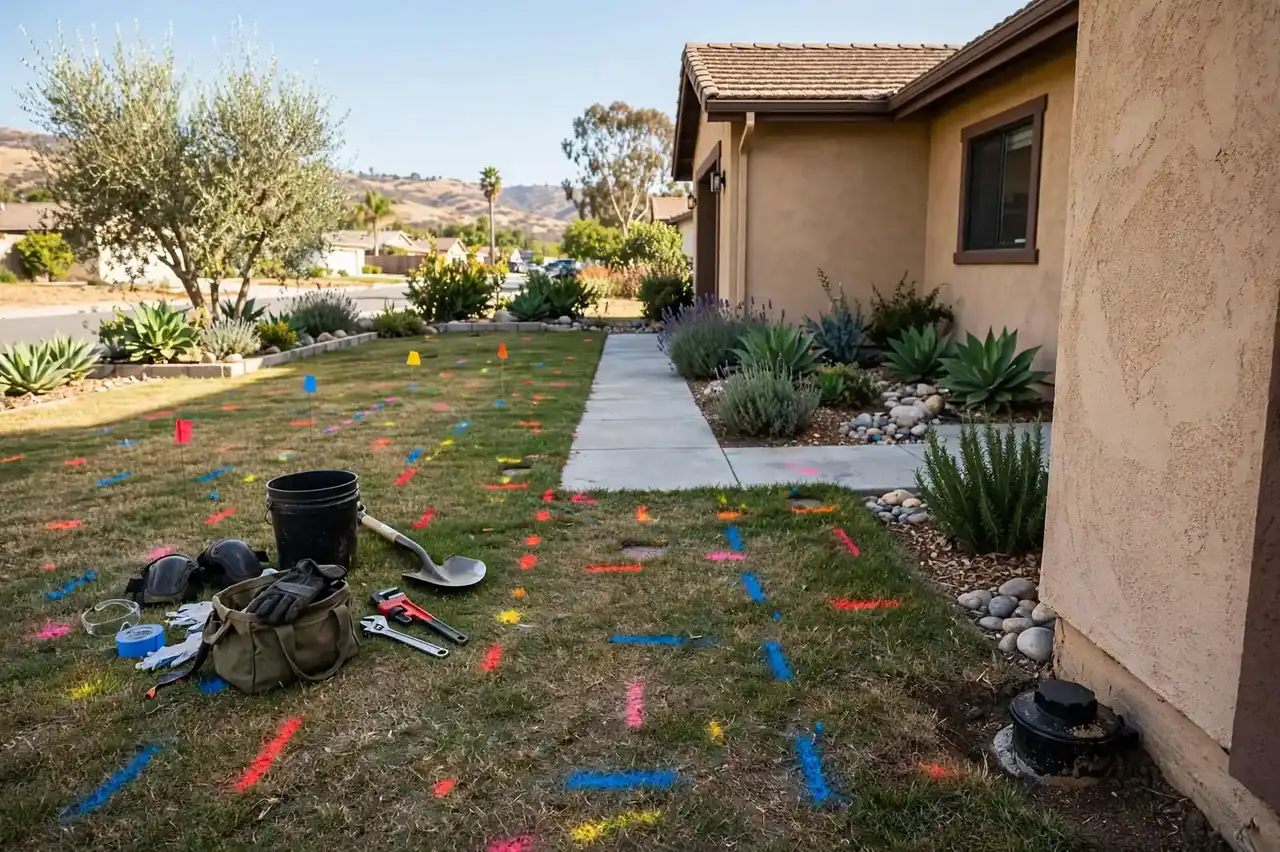
A little preparation before sewer repair saves time on site and helps the crew find the cause faster. Here is what to have ready: ...
 Trenchless vs Traditional Sewer Repair
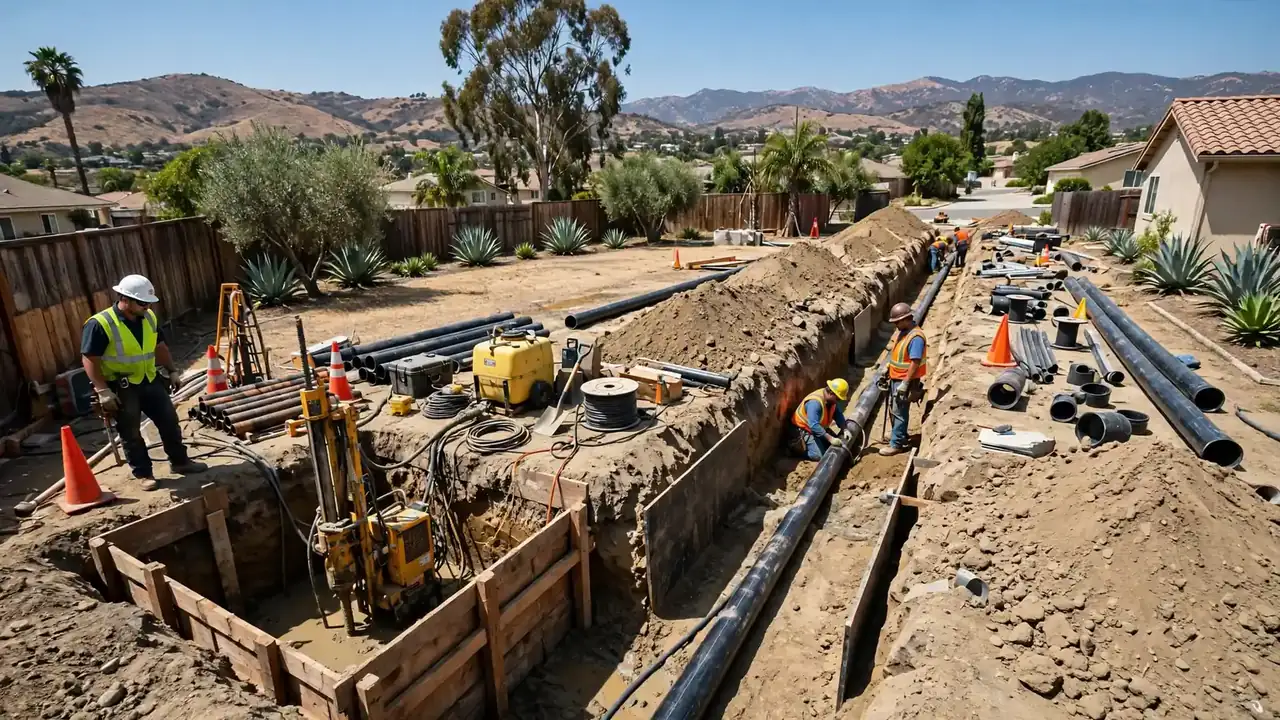
Trenchless repair leaves the yard intact. Traditional repair digs a trench along the line. Which one fits your lateral depends on ...
Frequently asked questions
Questions people ask about rpv sewer permits, answered plainly.
Yes, a replacement goes through the City first. The application is filed in eTrakit, staff check the pipe, the grade, and the tie-in at the main, and no digging starts until the permit is issued. Work that begins early risks a Stop Work Notice and tripled fees.
Permit fees and charges are tripled under RPVMC Title 15, Section 113.5, adopted by Ordinance 669, when work requiring a permit has been started, continued, or finished before the permit is obtained. A Stop Work Notice can also be issued, and work that has been buried may have to be uncovered for inspection.
Yes, and they are narrow: emergency work, work preserving the structural integrity of a building, and work mitigating impacts to adjacent property. A planned replacement that starts early for convenience does not qualify, and the City decides whether an exception applies.
eTrakit is the City of Rancho Palos Verdes online permit system, where applications are submitted, tracked, and issued. The application states what is being done, where the lateral runs, and how the connection at the main will be made.
That turns on what the repair involves. Opening the ground to swap out a length of pipe is a different matter from clearing a blockage or sealing a joint from inside. The City decides where a given job falls, so the question is worth asking before anyone digs.
The permit lists them, and they usually cover the open trench with the new pipe and its grade visible, the tie-in at the main, and a final look once the ground is backfilled. Each visit has to be booked, and the crew waits for the inspector at each stage instead of covering work that has not been seen.
Hold on to the issued permit, the inspector's sign-offs at each stage, and the camera recording of the completed line. Together they show the job was reviewed, watched as it went, and finished properly, which is what a future buyer or insurer will ask to see.
Sewer line trouble in your Rancho Palos Verdes home?
Call Now to reach a local sewer professional. Describe the problem, where it is, and what the line has been doing.
Call now for sewer line help
Tap Call Now to reach a local sewer professional. Tell them where the problem is, what the line has been doing, and whether wastewater is coming into the home.
Hours: Mon–Fri 7:00 AM–10:00 PM PT · Sat 8:00 AM–10:00 PM PT · Sun 7:00 AM–9:00 PM PT
Before you call
- Stop using water if the line is backing up.
- Keep people and pets away from any wastewater.
- Note which drains are slow, and which one backs up first.
- Note whether the problem happens in heavy rain, or all the time.
- Have the age of the home ready, if you know it.