
Sewer Line Repair La Cresta, Rancho Palos Verdes CA
La Cresta sits on the ridge south of Crest Road, bordered by Rolling Hills to the east and Hawthorne Boulevard to the west, with Del Cerro Park on the ridge overlooking Portuguese Bend. Its homes date largely from the late 1960s, and their clay laterals are now approaching sixty years old.
Need help with your sewer line?
Call Now to reach a local sewer professional. Describe the problem, where it is, and what the line has been doing.
Hours: Mon–Fri 7:00 AM–10:00 PM PT · Sat 8:00 AM–10:00 PM PT · Sun 7:00 AM–9:00 PM PT
Sewer line repair in La Cresta
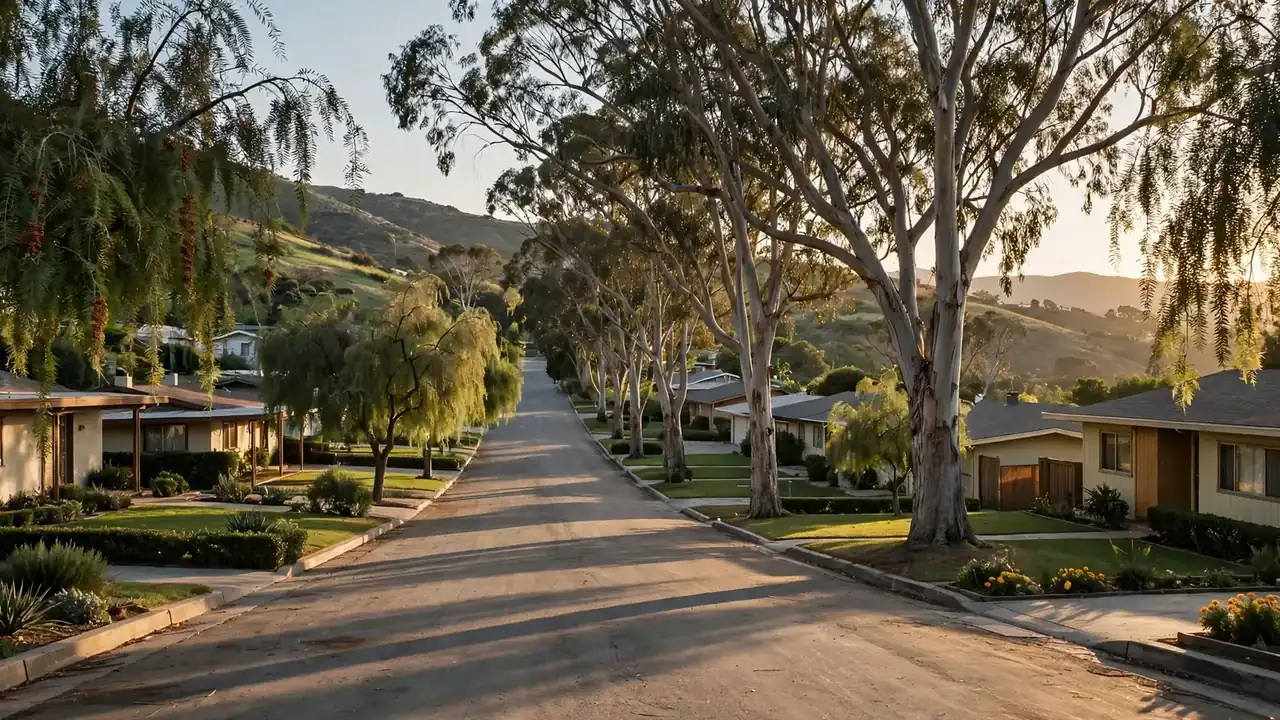
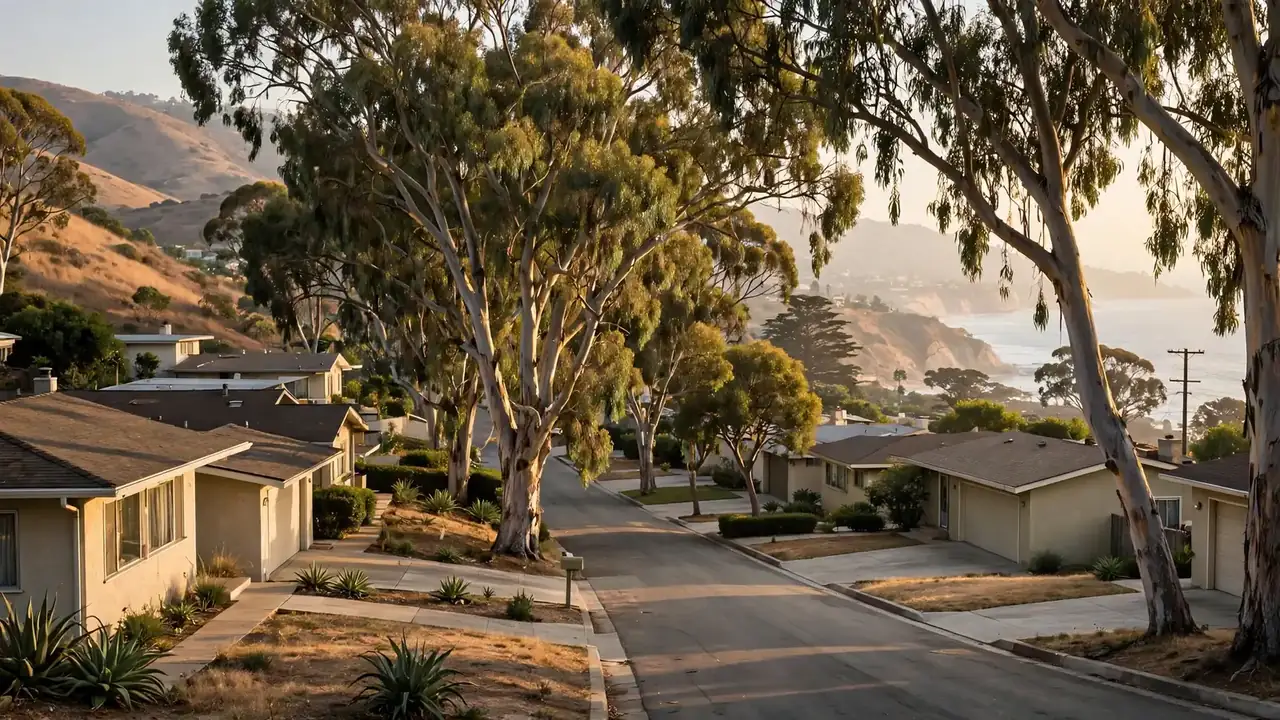
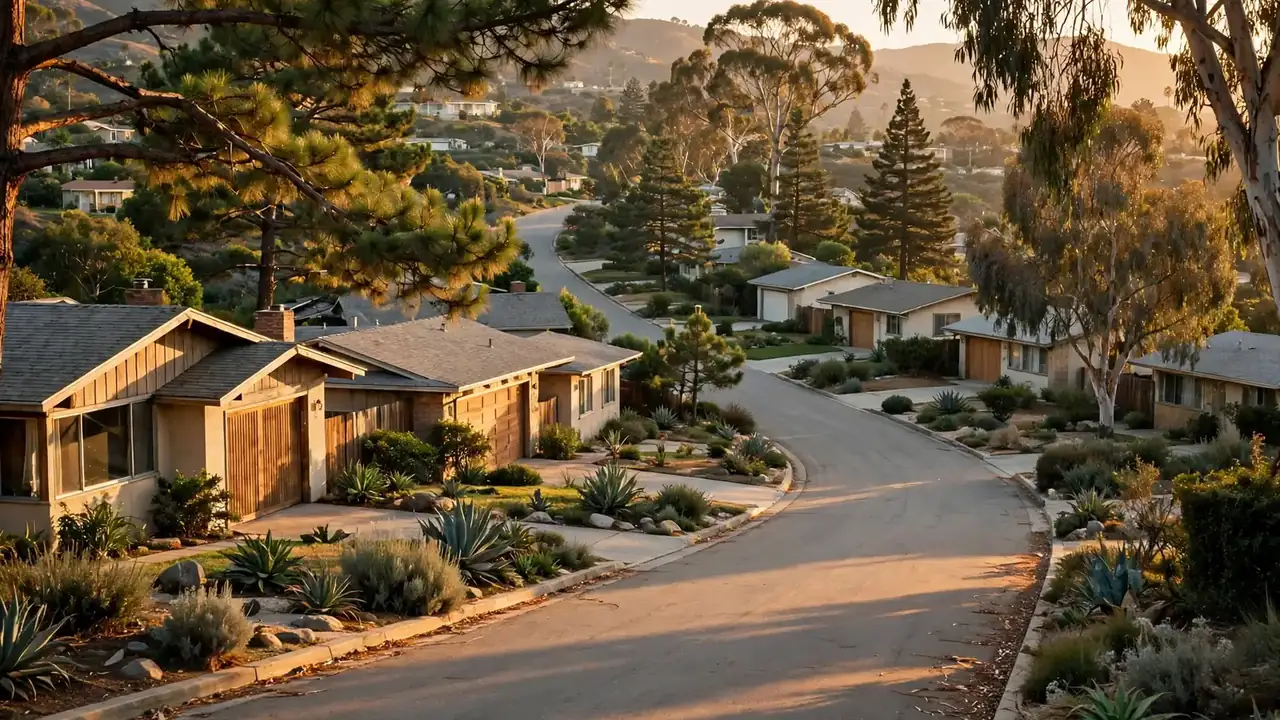
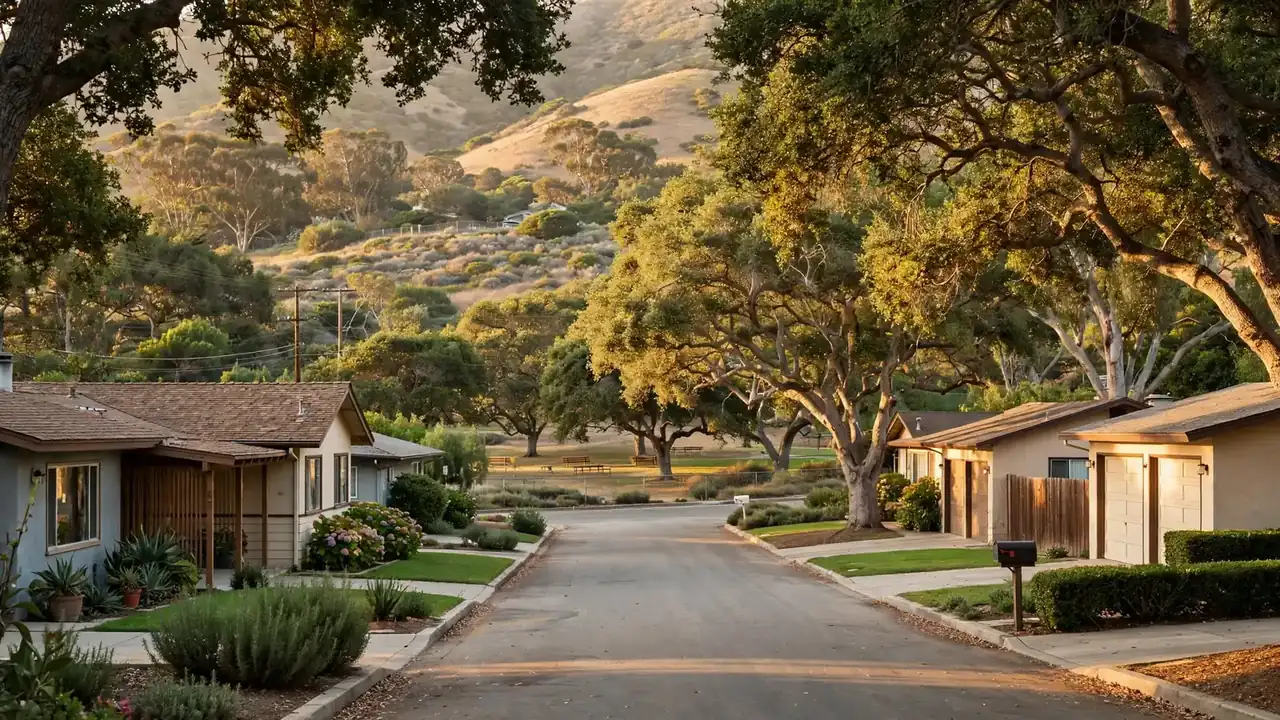
La Cresta and Crest sit at the top of the hill, on the north and south sides of Crest Road, and La Cresta lies mostly to the south of the road. It is bordered by the City of Rolling Hills to the east, the Peninsula Center on the north, and Hawthorne Boulevard to the west. The area holds a mix of estates, family neighborhoods, and townhome and condominium complexes, and Del Cerro Park, a hiking area on the ridge overlooking Portuguese Bend, sits in the La Cresta area. Rancho del Mar High School, the Palos Verdes Peninsula continuation high school, sits on the site that housed Palos Verdes College from 1947 to 1954, in a newer facility built in the 1970s.
The homes on Via La Cresta date to 1968, and the property records repeat that year across the street: homes at 30500, 30604, 30618, 30626, 30675, 30692, 30778 and 30804 Via La Cresta were all built in 1968. A lateral laid in 1968 is now approaching sixty years old, which is the far end of the working life of clay tile. The joints, short clay sections joined with mortar, open with age and ground movement, and roots from the mature trees find every opening. Cast iron, used for the indoor drains and the first stretch outside the foundation, corrodes from the inside and narrows until the line barely passes water.
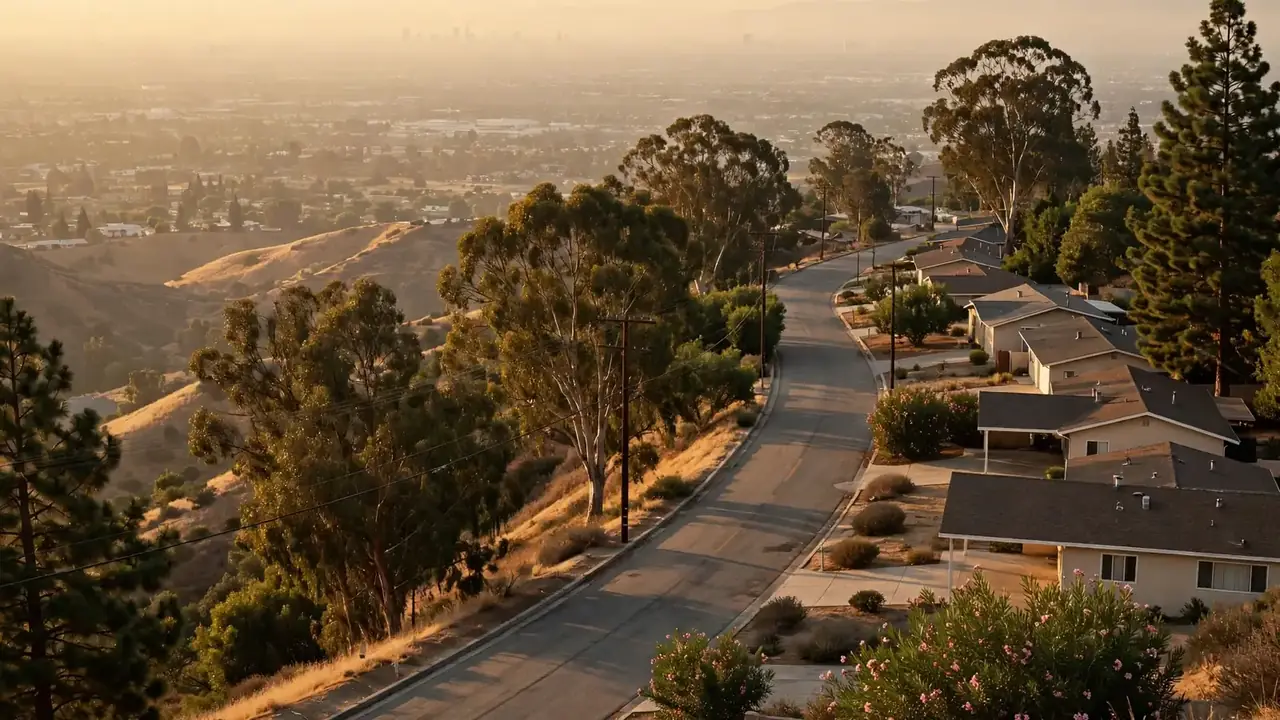
The ridge ground in La Cresta shapes the failure pattern. The neighborhood sits on the highest ground in the center of the city, and the laterals run downhill from the houses to the mains in the lower streets. A lateral on a slope is more likely to settle into a belly or separate at a joint as the ground moves downhill over time, and the fall of the line depends on the ground holding its shape. When the ground shifts, the fall changes, and the line backs up at the lowest drain in the house. The camera inspection measures the depth and the grade along the run, so the crew knows where the line is shallow, where it is deep, and where it has bellied.
Local note
La Cresta lies mostly south of Crest Road, bordered by Rolling Hills to the east and Hawthorne Boulevard to the west, with Del Cerro Park on the ridge overlooking Portuguese Bend. Homes on Via La Cresta date to 1968, and a lateral from that year is now approaching sixty years old.
How sewer lines fail in La Cresta
Depth changes along the run in La Cresta, because the ground falls away from the ridge houses toward the lower streets. A line can be shallow near the house and deep at the main, and the work has to be planned for both: a shallow section is reached through a small excavation, while a deep section needs a larger dig and more care. The slope also changes how water moves. A steep section carries waste quickly, while a settled section holds it. The camera inspection measures the depth along the run, so the crew knows where the line is shallow, where it is deep, and where it has bellied, before any method is chosen.
When a La Cresta lateral is replaced, the slope is the detail that matters most. The new line has to hold the correct grade from the house to the street main, even as the ground continues to move downhill over time. That means careful bedding and compaction under the pipe, so the slope stays true after the trench is closed. A line laid without that care will belly again within a few years. Trenchless methods suit La Cresta well where the line is still round and continuous, because they replace the lateral through small pits instead of opening a trench across a landscaped front yard. The finished line is camera-checked before the work is called done, and the check shows the slope as well as the joints.
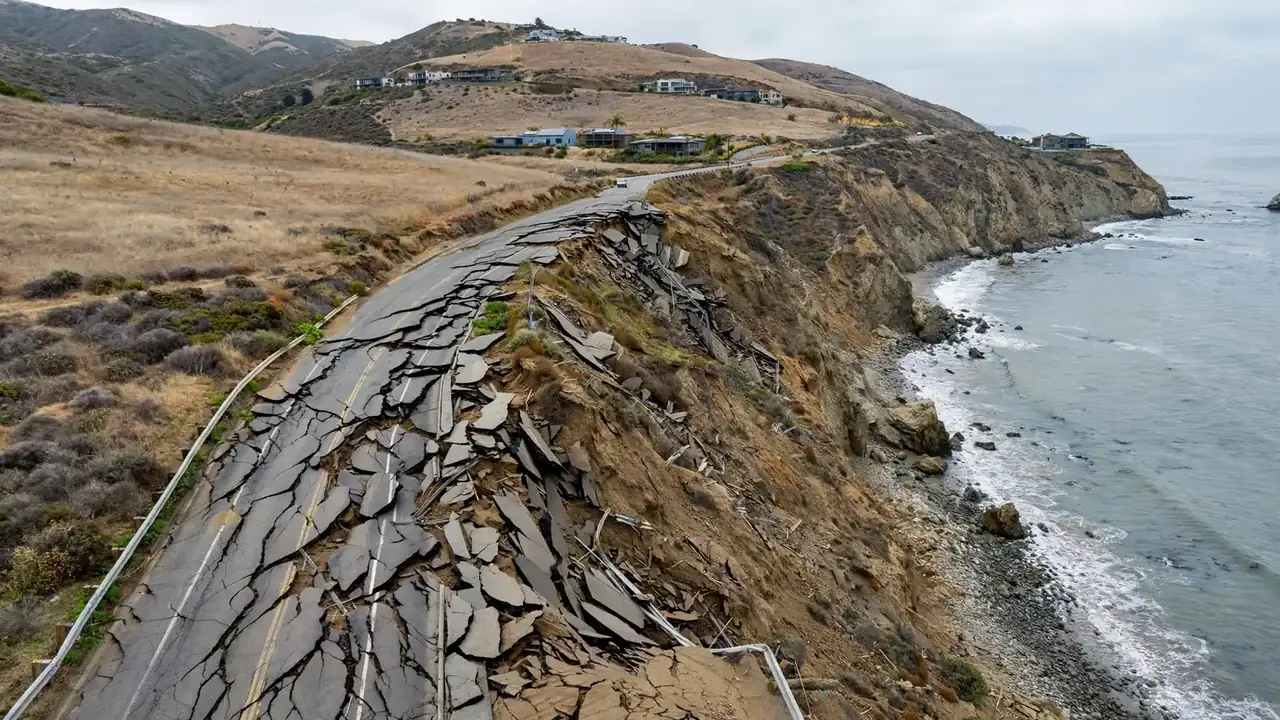
La Cresta is close to the landslide ground to the south, and the ridge above Portuguese Bend is a reminder that ground movement is part of life on this peninsula. La Cresta itself is not inside the mapped landslide complex, and the moratorium on new construction covers about 715 acres in the Greater Portuguese Bend Landslide Complex to the south. The distinction matters for sewer work: a La Cresta lateral fails in the ordinary ridge pattern, settling and bellies and open joints, rather than the ground-movement pattern of the slide area. The camera inspection is what confirms which pattern a particular line follows. The ridge above Portuguese Bend is visible from the La Cresta streets, and the view is a reminder that the ground on this peninsula is not still. The homes on Via La Cresta were built in 1968 on lots that had been graded for the ridge, and the laterals under them have lived with that ground for nearly sixty years. A lateral on the ridge fails a little at a time: a joint opens, a root enters, a section settles, and the line drains a little more slowly each year until it backs up. The change is gradual enough that a homeowner can miss it, which is why the slow drain and the gurgling toilet matter as early signs. A camera inspection shows the joints one by one, the bellies by measurement, and the connection at the street main, so the repair plan is built from what the camera found rather than from the symptom that brought the homeowner to call. The inspection also shows whether a past spot repair replaced one stretch of the line and left the rest, which is common in a neighborhood of this age.
Related reading in La Cresta: Trenchless vs Traditional Sewer Repair · Sewer Replacement Process Step by Step · RPV Sewer Permits
Sewer line services in La Cresta
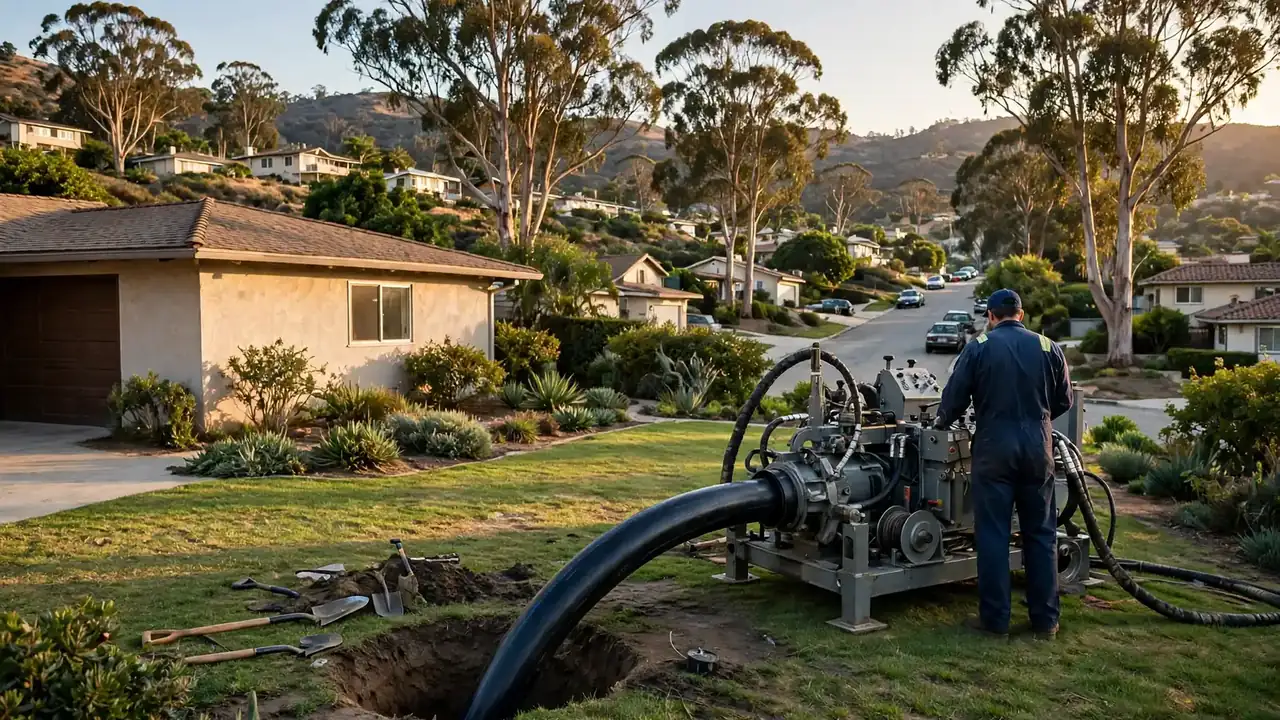 Trenchless Sewer Repair
a failed lateral renewed through small access points, with the yard left intact in La Cresta.
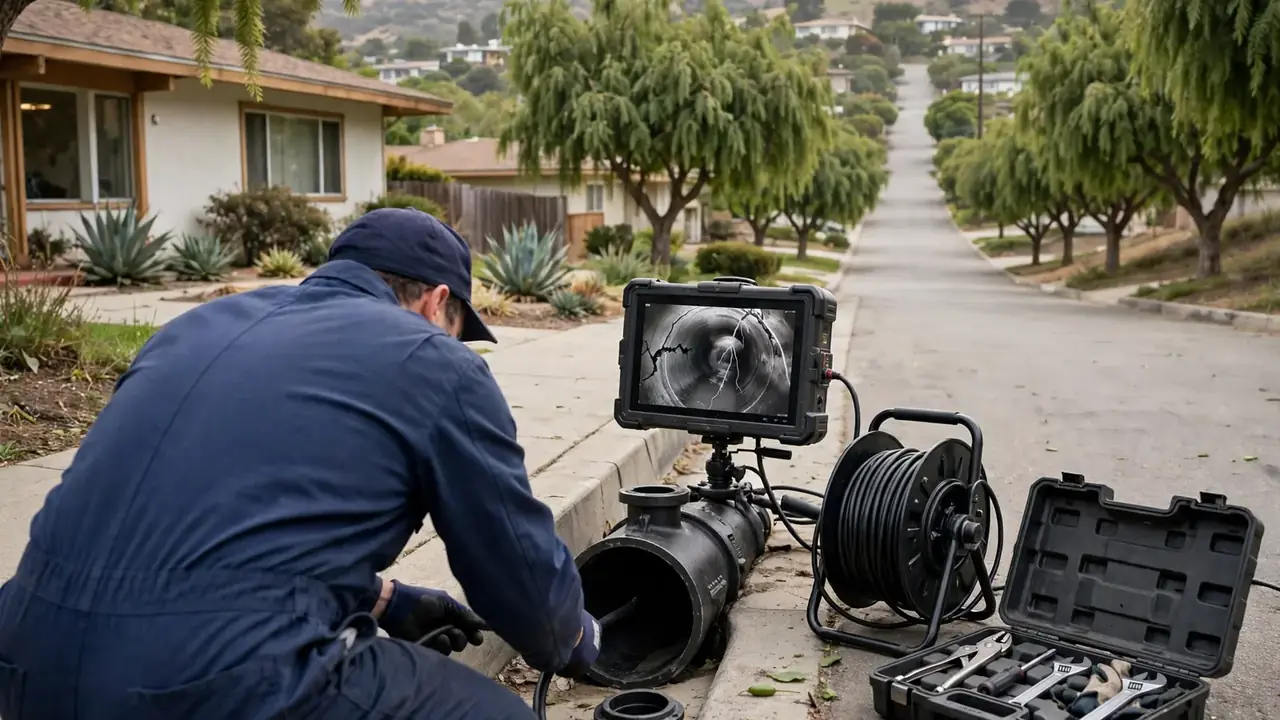 Sewer Camera Inspection
the inside of the line seen on camera, with each defect located and marked in La Cresta.
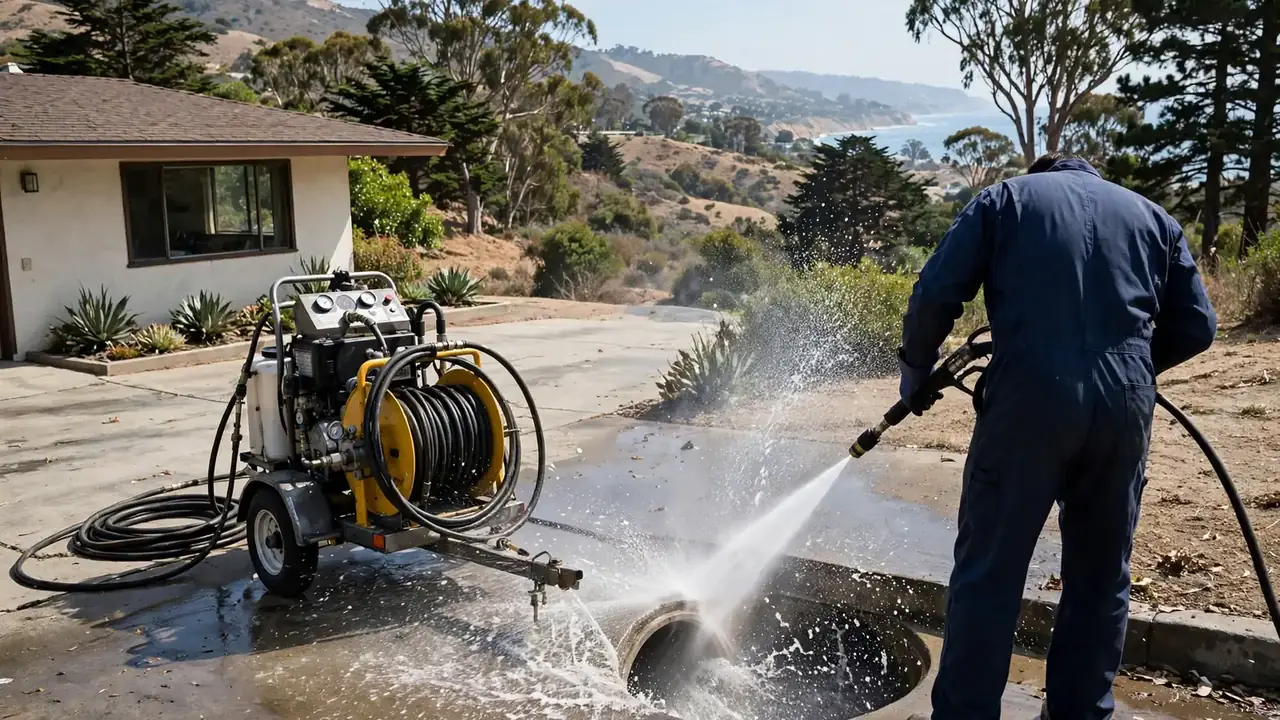 Hydro Jetting
a lateral cleared with high-pressure water, so roots and buildup are washed out in La Cresta.
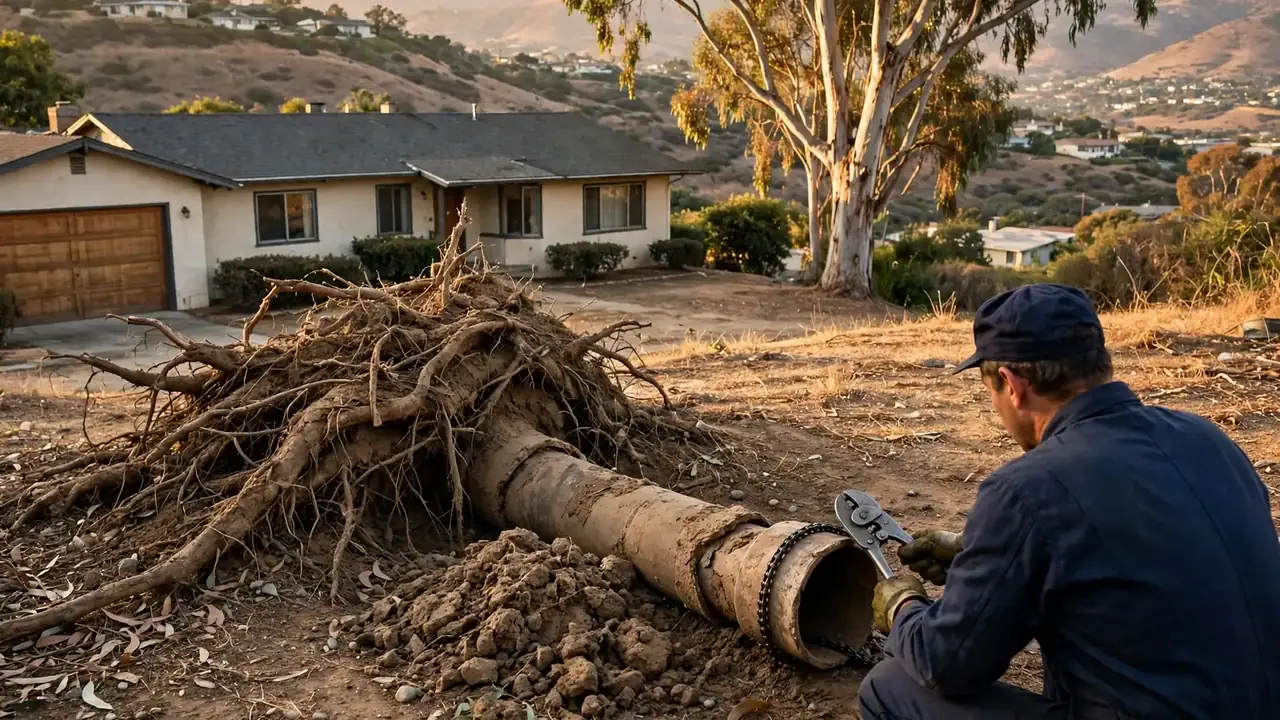 Sewer Root Removal
roots cleared from the line, with the camera showing where they entered in La Cresta.
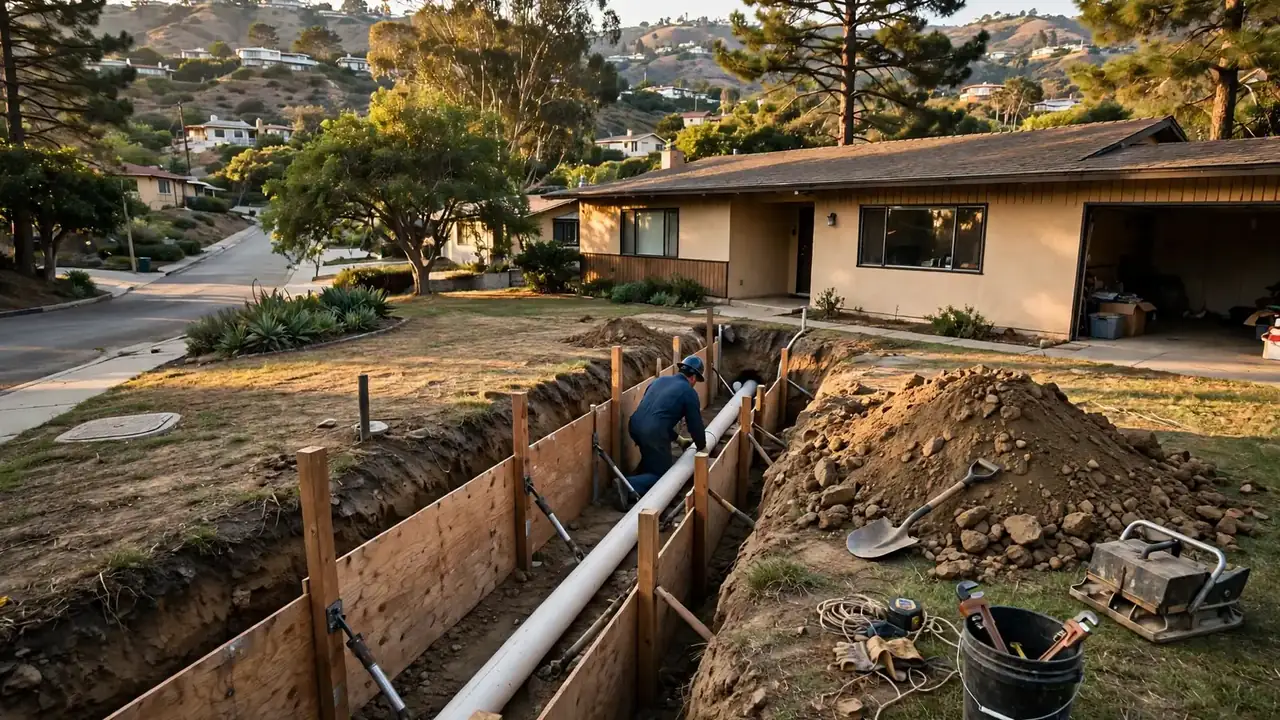 Sewer Lateral Repair
the line from the house to the street main repaired, trenchless or open-trench in La Cresta.
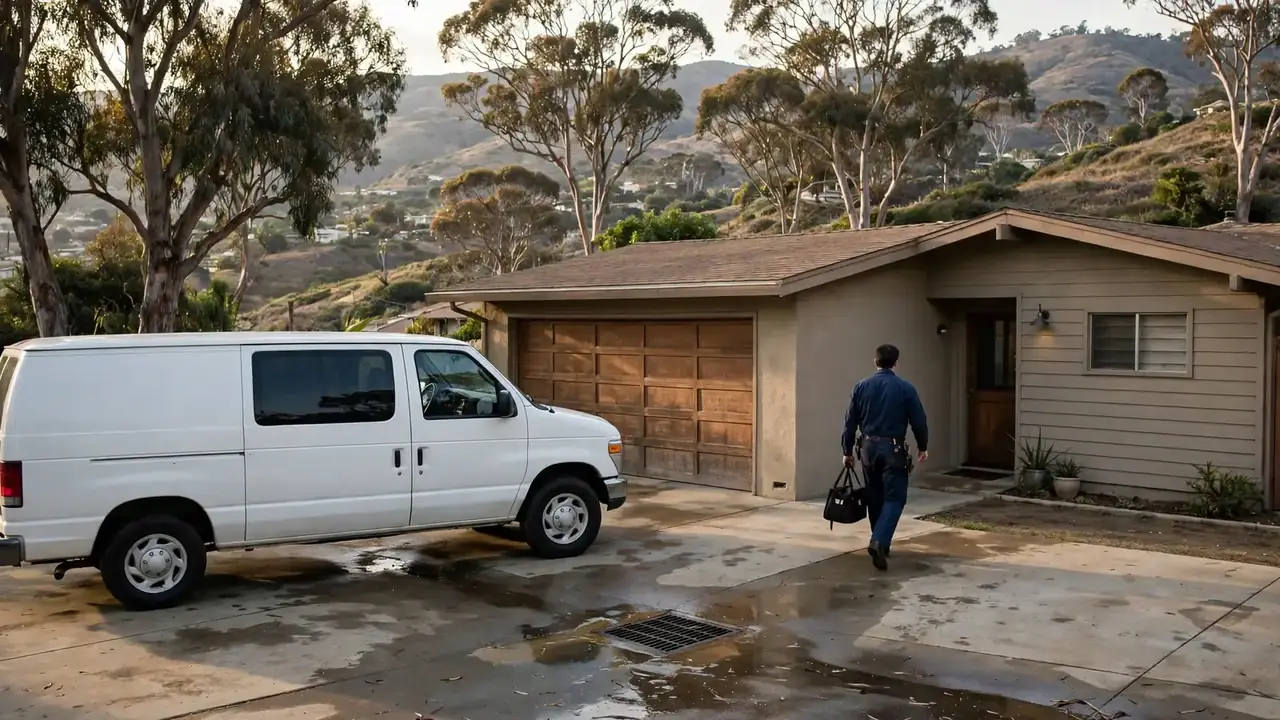 Emergency Sewer Repair
a backup in progress handled as an urgent call, with the cause found on camera in La Cresta.
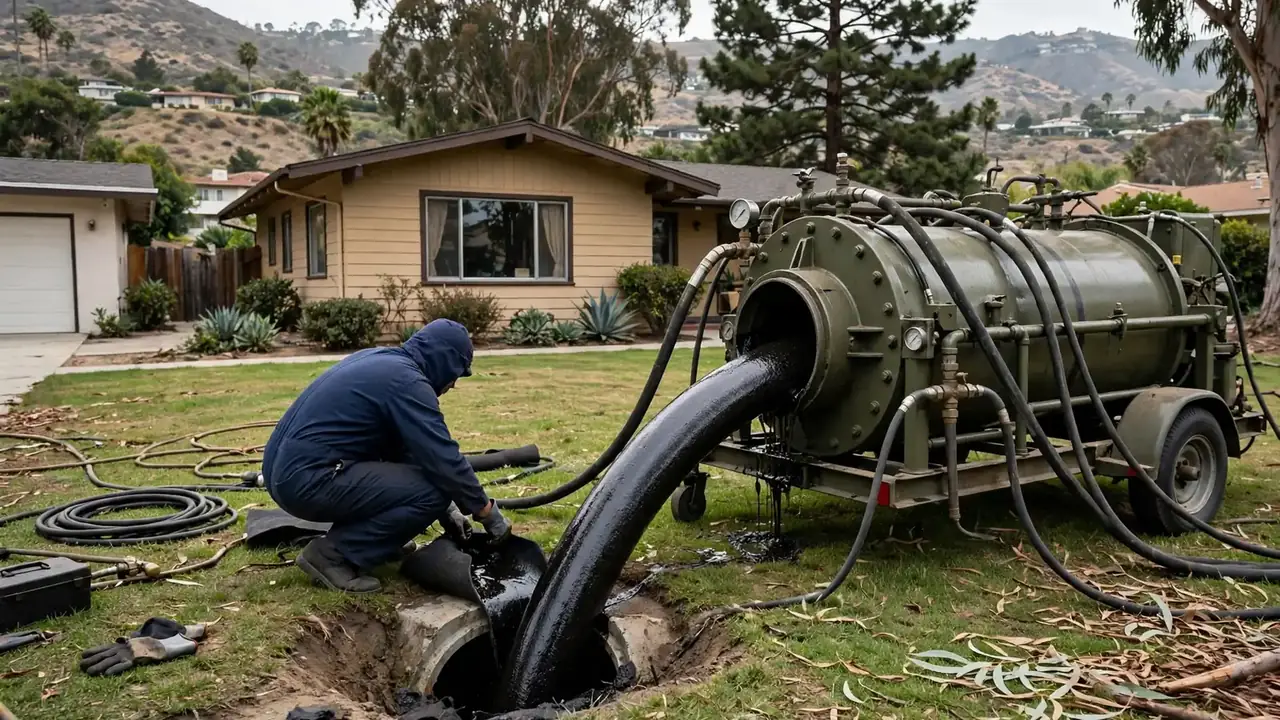 Sewer Pipe Lining
a new pipe built inside the old one, with no joints for roots to enter in La Cresta.
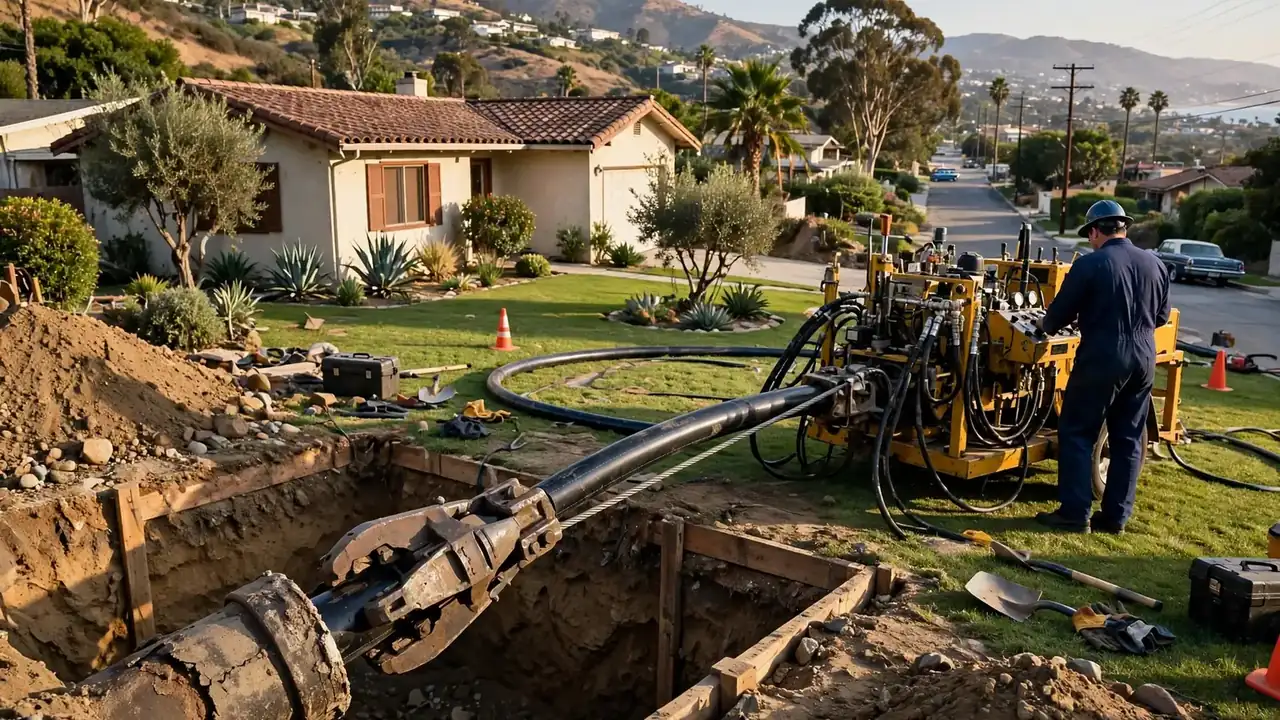 Pipe Bursting
the old pipe broken outward and a new pipe pulled into its place in La Cresta.
 Sewer Line Replacement
a failed lateral replaced with a new line, from the house to the street main in La Cresta.
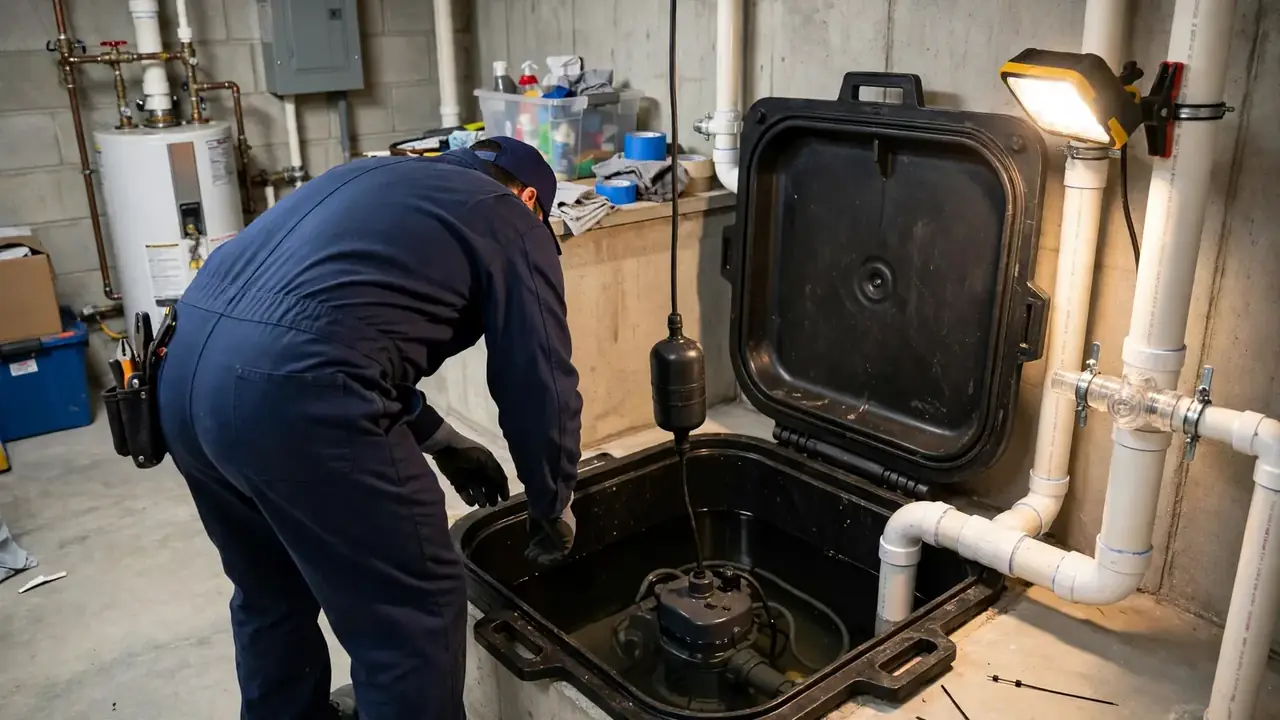 Sewage Ejector Pump Repair
a sewage ejector or grinder pump repaired so below-grade fixtures drain again in La Cresta.
Sub-areas covered in La Cresta
- Via La Cresta — 1968 homes along the main street of the neighborhood.
- Crest Road side — homes on the south side of Crest Road.
- Del Cerro Park area — homes near the ridge park overlooking Portuguese Bend.
- Rolling Hills border — homes toward the eastern edge of La Cresta.
- Hawthorne Boulevard side — homes near the western edge of the neighborhood.
- Peninsula Center side — homes toward the northern edge of La Cresta.
- Ridge-top streets — homes on the high ground, with laterals running downhill.
- Townhome areas — townhome and condominium complexes in the La Cresta area.
ZIP codes served
Also serving nearby








Frequently asked questions
Questions people in La Cresta ask about sewer lines, answered plainly.
The homes on Via La Cresta date to 1968, and the property records repeat that year across the street. A lateral laid in 1968 is now approaching sixty years old, which is the far end of the working life of clay tile. A camera inspection shows whether the original line is still in the ground and what condition it is in.
No. La Cresta sits on the ridge above the slide area, and Del Cerro Park in the La Cresta area overlooks Portuguese Bend, but the moratorium on new construction covers about 715 acres in the Greater Portuguese Bend Landslide Complex to the south. A La Cresta lateral fails in the ordinary ridge pattern, settling and bellies and open joints, and the camera inspection confirms which pattern a particular line follows.
The neighborhood sits on the highest ground in the center of the city, and the laterals run downhill to the mains in the lower streets. Over time the ground moves downhill, a section of pipe settles or separates at a joint, and a belly forms where the fall changes. The camera inspection measures the grade along the run, so a belly is found by measurement.
In many La Cresta homes, yes. The 1968 laterals here are clay tile, and where the camera shows the clay is still round, with joints that have opened but no collapse, a liner or a burst pipe replaces the line through small pits and leaves the front yard intact. The exception is a deep belly on the ridge slope: a liner cannot correct a bad grade, so a bellied section is dug up and re-laid. The camera inspection is the step that sorts the two cases, and it is worth doing before any method is chosen.
Mostly clay tile and cast iron from 1968. Clay tile fails at the joints, which open with age and let roots in. Cast iron corrodes from the inside and narrows. A camera inspection identifies the material section by section, so the repair plan matches what is actually in the ground.
Yes. La Cresta homes date largely from the late 1960s, and their laterals are now approaching sixty years old. A lateral at the end of its life may show no symptom at all until it backs up. The inspection shows the condition of the line and the connection at the street main before the purchase is final.
Sewer line trouble in La Cresta?
Call Now to reach a local sewer professional serving La Cresta and Rancho Palos Verdes.
Call now for sewer line help in La Cresta
Tap Call Now to reach a local sewer professional. Tell them where the problem is, what the line has been doing, and whether wastewater is coming into the home.
Hours: Mon–Fri 7:00 AM–10:00 PM PT · Sat 8:00 AM–10:00 PM PT · Sun 7:00 AM–9:00 PM PT
Before you call
- Stop using water if the line is backing up.
- Keep people and pets away from any wastewater.
- Note which drains are slow, and which one backs up first.
- Note whether the problem happens in heavy rain, or all the time.
- Have the age of the home ready, if you know it.