Sewer Line Repair for Hillside & Slope Properties in Rancho Palos Verdes, CA
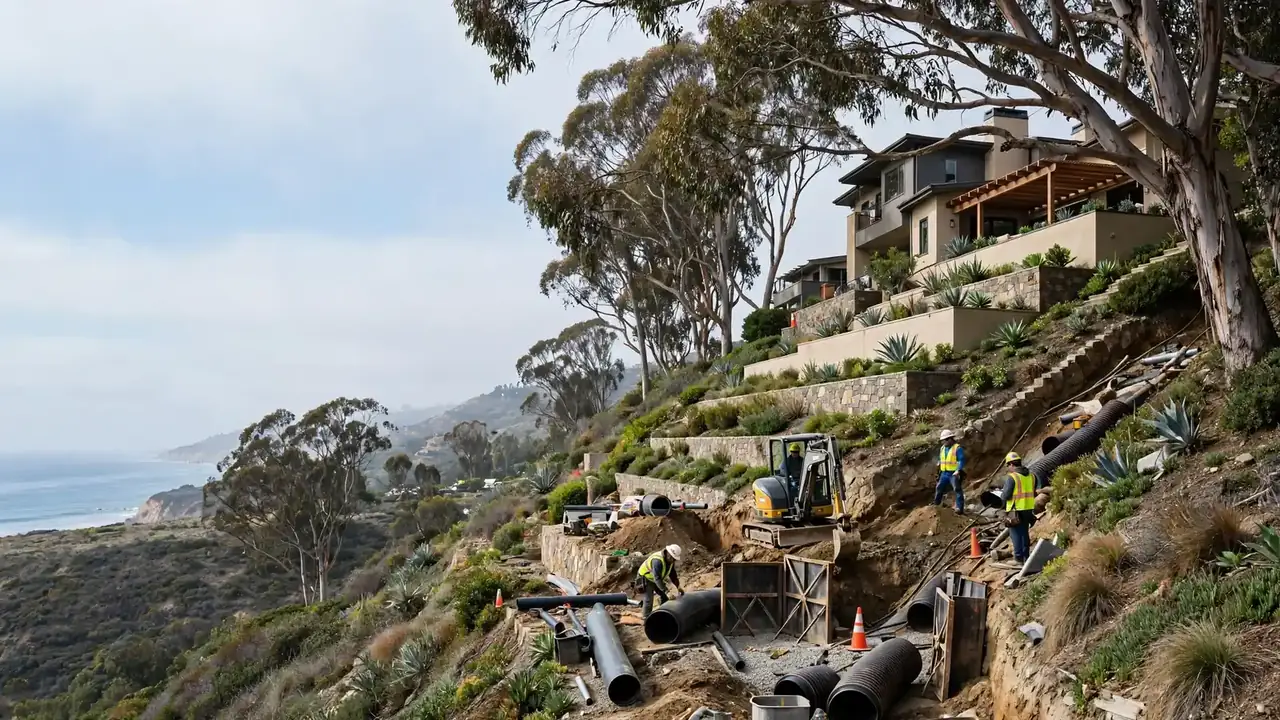
A sewer line on a Rancho Palos Verdes hillside does not behave like a sewer line on flat ground. Grade, rock, and ground movement shape every decision about it.
Need help with your sewer line?
Call Now to reach a local sewer professional. Describe the problem, where it is, and what the line has been doing.
Hours: Mon–Fri 7:00 AM–10:00 PM PT · Sat 8:00 AM–10:00 PM PT · Sun 7:00 AM–9:00 PM PT
How slope changes a sewer line in Rancho Palos Verdes
Rancho Palos Verdes is a peninsula city, and much of its housing sits on ground that falls away toward the ocean or toward a canyon. A sewer lateral on that kind of lot has to carry wastewater downhill at a steady grade from the house to the street main, and the grade is the whole job. Too steep, and water runs ahead of solids and leaves material behind in the pipe. Too flat, and flow slows and solids settle. On a hillside lot the pipe often changes grade more than once along its run, because the ground itself changes, and each change is a place where flow can slow, solids can collect, and a belly can form over time.
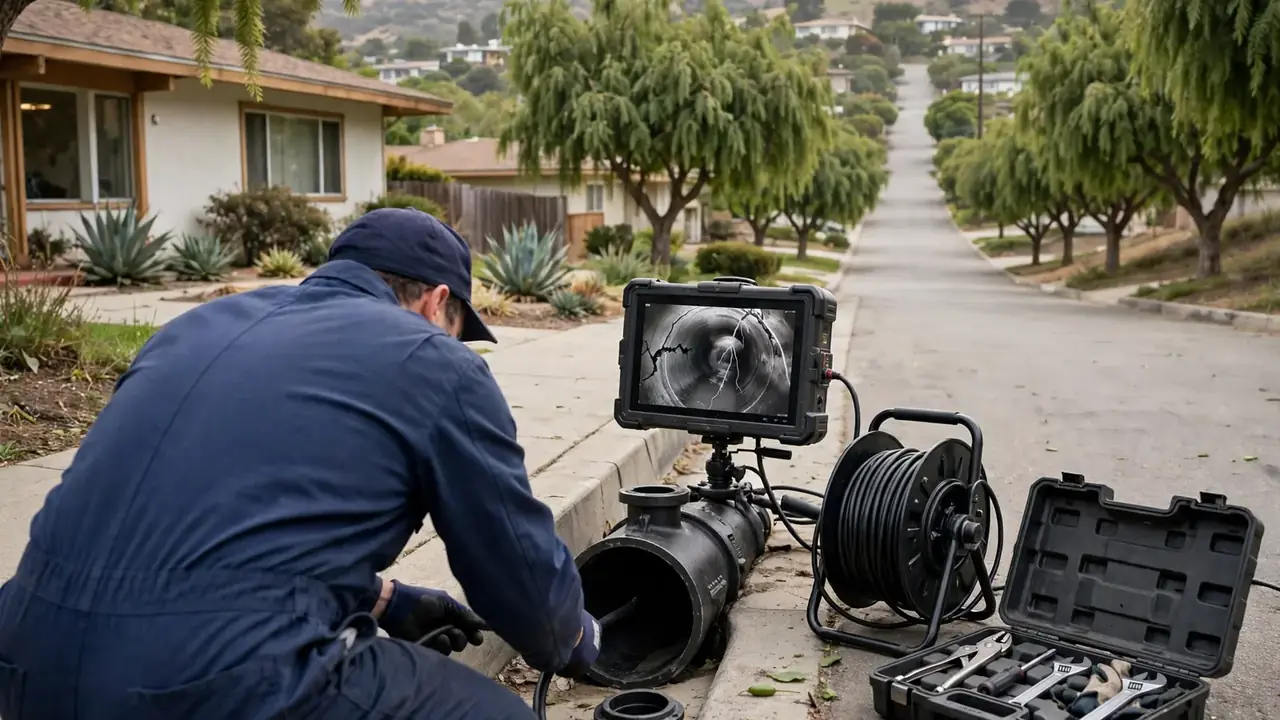
The camera inspection of a hillside lateral reads differently from the camera inspection of a flat-lot lateral. The operator watches the water line inside the pipe, the way the camera moves through each section, and the depth readings from the locator, because those readings show where the pipe is holding grade and where it is not. A section that holds water while the camera is inside it is a section with a belly or a flat spot. A section where the camera drops suddenly is a section where the pipe has shifted at a joint. The footage, the depth, and the slope reading together are what the repair plan is built from, and a plan built without them is a guess.
Access is the other way slope changes the work. A hillside lot often has a driveway that cuts across the slope, terraces held by retaining walls, stairs between levels, and planting that holds the bank in place. The lateral usually runs under one or more of those features, and the crew has to reach it without disturbing the features that hold the slope together. That is why the first questions about a hillside lateral are always about access and grade, before anyone talks about method. The answers decide whether the line can be reached through a cleanout, whether a small pit will do, or whether a larger excavation is needed. A grade survey is worth having before any method is chosen. The crew measures the fall from the house to the street main, records the depth at each marked point, and notes where the ground changes, because a lateral that changes grade more than once needs a plan that deals with each change. The survey, the camera footage, and the locator marks together show the whole run, and a repair planned from all three is a repair that deals with the slope rather than fighting it.
Limestone rock under the Peninsula
Much of the Palos Verdes Peninsula sits on limestone and other hard rock, and a sewer lateral in Rancho Palos Verdes often runs through that rock rather than through soft soil. Rock changes excavation completely. A trench through soil is dug with a small excavator in a day. A trench through limestone is slower, louder, and harder on equipment, and it can require breaking rock section by section. The depth of the line matters too, because a deep line in rock means a deep cut, and a deep cut on a slope means shoring and a wider work area to keep the cut safe while the crew is in it.
Rock also changes what the pipe itself has lived through. A clay tile lateral laid in a rock trench in the 1950s or 1960s was often bedded in the material that came out of the trench, and that bedding can include sharp rock that presses against the pipe. Over decades, ground movement presses the pipe against that bedding, joints open, and sections crack. Cast iron in the same trench corrodes from the inside while the rock presses from the outside. The camera shows the result: cracked sections, offset joints, and places where the pipe has shifted against its bedding.
The rock is also the reason trenchless methods get serious attention on hillside lots. A lining or bursting job that works through small pits avoids cutting a long trench through limestone, and it avoids disturbing the retaining walls, terraces, and planting that hold the slope. That does not make trenchless right for every hillside line. A pipe that has lost its shape, a line with a severe belly, or a section that has collapsed cannot be lined, and the camera findings decide. Rock makes the choice between methods matter more, not less, because the wrong method on a rock lot is a long and disruptive job. Bedding matters as much as the pipe in a rock trench. A new pipe laid directly on sharp rock will press against the same points that damaged the old one, so the trench is bedded with a layer of fine material that cushions the pipe and spreads the load. The backfill is placed in layers and compacted, so the ground does not settle into a dip above the new line, and the surface is restored to shed water away from the trench rather than collecting it above the pipe.
CIPP lining through one cleanout
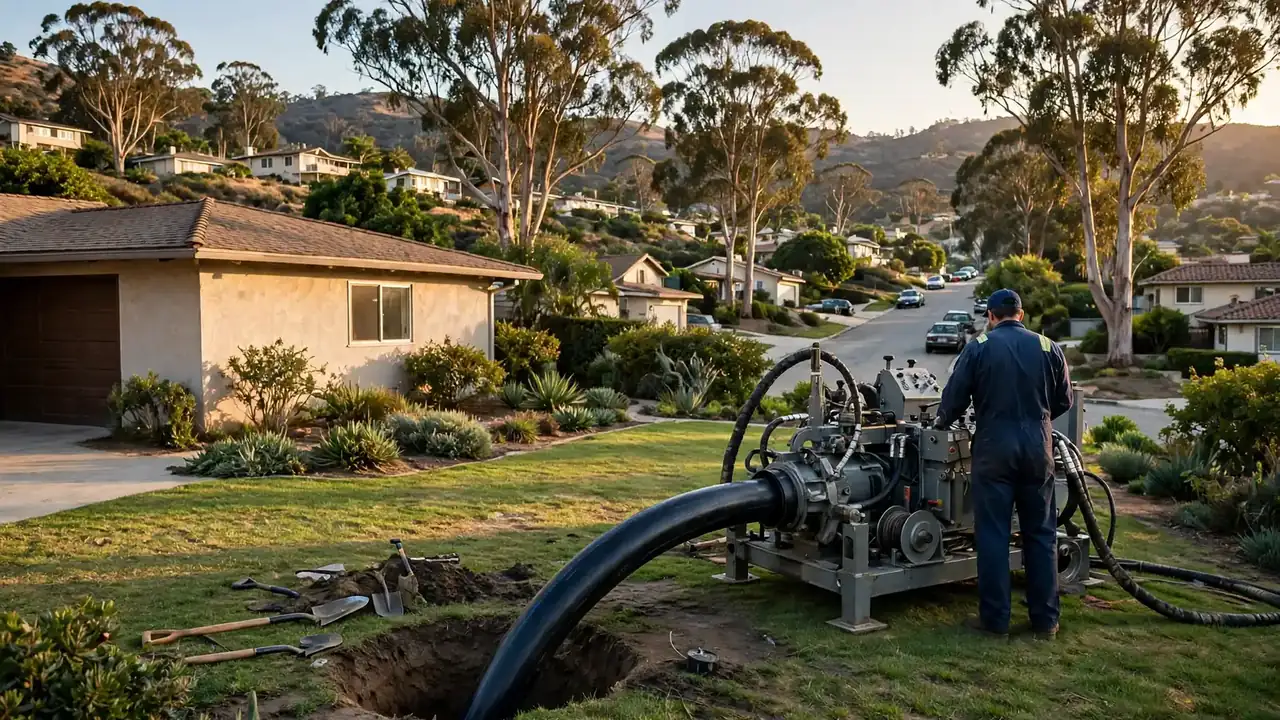
Cured-in-place pipe lining, usually called CIPP, creates a new pipe inside the old one. A flexible liner soaked in resin is pushed or pulled into the existing lateral, inflated against the inside of the old pipe, and cured into a solid tube. On a steep hillside lot, the appeal is plain: the work can often be done through one cleanout, with no trench cut through the slope at all. The liner follows the grade of the existing pipe, seals the joints where roots entered, and gives the line a smooth interior that resists buildup. For a lateral that still holds its shape but leaks at every joint, lining through a cleanout is a strong option.
The cleanout is the key to the whole job. A cleanout is an access point on the lateral, usually a capped pipe at or near ground level, and a hillside home that has one in a usable place gives the crew a way in without digging. Many older Rancho Palos Verdes homes do not have a cleanout where the crew needs one, or the cleanout is buried, broken, or too small for the liner. In that case the crew installs an access point first, which is a small excavation, and then runs the liner from it. The camera inspection shows whether the existing access will work, and the plan is built around what the camera found.
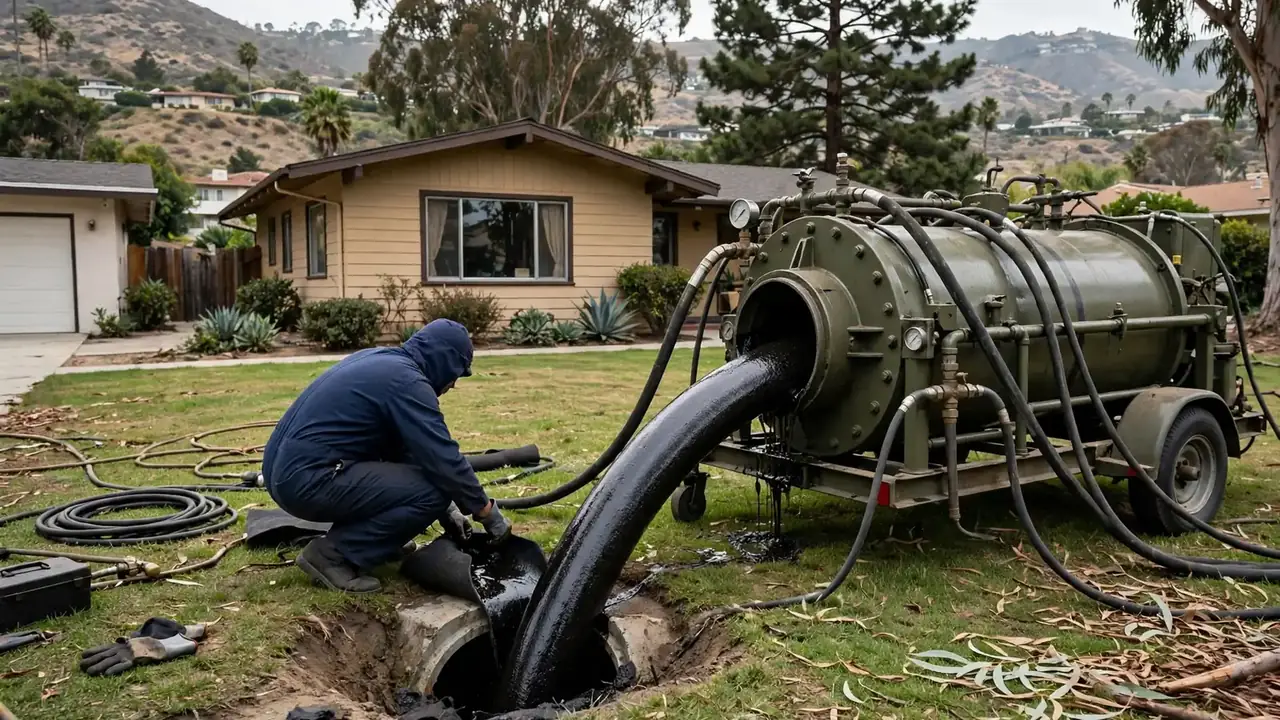
Lining has limits that matter on a slope. It follows the existing pipe, so it follows an existing belly too, and a belly that holds water will still hold water after lining. It needs a host pipe that still has its shape, so a collapsed section or a pipe that has lost a large part of its wall cannot be lined. It also needs the line to be clean before the liner goes in, which usually means hydro jetting and descaling first, and that cleaning step is harder on a steep line with heavy scale. A lining job that skips the cleaning or ignores a belly is a lining job that fails early, and the camera check after curing is the record that the liner went in correctly. Curing takes time, and the time depends on the resin, the diameter, and the temperature of the ground. The crew monitors the cure rather than guessing at it, and the line stays out of use until the liner has hardened fully. A post-cure camera run then checks the liner from end to end, showing that it has bonded to the host pipe, that the ends are sealed, and that no wrinkle or gap remains. That footage is the record that the lining job is complete.
When excavation is the fitting choice
Excavation means opening the ground above the lateral, removing the failed pipe, and laying a new pipe at the correct grade. On a hillside lot it is the disruptive option, and it is also the option that fixes problems no other method can fix. A collapsed section, a severe belly, a line that has lost its grade entirely, or a pipe that has shifted so far at a joint that the liner cannot pass through it — each of those calls for excavation. The new pipe is laid with a steady fall to the street main, bedded properly, and checked on camera before the trench is closed.
The excavation plan on a slope starts with the surface. The crew maps the lateral, marks the depth at each point, and plans the trench around the driveway, the retaining walls, the stairs, and the planting. A trench on a slope is dug in sections, and each section is shored as it is opened, because an open cut on a slope is a place where ground can move. The pipe is laid section by section, the grade is checked as the work goes, and the backfill is compacted in layers so the ground does not settle into a dip above the new line. The surface is restored at the end, and the restoration matters on a slope, because a dip above the line collects water and a water-collecting dip erodes.
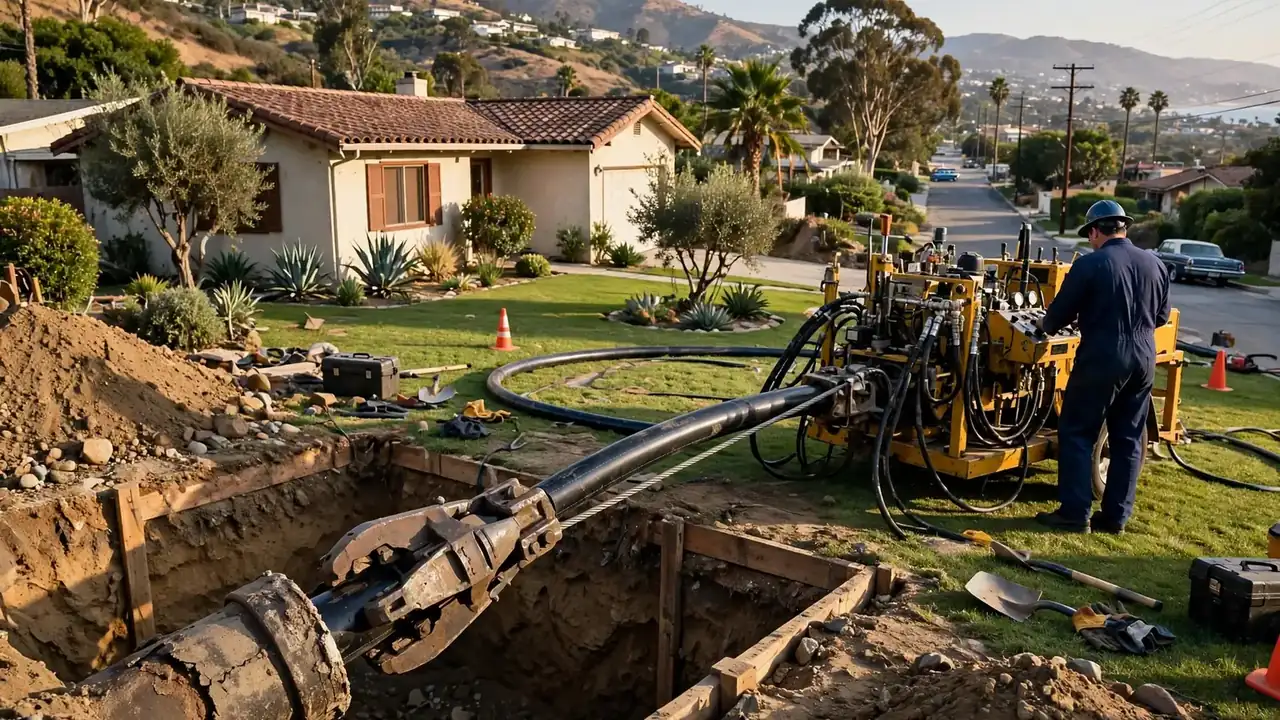
Pipe bursting sits between lining and open excavation. A bursting head is pulled through the old pipe, breaking it apart and pulling a new pipe in behind it, through two small pits rather than a full trench. On a hillside lot it can replace a line that has lost its shape without cutting the whole slope open, and it can correct a small grade problem by following a new path. It needs room for the pits, it needs the old pipe to be burst-able, and it needs the ground to accept the new pipe without disturbing what sits above it. The camera findings, the depth, and the rock decide whether bursting fits, and the crew explains the choice from those findings rather than from a preference for one method. Shoring is part of any deep cut on a slope. The sides of the trench are supported as the work goes, so the cut stays safe for the crew and the ground above it does not slump into the trench. Each section is opened, laid, checked, and backfilled before the next section is opened, which keeps the open ground to a minimum at any one time. The inspector sees the pipe and the grade before backfill, and the inspection record closes each stage of the work.
Bellies, ground movement, and watching the line over time
A belly is a low section in a sewer line where water and solids collect instead of flowing on to the street main. On a hillside lot, bellies form when the ground under the pipe settles or moves, and the pipe settles with it. The Peninsula has ground that moves — slowly in most places, faster in the landslide areas — and a lateral that was laid at a correct grade decades ago can develop a belly as the ground shifts beneath it. The camera shows a belly plainly: water stands in the pipe, the camera lens dips below the water line, and solids collect in the low spot. A shallow belly can be lived with for a time if the line is kept clean. A deep belly that holds solids will keep backing up, and lining will not fix it, because the liner follows the belly.
Ground movement also opens joints and offsets sections. Clay tile joints are the first to open, because each joint is a separate piece, and a small shift at one joint is enough to let roots in and let water out. The water that leaks out softens the ground around the pipe, and the softened ground lets the pipe move more, which opens the joint further. Cast iron fails differently, corroding from the inside until the wall thins and the pipe sags or cracks. Either way, the pattern is the same: the camera shows a line that has moved with its ground, and the repair has to deal with the movement, not only with the pipe.
A hillside lateral should be camera-inspected every few years, and always after a backup, after heavy rain, or after any visible ground movement on the lot, such as a new crack in a wall, a leaning fence, or a dip in the yard above the line. The inspection shows the grade, the joints, and the bellies while the line is still working, and a later inspection can be compared against the earlier footage to show whether the line is stable or still moving. A hillside lateral that is checked is a lateral that does not surprise its owner during a storm, and the footage is the record that shows whether the ground or the pipe changed. Rain is the test of a hillside lateral. Heavy rain raises the water table, softens the ground, and adds flow to the line all at once, and a lateral with a belly or open joints will show its weakness during a storm. A homeowner who watches the drains during the first heavy rain of the season learns more about the lateral in one evening than a dry-weather inspection can show, and a camera run after that rain shows whether the line handled the storm or whether the storm moved the ground beneath it.
Services for hillside & slope properties
Where we work
Eastview · Miraleste · West Palos Verdes · Los Verdes · Monaco · La Cresta · Del Cerro · Mesa Palos Verdes · Mira Catalina · Ladera Linda · Crestridge · Seaview · Portuguese Bend · Abalone Cove · Island View
Services used most
Trenchless Sewer Repair · Sewer Pipe Lining · Pipe Bursting · Sewer Camera Inspection
Frequently asked questions
Questions people ask about sewer lines in hillside & slope properties, answered plainly.
Often, yes. Lining through a cleanout or pipe bursting through small pits can replace a hillside lateral without cutting a trench through the slope. Whether that fits depends on the camera findings: a line that still holds its shape can be lined, while a collapsed section or a deep belly calls for excavation.
A belly is a sagging stretch of pipe where wastewater pools instead of moving on. Hillside ground settles and shifts, and the pipe sags with it, so a run that was laid true can develop a low spot over the years. Inside, the camera shows standing water and collected solids. A liner follows the sag, so it cannot cure a belly.
Much of the Peninsula sits on limestone and other hard rock, and a trench through rock is slower and harder than a trench through soil. It can require breaking rock section by section, and a deep line in rock means a deep cut that needs shoring on a slope. That is one reason trenchless methods get serious attention on hillside lots.
Not until an entry point exists. Plenty of older hillside homes in Rancho Palos Verdes have no usable cleanout, or the one they have is buried or broken. The crew first opens a small access point, then feeds the liner through it. The camera run beforehand shows whether the existing access can be used or a new one has to be put in.
Plan on a check every few years, plus a run after any backup, any heavy rain, or any sign the lot has shifted, like a fresh wall crack or a dip in the yard over the line. Comparing each new recording with the last one shows whether the pipe is holding its grade or slowly losing it.
Ground movement opens clay joints, offsets pipe sections, and forms bellies. Water leaking from an open joint softens the ground around the pipe, which lets the pipe move more and opens the joint further. The camera shows the movement, and the repair has to deal with the movement, not only with the pipe.
Sewer line trouble in your Rancho Palos Verdes home or business?
Call Now to reach a local sewer professional. Describe the problem, where it is, and what the line has been doing.
Call now for sewer line help
Tap Call Now to reach a local sewer professional. Tell them where the problem is, what the line has been doing, and whether wastewater is coming into the home.
Hours: Mon–Fri 7:00 AM–10:00 PM PT · Sat 8:00 AM–10:00 PM PT · Sun 7:00 AM–9:00 PM PT
Before you call
- Stop using water if the line is backing up.
- Keep people and pets away from any wastewater.
- Note which drains are slow, and which one backs up first.
- Note whether the problem happens in heavy rain, or all the time.
- Have the age of the home ready, if you know it.