Who Pays for the Sewer Lateral in Rancho Palos Verdes, CA
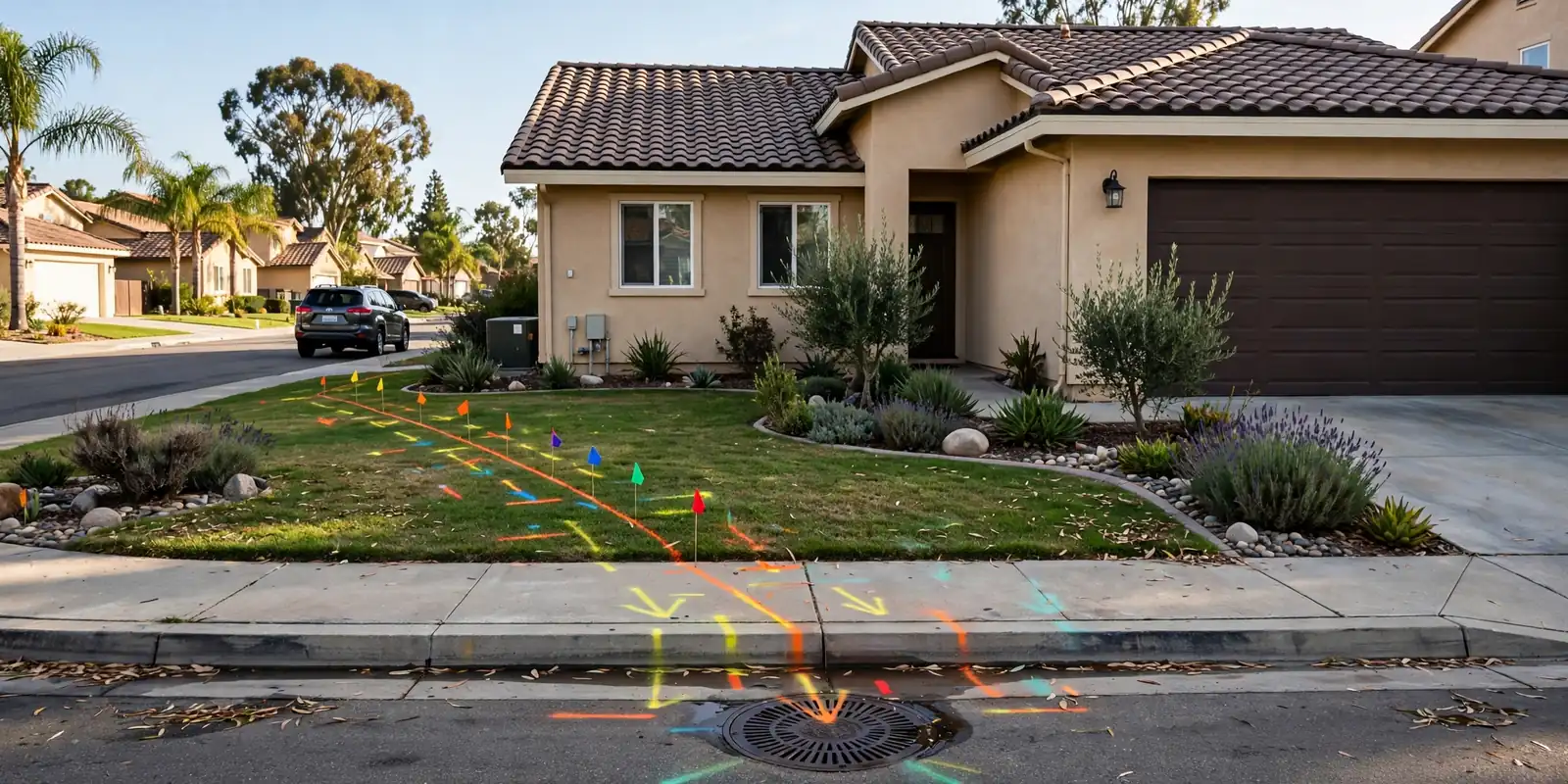
The owner pays for the private lateral — all of it, including the part that runs under the street. The County maintains only the public main.
Need help with your sewer line?
Call Now to reach a local sewer professional. Describe the problem, where it is, and what the line has been doing.
Hours: Mon–Fri 7:00 AM–10:00 PM PT · Sat 8:00 AM–10:00 PM PT · Sun 7:00 AM–9:00 PM PT
The rule in one paragraph
The property owner is responsible for the entire private sewer lateral, including the portion beyond the property line in the public right-of-way. That is the rule stated by LA County Public Works, and it is the rule that decides who pays for a lateral repair or replacement in Rancho Palos Verdes. The lateral is the pipe that connects the house to the public sewer main, and it belongs to the owner from the house to the main, including the connection at the main. The public main itself is maintained by the County, and the line between the two is the connection point: everything on the house side of that connection is the owner's, and the main itself is the County's.
The rule surprises many homeowners, because the part of the lateral under the street or the sidewalk does not feel like part of the house. It runs under public ground, and the owner cannot dig it up without a permit and an approved connection. But the responsibility follows the pipe, not the ground above it. The owner is responsible for the pipe that serves the house, wherever that pipe runs, and the County is responsible for the main that serves the neighbourhood. A lateral that fails under the street is the owner's repair, even though the street above it belongs to the public.
The practical consequence is that a lateral problem is handled by the owner calling a professional, not by calling the County. The County will confirm where the main is and what the connection requirements are, and the County will inspect the connection, but the County will not repair the lateral. The owner arranges the camera inspection, the owner authorises the repair or replacement, and the owner keeps the records. Knowing that before the first backup arrives is worth a great deal, because the first backup is a bad time to learn who owns the pipe.
What the private lateral includes
The private lateral starts at the house, where the drains inside the building join into a single pipe that leaves the foundation. It runs across the lot, under the yard, the driveway, or the walkway, to the property line, and then continues beyond the property line, under the sidewalk or the street, to the public main. The whole run is one pipe system, and the whole run is the owner's. The connection at the main — the fitting where the lateral joins the main — is part of the lateral, and it is the owner's responsibility too, including the condition of that connection and any repair it needs.
The lateral also includes the cleanout, where one exists. A cleanout is an access point on the lateral, usually a capped pipe at or near ground level, and it is the way the crew reaches the line for a camera inspection, a clearing, or a lining job. A cleanout that is buried, broken, or missing is the owner's to repair or install, because it is part of the lateral. A lateral without a usable cleanout is a lateral that is harder and more disruptive to work on, and the camera inspection is the step that shows whether the existing access will do.
The lateral does not include the public main, and it does not include the part of the system beyond the connection. The main is a larger pipe that carries wastewater from many laterals, and it runs under the street. The manholes on the main, the trunk lines that carry flow to treatment, and the pump stations on the public system are all County responsibilities. The owner's pipe ends at the main, and the County's pipe begins there. The camera inspection shows the connection, and the footage of the connection is the record of where one responsibility ends and the other begins.
What the County maintains
Most of the sewer system in Rancho Palos Verdes is maintained by the LA County Consolidated Sewer Maintenance District, and the public main is part of that system. The District maintains the mains, the manholes, and the public parts of the system, and it responds to problems in the main itself — a blockage in the main, a break in the main, or a manhole problem. The District's work is funded by the sewer service charges on the property tax bill, and the District's crews are the ones who open a manhole in the street, not the ones who open a lateral in a yard.
The LA County Department of Public Works is the agency behind the District, and its published guidance states the responsibility split in plain terms: the property owner is responsible for the house lateral, including the pipe that connects from the public sewer main to the house. That guidance is the source for the rule on this page, and it is the answer the County gives when a homeowner asks who owns the pipe under the street. The Department also holds the records of the public system, including the location and depth of the main, and those records are used when a new connection is designed or an existing connection is repaired.
The Abalone Cove system is the exception to the County pattern, and it is the only system in the City owned, operated, and maintained by the City itself. Every other part of the public system in Rancho Palos Verdes belongs to the County Sanitation Districts or the Consolidated Sewer Maintenance District. A homeowner in Abalone Cove has a different maintenance picture from a homeowner elsewhere in the city, and the Abalone Cove guide on this site explains that system in detail. Everywhere else, the split is the same: the owner owns the lateral, and the County owns the main.
How the split is decided in practice
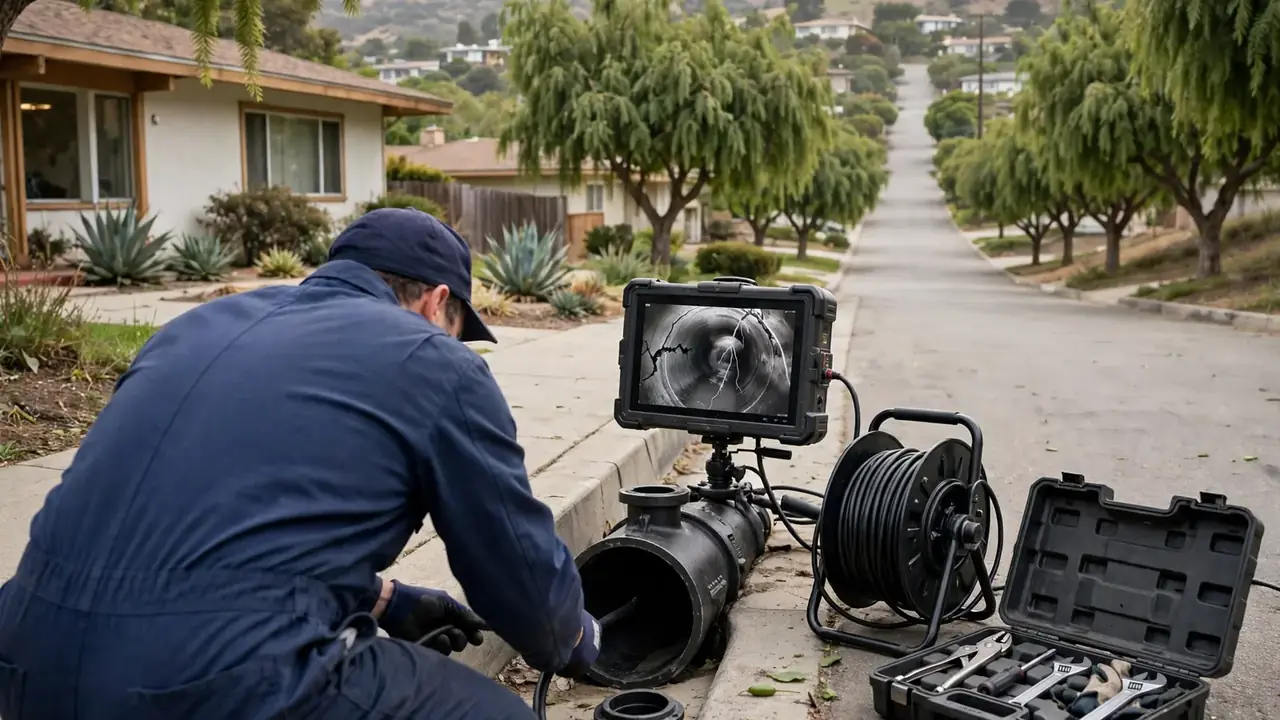
In practice, the split is decided by the camera inspection and the location of the problem. The camera runs from the house to the main, and the operator notes where each defect is: in the lateral on the lot, in the lateral under the street, or at the connection to the main. A defect in the lateral, wherever it sits, is the owner's repair. A defect in the main itself is the County's. The locator marks each defect on the surface, with the depth, and the marks show whether the problem is on the owner's side of the connection or the County's side of it.
A backup is the moment the split matters most, and it is also the moment it is hardest to see. A backup in the lowest drain of the house can be caused by a blockage in the lateral, a blockage in the main, or both. The way to tell is the camera: if the lateral is clear to the main and the main is blocked, the problem is in the main, and the County should be called. If the lateral is blocked before the main, the problem is in the lateral, and the owner arranges the repair. A homeowner who calls the County first and finds the problem is in the lateral has lost time, and a homeowner who calls a professional first and finds the problem is in the main has spent money on a camera inspection that points at the County. Either way, the camera is what decides, and the inspection is worth having before anyone is blamed.
The connection at the main deserves attention, because it is the place where the two responsibilities meet and where the most confusion arises. A connection that has shifted, cracked, or separated can let roots in and let water out, and it can look like a main problem from the street and a lateral problem from the house. The camera shows the connection from inside the lateral, and the County can inspect the main from the manhole. The two views together show the whole picture, and the repair is planned from that picture. A connection repair needs County approval, and the approval should be in hand before the work reaches the main.
What this means for a buyer, a seller, and a neighbour
A buyer should know the rule before the purchase closes, because the lateral is part of what the buyer is buying. A camera inspection before purchase shows the condition of the whole lateral, including the part under the street, and the buyer who has that footage knows what the lateral will need and when. A buyer who does not have it is buying a pipe whose condition is unknown, and the first backup after the purchase is the moment the rule is learned. The City recommends a lateral inspection on transfer of ownership if no inspection or replacement has taken place in the prior ten years, and that recommendation exists because the lateral is old, buried, and entirely the owner's.
A seller should know the rule too, because the lateral is part of what the seller is selling. A seller who can show a recent scope or a recent replacement takes a question off the table before the buyer asks it. A seller who has had backups, or who has had the line cleared repeatedly, knows something about the lateral that the buyer needs to know, and the disclosure should include it. A lateral that is disclosed is a problem that can be dealt with in the sale. A lateral that is hidden is a dispute waiting to happen, and the dispute will be about who pays for a pipe that the rule already assigns to the owner.
A neighbour should know the rule because a lateral problem can cross a property line. Water leaking from a failed lateral can soften the ground under a neighbour's lot, and a backup in one house can be caused by a blockage in a shared connection. The rule assigns the lateral to its owner, and the owner of the failing lateral is the one who arranges the repair, even when the effects are felt next door. The camera inspection shows where the problem is and whose lateral it is, and the repair is planned from that picture. A neighbour who reports a problem should report it to the owner of the lateral, and the owner should have the camera inspection that shows whether the report is right.
Paying for the work and keeping the record
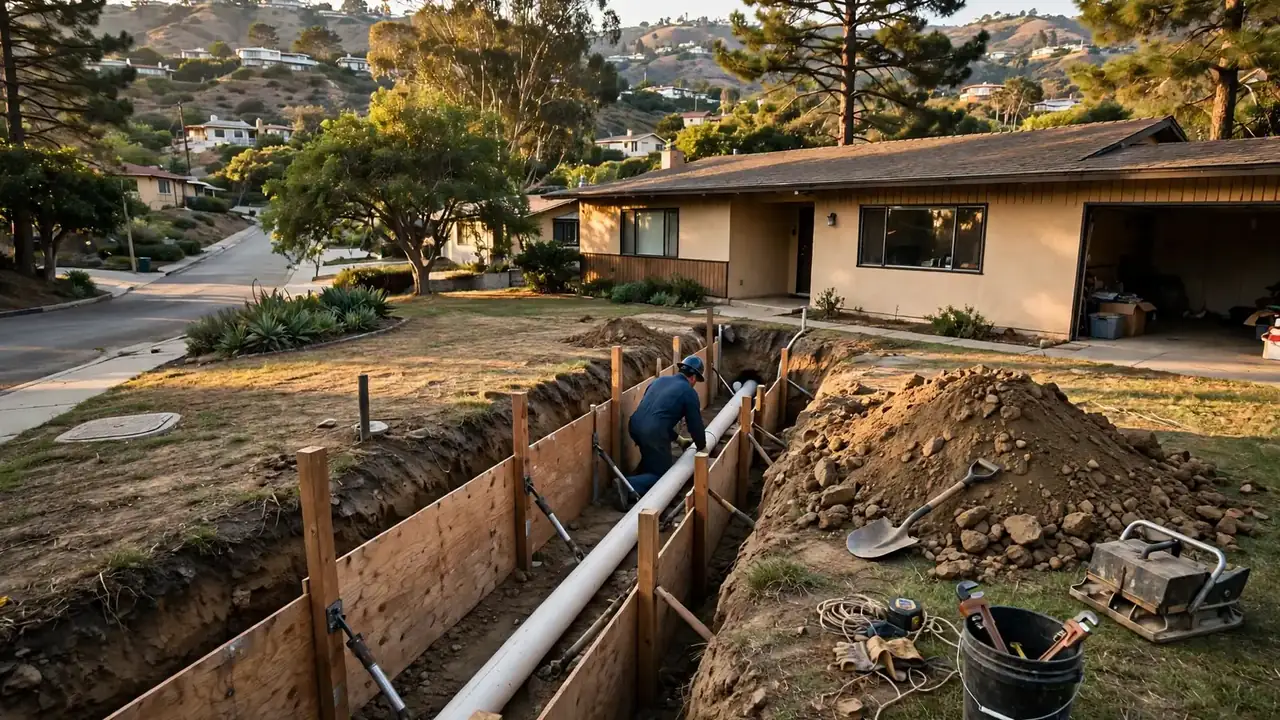
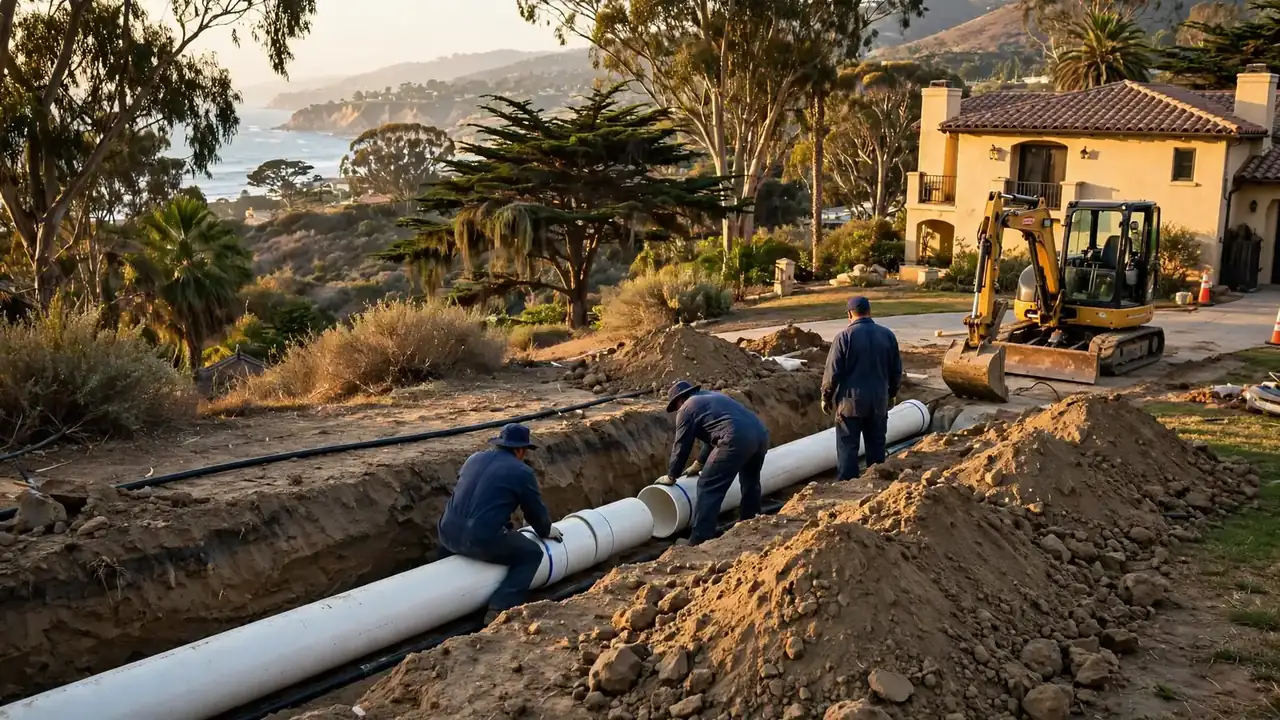
The owner pays for the lateral work, and the owner should plan for it as a property cost, not as a surprise. A lateral replacement is a substantial job, and a lining or bursting job is smaller but still a real cost. The owner should get the camera findings first, understand the method chosen from those findings, and keep the written account of the work. The cost factors are the length of the line, the depth, the access, the slope, the rock, the permits, and the restoration of the ground above the line. No two laterals have the same combination of those factors, and the work should be priced from the findings on that lateral, not from a general figure.
The record of the work is as important as the work itself. The camera footage before the work, the written findings, the permit, the inspection records, and the camera footage of the finished lateral should be kept together with the house file. Those records show that the lateral was inspected, that the repair was permitted and inspected, and that the finished line is sound. They are useful for the next owner, for the insurer, and for any later work on the line. A lateral that has been inspected and documented is a known quantity, and a lateral that has not been inspected is a guess.
The owner should also keep the record of the connection at the main, because that connection is the part of the lateral that the County will ask about if it is ever disturbed. The footage of the connection, the permit for the work, and the County approval for the connection are the records that show the lateral joins the main correctly. A connection that was made without approval, or a lateral that was replaced without a permit, has no such record, and the next owner who asks about it will find nothing to show. The rule is simple: the owner owns the lateral, the owner pays for it, and the owner keeps the record of it.
Services for this situation
Related guides
 Signs Your Sewer Line Is Failing
Most Rancho Palos Verdes laterals were laid decades ago in clay, cast iron, or bituminous fiber. These are the signs that yours is...
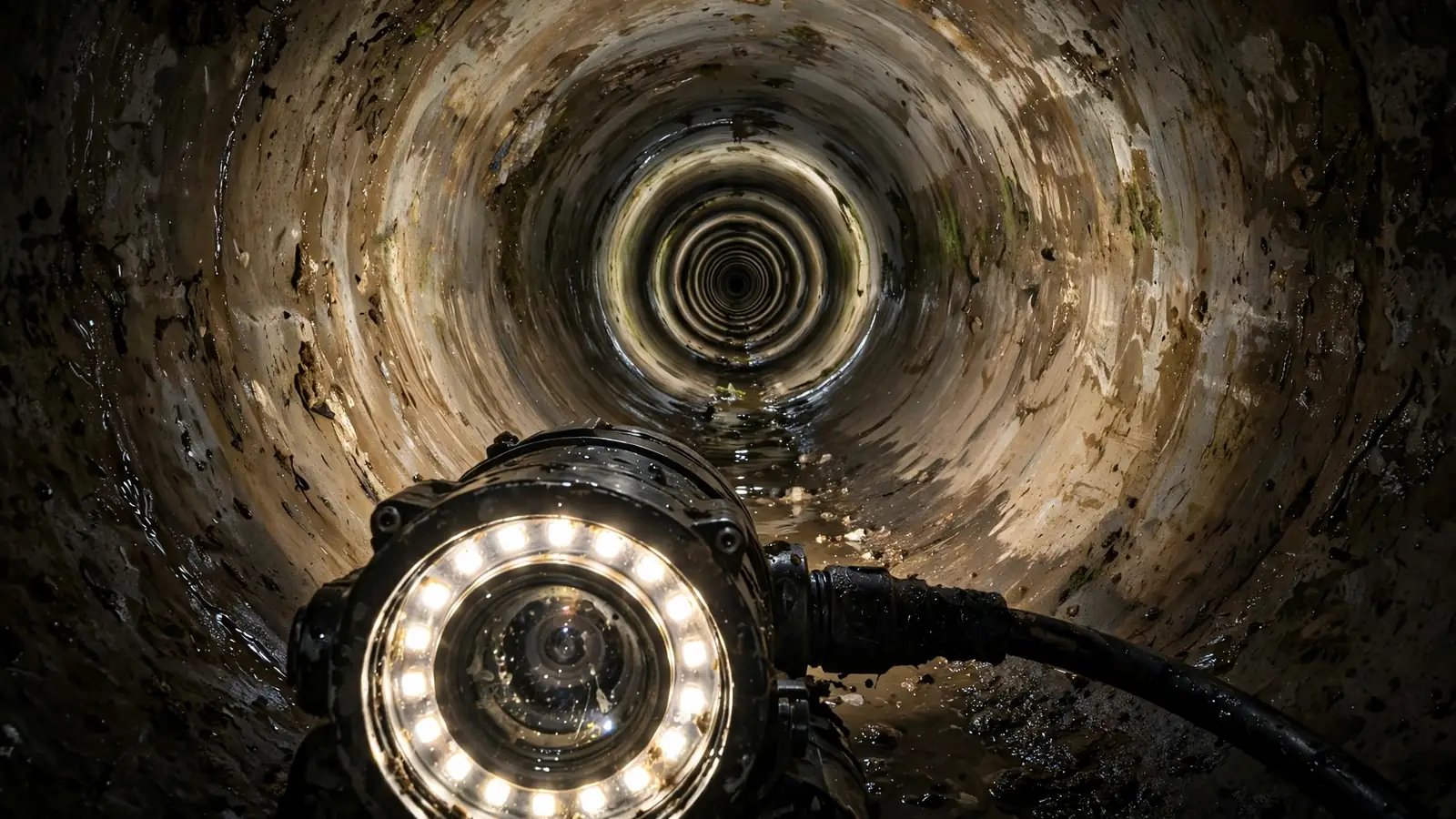 What a Camera Inspection Shows
A camera inspection shows the inside of your lateral — the material, the damage, and the location — so the fix matches the problem...
 Slow Drains vs Main Line Problem
One slow drain is usually a local clog. Several slow drains at once mean the lateral. Here is how to tell the difference in a Ranc...
Frequently asked questions
Questions people ask about who pays for the sewer lateral, answered plainly.
The property owner is responsible for the entire private lateral, including the portion beyond the property line in the public right-of-way. LA County Public Works maintains only the public main. The connection at the main is part of the lateral, and it is the owner's responsibility too.
The owner pays. The responsibility follows the pipe, not the ground above it, so a lateral that fails under the street or the sidewalk is still the owner's repair, even though the street above it belongs to the public.
The LA County Consolidated Sewer Maintenance District looks after most of the public system here, working under the County Department of Public Works. Its crews handle the mains, the manholes, and the public side of the network, while the private lateral stays the owner's job.
Only the camera can settle it. When the lateral runs clear all the way to the main and the blockage sits beyond that point, the trouble is in the public main and the County is the call to make. When the camera finds the blockage before the main, the lateral is the problem and the owner arranges the fix.
Yes, it stands alone in the city: the City itself owns and runs it, while the rest of Rancho Palos Verdes drains to County systems. Its low-pressure design, grinder pumps, and lift stations work differently from a gravity main, and the Abalone Cove guide on this site walks through it in full.
Yes. The connection at the main is where the private lateral meets the public system, and it has to be made in a way the County accepts. The approval should be in hand before the work reaches the main.
Keep a small file: the camera recording from before the work, the written findings, the permit and inspection notes, and the recording of the finished line. That file proves the lateral was examined, the repair was approved and checked, and the completed pipe is sound.
Sewer line trouble in your Rancho Palos Verdes home?
Call Now to reach a local sewer professional. Describe the problem, where it is, and what the line has been doing.
Call now for sewer line help
Tap Call Now to reach a local sewer professional. Tell them where the problem is, what the line has been doing, and whether wastewater is coming into the home.
Hours: Mon–Fri 7:00 AM–10:00 PM PT · Sat 8:00 AM–10:00 PM PT · Sun 7:00 AM–9:00 PM PT
Before you call
- Stop using water if the line is backing up.
- Keep people and pets away from any wastewater.
- Note which drains are slow, and which one backs up first.
- Note whether the problem happens in heavy rain, or all the time.
- Have the age of the home ready, if you know it.