Signs Your Sewer Line Is Failing in Rancho Palos Verdes, CA
Most Rancho Palos Verdes laterals were laid decades ago in clay, cast iron, or bituminous fiber. These are the signs that yours is failing — and what a camera inspection shows before any work starts.
Rancho Palos Verdes Sewer Line Pros · 2026-11-17 · Signs & Symptoms
The short version
Problem: Several drains slowing at once, a backup in the lowest drain, or a sewer smell that will not go away point to the lateral, not to a single fixture.
What to do: A wet or unusually green strip in the yard, cracks in the ground, or repeat cleanings that do not hold are further signs the pipe itself has failed.
When to call: Call Now if wastewater is coming into the home, or have the line camera-inspected so the fix is chosen from what the camera found.
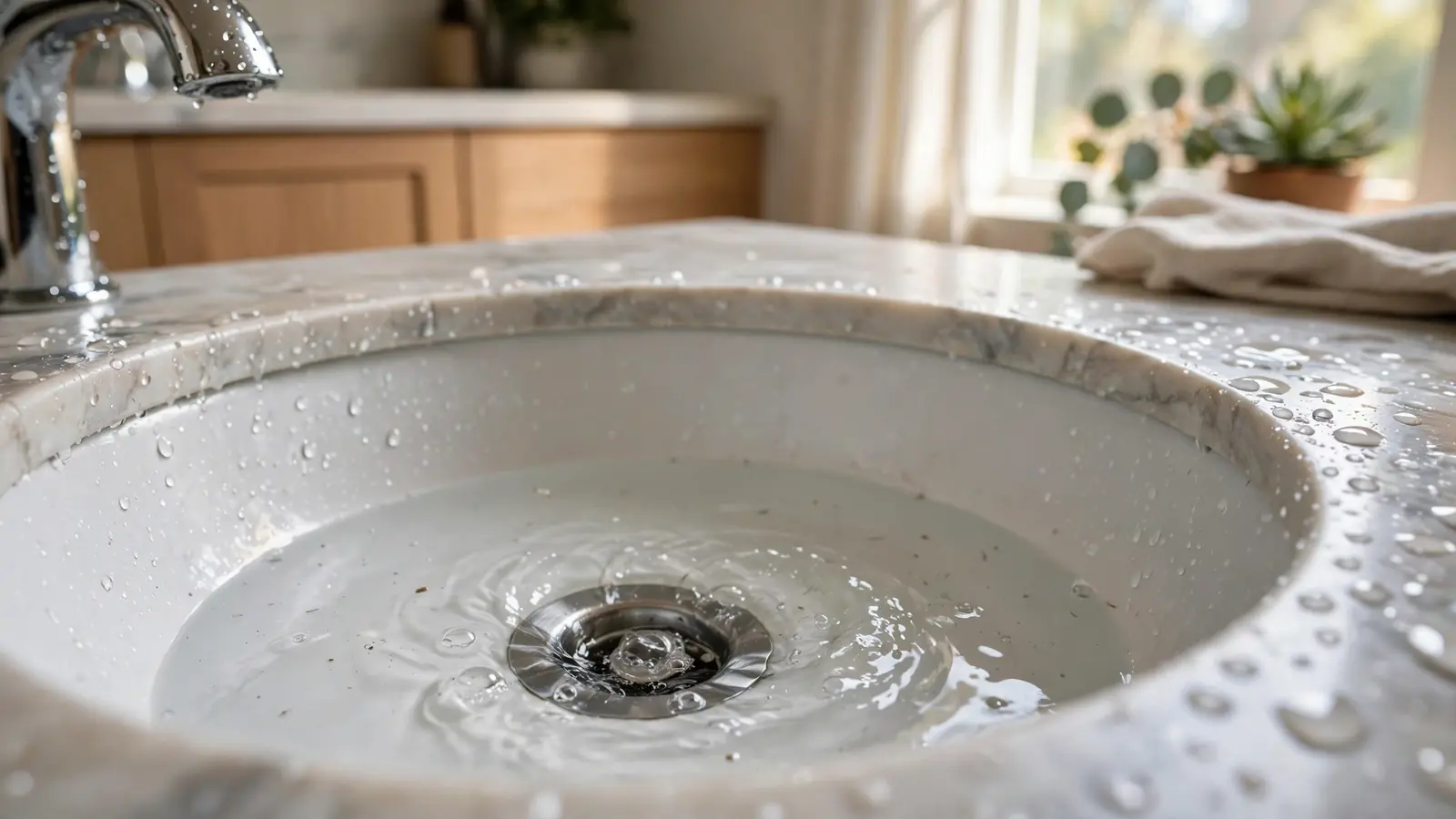
Several drains slow at the same time
A single slow drain is usually a local problem. Hair in a shower drain, soap buildup in a bathroom sink, or grease in a kitchen drain will slow one fixture while the rest of the house drains normally. Several drains slowing at the same time is a different problem. It means the lateral, the pipe that carries everything out of the house to the street main, is not draining as it should, and every fixture that feeds into it feels the restriction together. A homeowner who notices the pattern early can have the line inspected while the drains still work, rather than waiting for the restriction to grow into a backup that needs urgent help.
In Rancho Palos Verdes, the usual cause is an old lateral. The median year homes here were built is 1967, and more than four in five homes date from before 1980. Those laterals were laid in clay tile, cast iron, or bituminous fiber, and each of those materials fails in its own way after decades underground. Clay joints open and let roots in. Cast iron corrodes and narrows from the inside. Bituminous fiber softens and sags. Any of those failures narrows the line, and a narrowed line slows every drain in the house. Clay joints in a 1960s lateral have had decades to open, and a root mat that narrows the line by half will slow every fixture that drains into it, even when no single fixture looks blocked.
The pattern is worth watching closely. Run water in two fixtures at once and watch the lowest drain in the house. If a toilet gurgles when the washing machine drains, or a shower drains slowly only when another fixture is running, the lateral is the likely cause. A plunger will not fix a lateral problem, because the restriction is not in the fixture. It is in the line under the yard, and a camera inspection is the step that shows where it sits and how far it has gone. Watching the lowest drain during the test gives the clearest result, because that drain is the first to rise when the lateral cannot carry the flow from the rest of the house.
A gurgling toilet or a backup in the lowest drain
The lowest drain in a Rancho Palos Verdes home is usually a floor drain, a shower on the lowest level, or a toilet that sits lower than the rest of the house. When the lateral cannot carry the flow, wastewater comes back through that lowest opening first. A backup that appears when the washing machine runs, after a shower, or while the dishwasher is draining is a lateral problem until a camera proves otherwise, because the water has nowhere else to go. Gurgling that appears only when the washing machine runs is a useful clue, because the machine sends a large volume of water into the line in a short time and overwhelms a narrowed lateral first.
Gurgling is the earlier version of the same warning. Air trapped in a partly blocked lateral pushes back through the water in a toilet bowl or a sink trap, and the sound is the air escaping. A toilet that gurgles when a nearby sink drains, or a shower drain that bubbles when a toilet is flushed, is telling the homeowner that air and water are not moving easily through the lateral. The sound may come and go, and it may seem minor, but it is one of the clearest early signs a lateral is failing. A backup that returns after a clearing is a sign the pipe itself has failed, because clearing removes the blockage while leaving the crack, the belly, or the open joints that caused it.
A backup is not a problem to live with. Stop using water in the house, keep people and pets away from any wastewater, and call for help. The urgent work is to clear the line and restore flow. The lasting fix comes after the camera inspection, which shows whether the line needs a spot repair, lining, bursting, or a full replacement. A backup that happens more than once is a line that has failed, not a line that is merely blocked. Keeping people away from wastewater matters because the water that comes back through a drain has travelled through the sewer, and it should be treated as contaminated until the line is cleared.
A sewer smell that will not go away
A sewer smell in the house has several causes, and the first check is the simplest one. Run water into every drain, especially a floor drain and any drain that is rarely used. A trap that has dried out lets sewer gas up into the house, and running water refills it. If the smell stops after the traps are filled, the trap was dry, and the fix is to keep water in it by running that drain regularly. A trap that dries out in a guest bathroom can smell for weeks before anyone traces it, so running water into rarely used drains is a habit worth keeping in a Rancho Palos Verdes home.
If the smell persists after the traps are filled, and it is strongest at the lowest drain in the house, the lateral is the likely source. A cracked section lets gas out into the soil and back into the house, and a bellied or partly blocked line pushes gas back when water is used elsewhere. The smell comes and goes with water use, strong after a shower or a load of laundry and faint at other times. That pattern points to the line, not to a trap or a vent. A smell that grows stronger after a shower points to the lateral, because water moving through a damaged line pushes gas ahead of it and back through the lowest drain in the house.
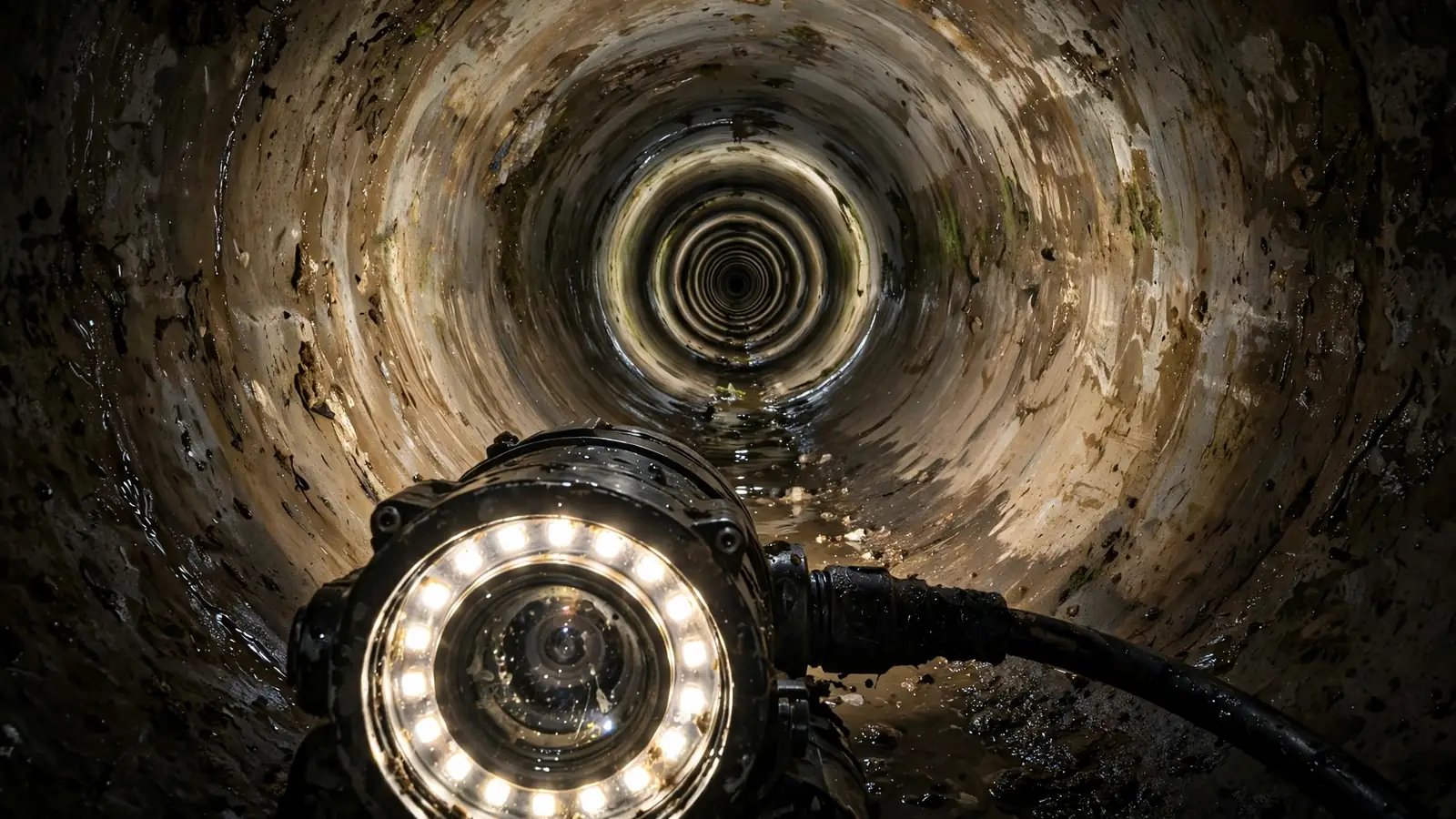
A camera inspection is the step that finds a lateral problem behind a smell. The camera shows cracks, open joints, and bellies, and whether the line is clear to the street main. A smell with no lateral problem points to the indoor drains or the vent system, and the crew explains what the camera ruled out. A persistent sewer smell should be checked, not ignored, especially if it comes with slow drains or a backup. The camera shows a crack as a dark line across the pipe wall, and the locator marks its position on the surface, so the crew knows exactly where the gas is escaping from.
A wet or unusually green strip in the yard
A lateral that leaks does not always announce itself inside the house. A crack in the line lets wastewater out into the soil, and the soil above the leak stays wet, or the grass above it grows greener and faster than the rest of the lawn, fed by the nutrients in the wastewater. A wet or unusually green strip in the yard, running from the house toward the street, is a sign of a leaking lateral, and it follows the line. A green strip that follows a straight line from the house toward the street is hard to mistake for a sprinkler problem, because sprinklers water a wide area and a leaking lateral feeds a narrow band above the pipe.
The strip follows the lateral because the lateral runs in a straight line from the foundation to the street main. In Rancho Palos Verdes, the laterals are old, and the joints are the usual leak point. Clay joints open as the mortar crumbles, bituminous fiber joints separate as the pipe sags, and cast iron develops cracks as it corrodes. The leak also washes soil into the pipe, which undermines the bed under the line and lets a section settle or separate further. A leaking joint also lets soil wash into the pipe, and the soil that washes in leaves a void under the line that lets the next section settle and open further.
A wet patch in the yard is worth a camera inspection, even if the drains work fine. The camera shows the crack or the open joint, and the locator marks its position and depth on the surface. A leaking lateral that is left alone does not heal. The leak grows, the soil washes out, and the section settles further. The fix is in the pipe, and the camera is what shows which fix fits. The locator reading gives both the position and the depth of the leak, so a repair can be planned for the right spot instead of digging along the whole run from the house to the street.
Cracks, ground movement, and repeat cleanings
Rancho Palos Verdes sits on a peninsula of hills and slopes, and ground movement is part of life here. A lateral under a hillside home moves with the ground, and a pipe that was laid straight can be pulled apart at a joint or bent into a low spot by slow movement over decades. Cracks in a driveway, a walkway, or a patio above the line, or a section of ground that has settled in a line from the house toward the street, can be signs that the soil under the surface has shifted and the pipe with it. Cracks in a patio above the lateral are worth noting, because a slab that has shifted may be sitting over soil that has moved, and the pipe under that soil has moved with it.
The Portuguese Bend area is the extreme version of this, where the ground has moved enough to affect utilities, but smaller movement happens across the city, on slopes in Seaview, Crestridge, Mira Catalina, and other hillside neighborhoods. A lateral does not need a landslide to fail. Ordinary settlement, fill that was never fully compacted when the home was built, and the slow creep of a slope are enough to open a joint or belly a section over fifty years. Hillside homes in Seaview and Crestridge sit on ground that creeps slowly downhill, and a lateral under that ground is pulled a little further out of line with every passing year.
A sewer line that needs cleaning more than once in a year is telling the homeowner something. Cleaning clears the blockage, but it does not fix the pipe. If the pipe is cracked, bellied, or so root-filled that the joints have all opened, the problem will come back, because the cause is still there. A line that fails again within months of a cleaning is a line that needs a camera inspection, not another cleaning. A line that has been cleaned twice in a year and still blocks is a line whose joints have opened along its length, and each cleaning buys less time than the last one did.
Related: Old Pipes in Rancho Palos Verdes · Sewer Camera Inspection · sewer line repair across Rancho Palos Verdes
Related guides
 Signs & Symptoms
Sewer Smell in the House in Rancho Palos Verdes, CA
A sewer smell in the house usually starts with a dry trap. When the smell persists after the traps are filled, the lateral is the next place to look — and a camera inspection finds it.
 Signs & Symptoms
Slow Drains vs Main Line Problem in Rancho Palos Verdes, CA
One slow drain is usually a local clog. Several slow drains at once mean the lateral. Here is how to tell the difference in a Rancho Palos Verdes home — and what to do next.
 Guides
What a Sewer Camera Inspection Shows in Rancho Palos Verdes, CA
A camera inspection shows the inside of your lateral — the material, the damage, and the location — so the fix matches the problem instead of the guess.
Frequently asked questions
Questions people ask about this topic, answered plainly.
Usually several drains slowing at once, or a toilet that gurgles when another fixture is running. A single slow drain is usually a local clog, while several slow drains point to the lateral. A camera inspection confirms which one it is, and shows the material and the damage.
Yes. A lateral can be near failure without any visible symptom. The drains work, the lowest level stays dry, and the first backup comes without warning. That is why a camera inspection matters for a home built in the 1960s or 1970s, even when nothing seems wrong.
Not always. A wet patch can come from a water line, a downspout, or groundwater. But a wet or unusually green strip running from the house toward the street, above the lateral, is a strong sign of a leaking sewer line, and a camera inspection confirms it.
A partly blocked lateral can handle a small flow and fail under a larger one. One fixture at a time drains fine, while a shower and a washing machine together overwhelm the narrowed line. The pattern points to the lateral, and the camera shows the restriction.
A single slow drain is usually a local clog, and it is worth clearing that fixture first. If the slowness spreads to other drains, or if the same drain keeps slowing after clearing, have the lateral camera-inspected. The inspection shows whether the problem sits in the fixture or in the line.
Hillside ground in Rancho Palos Verdes moves slowly over time, and a lateral moves with it. Settlement and slope creep can open joints, belly sections, and separate connections. The camera shows the shape of the line, and the locator marks where it has shifted.
Still have questions?
Call Now to reach a local sewer professional — describe the problem and what the line has been doing.
Call now for sewer line help
Tap Call Now to reach a local sewer professional. Tell them where the problem is, what the line has been doing, and whether wastewater is coming into the home.
Hours: Mon–Fri 7:00 AM–10:00 PM PT · Sat 8:00 AM–10:00 PM PT · Sun 7:00 AM–9:00 PM PT
Before you call
- Stop using water if the line is backing up.
- Keep people and pets away from any wastewater.
- Note which drains are slow, and which one backs up first.
- Note whether the problem happens in heavy rain, or all the time.
- Have the age of the home ready, if you know it.