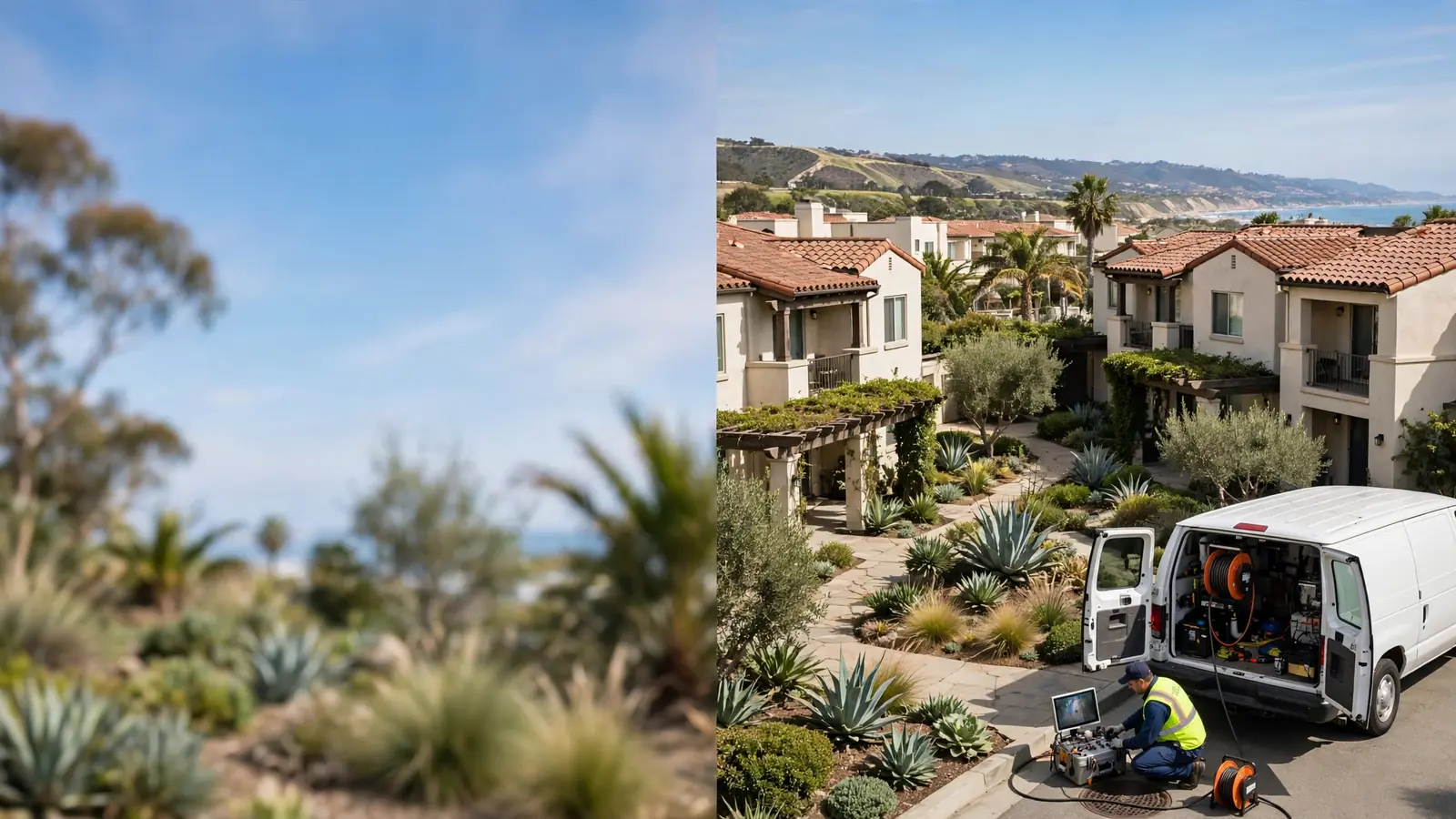
Sewer Line Repair for HOA & Multi-Family Properties in Rancho Palos Verdes, CA
A sewer problem in a condo complex or HOA community is never one household's problem. The line is shared, the responsibility is split, and the decision has to be made together.
Need help with your sewer line?
Call Now to reach a local sewer professional. Describe the problem, where it is, and what the line has been doing.
Hours: Mon–Fri 7:00 AM–10:00 PM PT · Sat 8:00 AM–10:00 PM PT · Sun 7:00 AM–9:00 PM PT
Who owns what in an HOA sewer system
A multi-family property has more than one kind of pipe, and the first job is sorting out which kind is failing. Inside each unit there are branch drains that serve that unit alone. Outside, those branches join a shared lateral that carries wastewater from several units to the street main, and in a larger complex there may be several shared laterals, a shared main inside the property, and a connection at the street. The governing documents of the association — the CC&Rs, the bylaws, and the maintenance matrix, where one exists — state which parts belong to the individual owner and which parts belong to the association, and that split is the starting point for every decision about the work.
In most associations, the owner is responsible for the drains inside the unit and the association is responsible for the shared lateral outside it, but the line between the two is not the same in every community. Some documents put the lateral from the building wall outward in the association's hands. Others put the whole lateral, including the connection at the street main, on the association. A few older documents say nothing clear about the lateral at all, and the board has to interpret them with advice before authorising work. The camera inspection is useful here too, because it shows exactly where the problem is — inside one unit, in the branch from that unit, or in the shared lateral — and that location decides whose responsibility it is under the documents.
The split matters because the money follows it. A repair to a shared lateral is usually paid from association funds, and a large replacement may need a board vote, a reserve study, or a special assessment, depending on the documents and the amount. A repair inside one unit is usually the owner's cost. A backup that affects several units at once is usually a shared-lateral problem, and the association acts first and sorts out the accounting after the flow is restored. The documents should be read before the work is authorised, and the camera findings should be kept with the board minutes, because the next board will need the same record. The board should read the maintenance matrix with the manager before authorising any lateral work, because the matrix is the document that states the split in plain terms. Where the documents are silent or unclear, the board should get advice before spending association funds, as a repair paid from the wrong account can be challenged by an owner. The camera findings, the documents, and the board decision should be recorded together, so the next board inherits the reasoning rather than only the bill.
Shared laterals and how they fail
A shared lateral carries more flow than a single-family lateral, and it carries it from more than one household at once. Morning showers, evening laundry, and dishwashers in several units can peak at the same time, and a lateral that was sized for the building when it was built may be working harder now than it was designed to. The pipe stock is the same as the rest of Rancho Palos Verdes — clay tile and cast iron in buildings from the 1950s, 1960s, and 1970s, with bituminous fiber in some tracts — and the failure pattern is the same: joints open, roots enter, cast iron corrodes and narrows, and the ground settles into bellies. The difference is that one failure affects several homes at once.
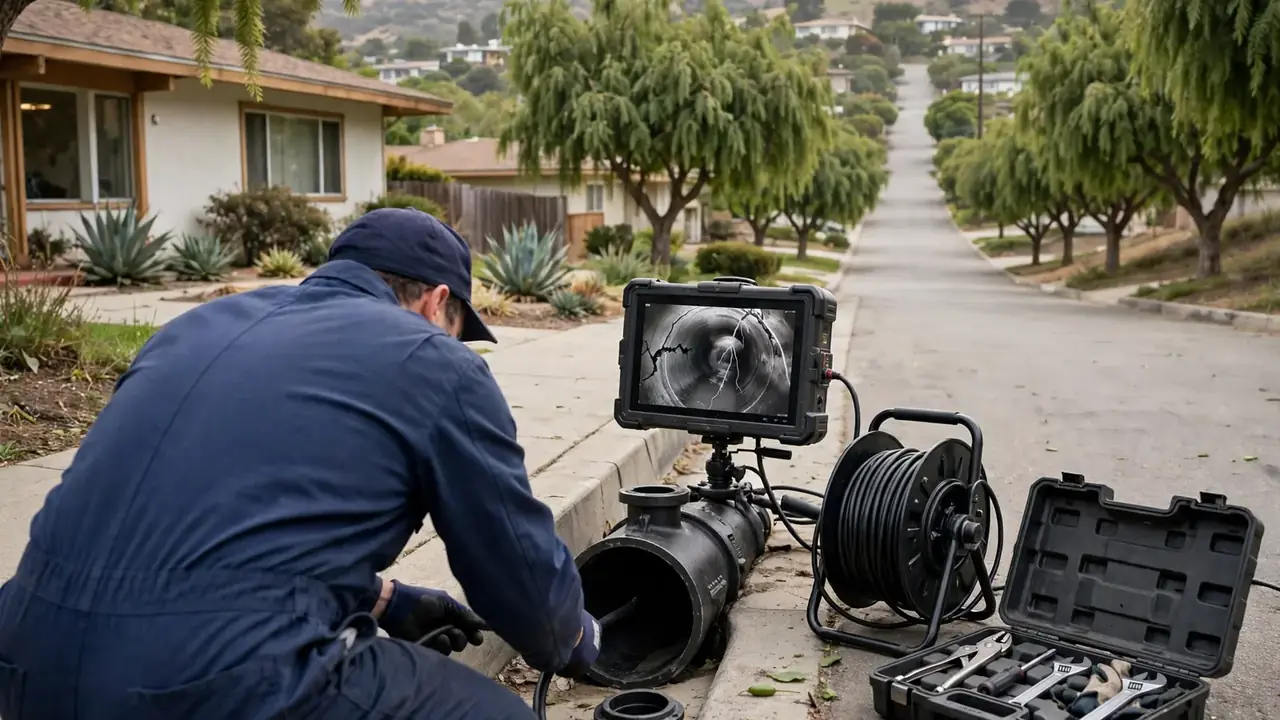
A backup in a shared lateral shows up in the lowest units first. Wastewater comes up through a ground-floor toilet or a floor drain, or several units report slow drains at the same time. The residents of the upper units may notice nothing, because their water still drains away — into the shared lateral, where it has nowhere to go, and then back into the lowest unit. That pattern is the signal that the problem is in the shared line rather than in one unit's drains. The camera inspection confirms it by running from the cleanout to the street main and showing the condition of the shared lateral section by section.
Roots are a particular problem for shared laterals in Rancho Palos Verdes, because the complexes are landscaped with mature trees — eucalyptus, pepper trees, and other large species whose roots seek water. A clay lateral with open joints under a landscaped common area is an open invitation, and the roots from several trees can enter the same lateral at different joints. Hydro jetting clears the roots, but the roots return through the same openings, and the lasting fix is a repair that seals the joints — lining, bursting, or replacement — rather than another clearing. The camera shows how many joints are open and how far the roots have spread, and the plan is built from that picture. Peak flow is the hidden load on a shared lateral. A line sized for the building when it was built may now carry more water at peak times, because households use more water than they did decades ago, with larger washers, dishwashers, and additional bathrooms. A camera inspection during a quiet period shows the pipe, but the backup during a busy morning shows the load, and the two together tell the board whether the problem is the pipe, the load, or both. A line that is sound but undersized needs a different answer from a line that is damaged.
How the work is planned around residents
Work on a shared lateral has to be planned around the people who live above it. Water use in the affected units is paused while the line is open, and the residents need to know when that pause starts, how long it lasts, and what to do in the meantime. The board or manager tells the residents, the crew tells the board what to expect, and the schedule is set so the pause is as short as the work allows. A lining job through a cleanout may pause water for hours. A full replacement may pause it for longer, and the residents may need access to another restroom in the complex while the work runs.
Access is arranged through the manager. The crew needs to reach the cleanouts, the lowest units, and the ground above the lateral, and that ground is common area — landscaping, walkways, parking, and patios that belong to the association. The work plan states which areas will be opened, how they will be protected, and how they will be restored, and the board approves that plan before the work starts. A trench through a courtyard or a parking area affects every resident who uses it, and the restoration has to leave the common area usable, not only the pipe fixed.
The documentation matters more in a multi-family job than in a single-family job, because more people rely on it. The camera footage before the work, the written findings, the method chosen and why, the footage of the finished line, and the restoration plan are kept together as the record of the job. The next board, the next manager, and any insurer who asks about the sewer will need that record. A shared lateral that has been inspected and documented is a known quantity, and a board that knows its condition can plan the next repair before it becomes a backup in a ground-floor unit. Notice is part of the job. Residents should be told in writing when the water will be off, how long the shutoff is expected to last, and where they can use a restroom in the meantime. The notice should go out early enough for residents to plan around it, and it should be updated if the schedule changes. A resident who is surprised by a shutoff is a resident who will use water during it, and water used during an open-line job is water that flows into the work area. Clear notice protects the work as much as it protects the residents.
Condo complexes, townhomes, and large coastal properties
Rancho Palos Verdes has several kinds of multi-family property, and each brings its own sewer pattern. Condo complexes from the 1960s and 1970s have shared laterals under landscaped common areas, with units stacked or clustered around courtyards. Townhome developments have laterals that run under driveways and patios, with each row sharing a connection. Large coastal properties — resort-scale properties of the kind found around the Terranea area, golf club properties, and other commercial-scale sites on the coast — have longer runs, larger-diameter pipe, lift stations or ejector systems where the ground falls away, and a much higher daily flow. The pipe stock is similar across all of them, but the scale, the access, and the consequence of a failure are very different.
A large coastal property needs a plan that a single-family home does not. The system may include grease handling from kitchens, high-use restroom lines, and sections that run under parking areas or landscaped slopes where excavation is disruptive and expensive. The work is planned around the property's operating hours, so that guest areas, dining areas, and restrooms stay open while the crew works, and the camera inspection is done first so the method is chosen from the findings rather than from a guess. A property of that scale also has more than one lateral and more than one connection, and the inspection has to map all of them, not only the one that backed up.
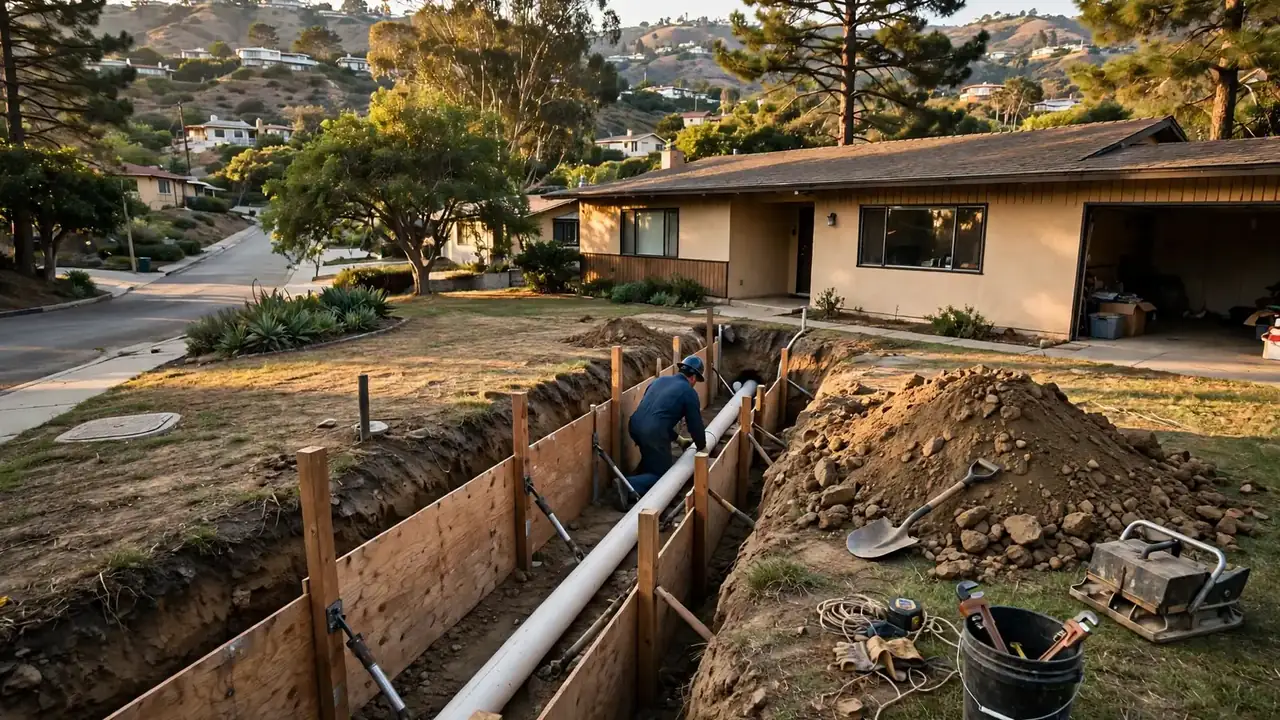
Townhomes and condos have a different trap: the lateral that serves one row may run under a neighbour's patio or driveway, and the work needs access through ground that belongs to another owner or to the association. The governing documents and the easements state who can open that ground, and the work plan has to follow them. The crew maps the lateral first, marks the depth and the path, and explains which surfaces will be opened and how they will be restored, before any digging starts. A multi-family lateral that crosses property lines is a legal question as well as a plumbing question, and the documents are read before the shovel goes in. Easements decide access on a multi-family lot. A lateral that runs under a neighbour patio or driveway can only be opened if an easement or the governing documents allow it, and the work plan has to state which easement applies and what restoration follows. The board should confirm the easement before the crew arrives, because a crew that opens ground without the right to do so creates a dispute that outlasts the repair. The easement, the map, and the restoration plan belong in the file with the camera footage.
Preventing the next shared backup
The shared backup that never happens is the one that costs the least, and prevention in a multi-family property is a schedule, not a single job. A camera inspection of the shared laterals every few years shows the joints, the roots, and the bellies while the line is still working, and a later inspection compared against the earlier footage shows whether the line is stable or getting worse. A complex that inspects on a schedule can plan a lining or replacement in the off-season, with a board vote and a budget, instead of authorising an emergency job during a backup that has flooded a ground-floor unit.
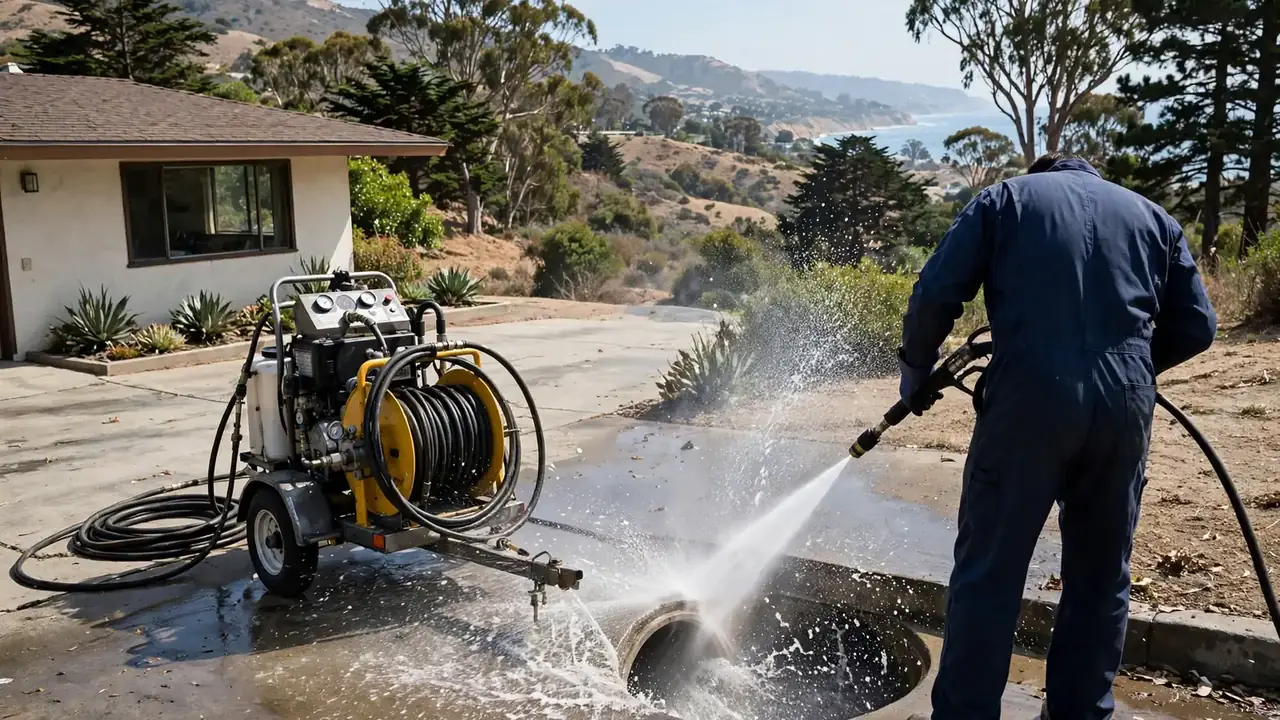
Hydro jetting on a schedule keeps a shared lateral clear between inspections, and it is the right tool for a line with root intrusion or grease buildup that has not yet failed. The jetting clears the roots and the buildup, and the camera check after jetting shows whether the pipe underneath is sound or whether the roots have opened joints that need sealing. Jetting without a camera check is a temporary fix that hides the condition of the pipe, and the roots return through the same openings. The inspection after jetting is the step that turns cleaning into information.
Resident habits matter in a shared system, because one unit's habits affect every unit on the lateral. Wipes, even those labelled flushable, do not break down the way paper does, and they catch in an old clay lateral and start a blockage that grows. Grease poured down a kitchen drain hardens in the pipe and narrows it. The association can remind residents what not to flush and what not to pour, and the manager can note which units report slow drains first, because those reports are the early warning that the shared lateral is narrowing. A shared lateral is a shared responsibility, and the residents who use it are part of keeping it clear. Reserve planning is where prevention becomes a budget line. A board that knows the condition of its shared laterals can put a lining or replacement into the reserve study, fund it over time, and schedule the work in the off-season, rather than paying for an emergency job from operating funds during a backup. The camera inspection is the input to that planning: it shows which laterals are sound, which need attention, and which are near failure, and the reserve study turns that picture into a schedule and a figure the board can vote on.
Services for hoa & multi-family
Where we work
Eastview · Miraleste · West Palos Verdes · Los Verdes · Monaco · La Cresta · Del Cerro · Mesa Palos Verdes · Mira Catalina · Ladera Linda · Crestridge · Seaview · Portuguese Bend · Abalone Cove · Island View
Services used most
Sewer Lateral Repair · Sewer Camera Inspection · Hydro Jetting · Emergency Sewer Repair
Frequently asked questions
Questions people ask about sewer lines in hoa & multi-family, answered plainly.
It depends on the association documents. In most associations the shared lateral outside the units belongs to the association, while the drains inside each unit belong to the owner. The camera inspection shows where the problem is, and the documents state whose responsibility that section is.
Wastewater from the upper units drains into the shared lateral, and when that lateral is blocked the water has nowhere to go except back into the lowest drain on the line. The upper units may notice nothing while the ground-floor unit floods. That pattern is the signal that the problem is in the shared line.
Often, yes. Lining through a cleanout or pipe bursting through small pits can replace a shared lateral without cutting a trench through the common area. Whether that fits depends on the camera findings and on where the cleanouts are.
The board reads the governing documents, reviews the camera findings, and votes on the method and the funding under the documents. A planned replacement can be scheduled and budgeted. An emergency replacement during a backup is decided under pressure, which is why inspections on a schedule matter.
They are larger and more complex: longer runs, larger pipe, more than one lateral and connection, and sometimes lift stations or ejector systems where the ground falls away. The work is planned around operating hours, and the inspection has to map the whole system, not only the section that backed up.
Wipes, even those labelled flushable, and grease. Wipes catch in an old clay lateral and start a blockage that grows. Grease hardens in the pipe and narrows it. One unit's habits affect every unit on the shared lateral.
Sewer line trouble in your Rancho Palos Verdes home or business?
Call Now to reach a local sewer professional. Describe the problem, where it is, and what the line has been doing.
Call now for sewer line help
Tap Call Now to reach a local sewer professional. Tell them where the problem is, what the line has been doing, and whether wastewater is coming into the home.
Hours: Mon–Fri 7:00 AM–10:00 PM PT · Sat 8:00 AM–10:00 PM PT · Sun 7:00 AM–9:00 PM PT
Before you call
- Stop using water if the line is backing up.
- Keep people and pets away from any wastewater.
- Note which drains are slow, and which one backs up first.
- Note whether the problem happens in heavy rain, or all the time.
- Have the age of the home ready, if you know it.