Trenchless Sewer Repair Rancho Palos Verdes, CA
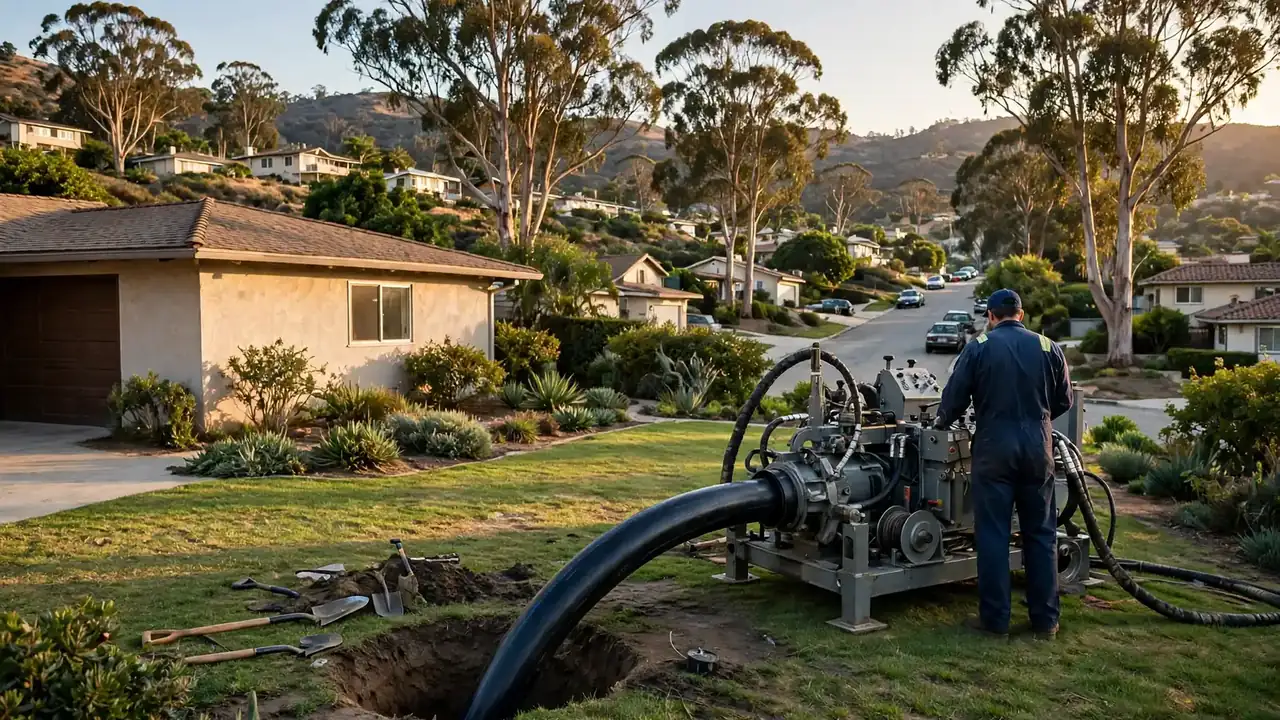
Trenchless sewer repair fixes a failed lateral from two small access pits instead of a trench across the yard — the right approach for the hillside lots, mature trees, and long driveways of Rancho Palos Verdes.
Need help with your sewer line?
Call Now to reach a local sewer professional. Describe the problem, where it is, and what the line has been doing.
Hours: Mon–Fri 7:00 AM–10:00 PM PT · Sat 8:00 AM–10:00 PM PT · Sun 7:00 AM–9:00 PM PT
What this service does
Trenchless sewer repair replaces or renews a damaged sewer line without opening a trench along its full length. Instead of digging from the house to the street, the crew digs a small pit at each end of the line — one near the house, one near the street main — and does the work underground between them. The lawn, the walkway, the driveway, and the mature trees above the line stay where they are. For a city where most homes sit on sloped lots with finished landscaping, that difference matters more than it would on a flat, open parcel. The Peninsula lots are also narrow and steep, with limited room for heavy equipment, and a trench crew needs space for spoil piles, shoring, and access that many Rancho Palos Verdes yards simply do not have. Working from two pits keeps the equipment footprint small and the disruption short, which is why trenchless methods have become the usual first choice for laterals under finished properties in this city.
There are two trenchless methods, and they solve different problems. Pipe bursting pulls a bursting head through the old line, breaking the old pipe outward into the surrounding soil while a new pipe follows behind it in the same path. Cured-in-place pipe lining, known as CIPP, inserts a resin-soaked liner into the old pipe and cures it in place, forming a smooth, jointless pipe inside the old one. Bursting gives you a completely new pipe; lining gives the old pipe a new interior. Both are trenchless, but they are not interchangeable, and the camera inspection is what decides which one fits a given line. A bursting job suits a line that needs to be replaced in full, because the new pipe is a complete replacement rather than a renewal of the interior. A lining job suits a line whose pipe still holds its shape, because the liner needs a sound shell to form against. Both methods leave the homeowner with a line that has sealed joints and a smooth bore, and both are checked on camera before the job is called done.
Rancho Palos Verdes is a strong fit for trenchless work. The median home here was built in 1967, and more than eight in ten homes date from before 1980, so the laterals under them are usually clay tile, cast iron, or bituminous fiber — materials that fail at joints and seams, exactly the kind of damage trenchless methods handle well. The lots are steep, the driveways are long, and the trees are mature. A trench through all of that is a restoration project on its own. Trenchless repair avoids most of it, while still giving the home a line that carries wastewater to the street main the way it should. The neighborhoods make the case even clearer. In Miraleste and Eastview, mature eucalyptus and pepper trees stand over laterals that are among the oldest in the city, and a trench would cut through root zones the homeowner wants to keep. On the steep streets above the coast, a trench down the slope disturbs ground that is hard to restore. Trenchless work respects both the trees and the slope.
Before you call
- Stop using water if the line is backing up.
- Keep people and pets away from any wastewater.
- Note which drains are slow, and which one backs up first.
- Note whether the problem happens in heavy rain, or all the time.
- Have the age of the home ready, if you know it.
How trenchless sewer repair works under a Rancho Palos Verdes home
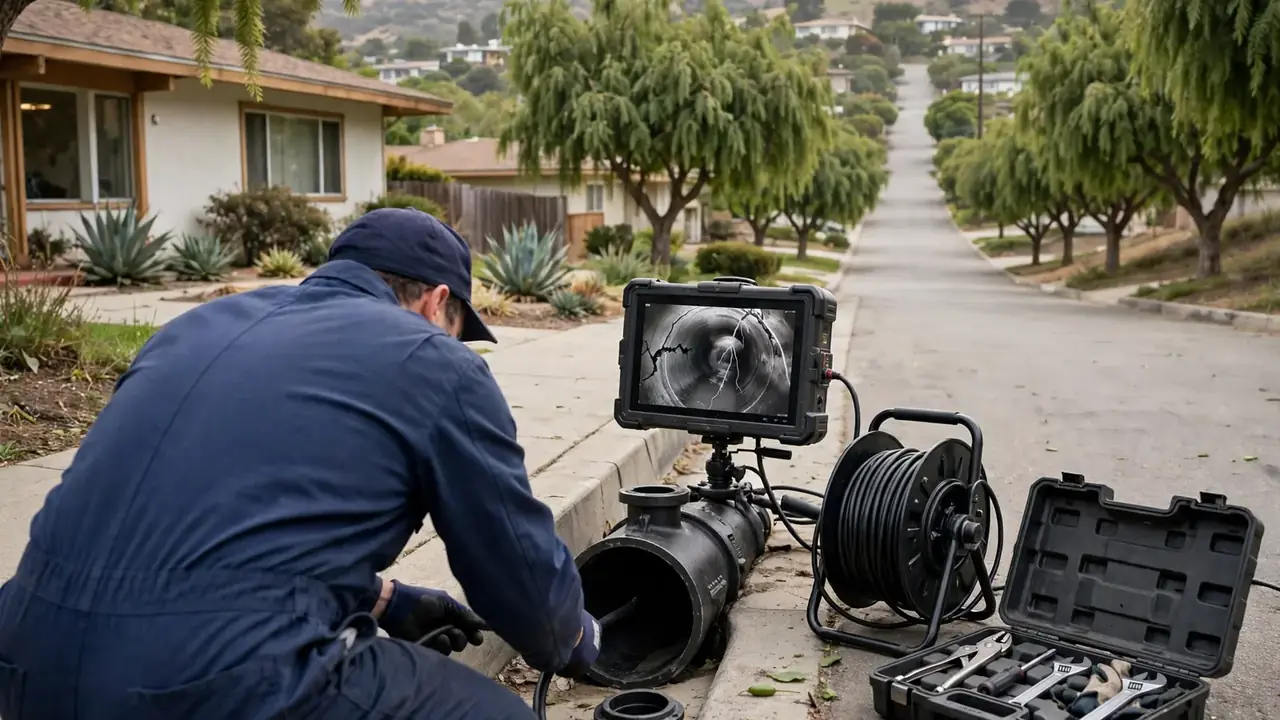
Every trenchless job starts with a camera inspection, and that step decides whether trenchless work is possible at all. The camera shows the pipe material, the depth, the joints, the damage, and the path of the line from the house to the street main. Trenchless methods need a line that can be entered and pulled through. A line that has collapsed flat, or a line where one section has shifted sideways away from the next, will stop a bursting head or a liner. The inspection also measures the length and the diameter of the run, so the crew knows what equipment the job needs before any digging starts. The inspection also records the depth of the line section by section, because depth decides how the pits are dug and how the equipment is set up. A shallow line near the house and a deep line near the street need different handling, and the camera gives the crew those numbers before the work is planned.
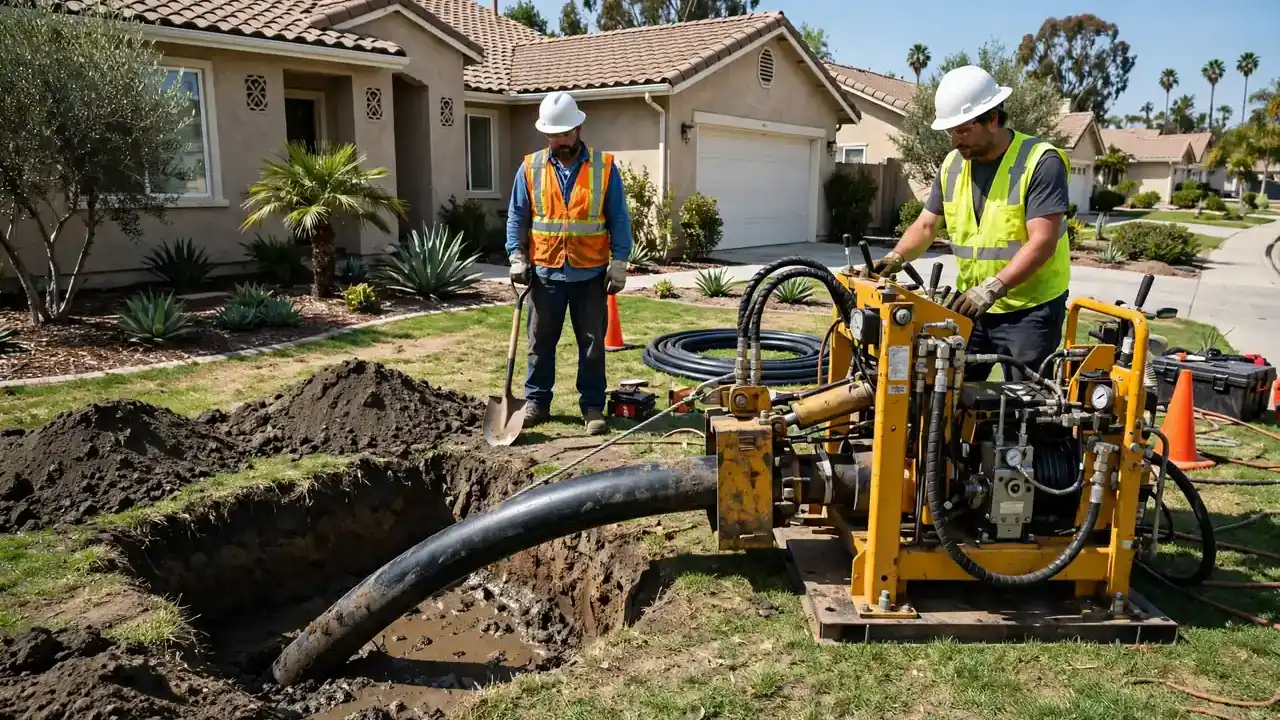
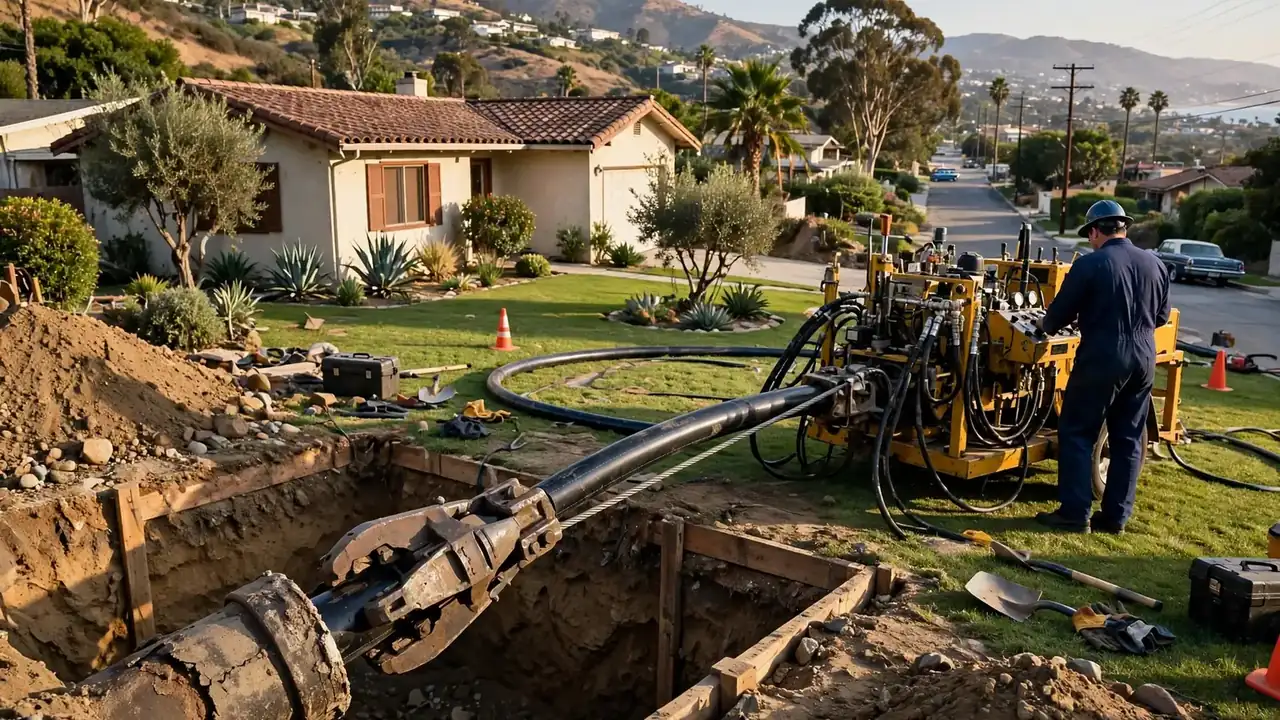
With pipe bursting, the crew digs a launch pit at one end of the line and a receiving pit at the other. A steel cable or rod is threaded through the old pipe, the bursting head and the new pipe are attached, and a pulling machine draws the head through. The head breaks the old clay, cast iron, or bituminous fiber outward into the soil, and the new pipe — usually HDPE or PVC — follows into the space the head opens. The new pipe can be the same diameter as the old one, or larger where the home needs more capacity. The old pipe never has to be dug out, and the ground between the two pits is never opened. The pulling machine is set up at the receiving pit, and the operator watches the tension as the head advances, because a sudden change in resistance can mean the head has met a collapse or an offset the camera did not show. The pull is steady rather than fast, and the head's progress is tracked from the surface so the crew knows where it is at every point along the run.
With CIPP lining, the crew measures the line, cuts a liner to length, soaks it in resin, and inverts or pulls it into the old pipe. Hot water or steam cures the resin, and the liner hardens into a smooth, jointless pipe inside the old one. The finished liner has no joints for roots to enter, and its smooth interior resists the buildup that narrows rough old pipe. CIPP liners are built to a fifty-year design life, which is why lining is a repair that lasts rather than a patch. The liner is slightly smaller in diameter than the old pipe, but its smooth bore often flows as well as the rougher pipe it replaces. Curing takes time, and the line cannot be used while it happens, so the crew plans the curing window with the homeowner before the liner goes in. Once the resin has hardened, the liner is a structural pipe in its own right, not a coating, and the camera check at the end confirms it is smooth, continuous, and clear from the house to the street main.
What the service includes
Camera inspection and measurement
The line is camera-inspected and measured end to end before any method is chosen, so the crew knows the length, the diameter, the depth, and every defect. The inspection is the evidence the whole job is planned from, and it is what separates a line that can be done trenchless from one that cannot.
Small access pits, not a trench
The crew digs a pit at the house connection and a pit at the street connection, and the ground between them stays closed. The lawn, the walkway, the driveway, and the planting above the line are left in place, which matters on the steep, landscaped lots common across Rancho Palos Verdes.
Pipe bursting
A bursting head breaks the old pipe outward while a new pipe is pulled into the same path. The old line never has to be dug out, the new line can be the same size or larger, and the work suits a line that is badly damaged or undersized for the home it serves.
Cured-in-place lining
A resin liner is installed inside the old pipe and cured into a new, jointless pipe with a fifty-year design life. Roots cannot enter through joints, because the lined pipe has none, and the smooth interior keeps wastewater moving instead of catching on rough, scaled walls.
House and street connections
The renewed line is connected at the house and at the street main, and both connections are sealed and checked. A repair that leaks at either end is not a repair, so the connections get the same attention as the run between them.
Final camera check
The finished line is camera-checked from end to end, confirming the new pipe is clear, continuous, and flowing with the correct fall toward the street main. The job is not finished until the new line has been seen on camera.
How the work runs
Describe the symptoms
Slow drains, repeat backups, a sewer smell, or a camera report that already shows a failed line — and whether the line runs under a driveway, a patio, a slope, or mature trees. Where the problem shows up in the house tells the crew a lot about where the trouble is in the line.
Camera inspection
The camera maps the line from the house to the street main: material, depth, length, joints, and damage. This is the step that decides whether trenchless work fits at all, and which of the two methods fits better.
Method choice
Pipe bursting fits a line that needs full replacement and has a clear path. Lining fits a line that is damaged but still holds its shape. A collapsed line, or a line with a sharp sideways offset, may need a trench for part of the run, and the crew explains that before work starts.
Locating and access pits
The line is located and marked on the surface, and the launch and receiving pits are dug — usually one near the house and one near the street main. On a hillside lot, the pit placement takes the slope and the access into account.
Bursting or lining work
The bursting head pulls the new pipe through, or the liner is installed and cured. Either way, the work happens underground, between the two pits, while the surface above the line stays in place.
Connections and final check
Both ends are connected and sealed, the new line is camera-checked end to end, and the pits are backfilled and graded. The homeowner sees the camera picture of the finished line before the job is called done.
Tools and methods used
Sewer camera with locator
The camera shows the inside of the line, and the locator beacon marks its path and depth on the surface. The method choice, the pit placement, and the whole plan depend on what the camera finds.
Pipe bursting rig
A pulling machine draws the bursting head and the new pipe through the old line. The rig sits at the receiving pit, and the head does the work underground, breaking the old pipe outward as it goes.
CIPP inversion equipment
The liner is inverted into the old pipe with air or water pressure, then cured with hot water or steam until the resin hardens into a new pipe inside the old one.
Mini excavator
A compact excavator digs the access pits in a residential yard, sized for the narrow side yards and steep driveways common in Rancho Palos Verdes. Two small pits are far less disruption than a trench along the whole line.
Trenchless sewer repair cost: what decides it
Trenchless sewer repair has no single figure per foot, because the figure follows the line itself. The length of the run matters first: a short lateral from a house near the street is a smaller job than a long run from a house set far back on a steep lot. Depth matters next, because a deep line near the street main needs larger pits and more care than a shallow line near the house. Access matters too: a line that runs under a driveway, a patio, or mature trees takes more setup than a line under open lawn, and the slope of the lot decides how the pits are placed. The method is the last driver: pipe bursting and CIPP lining are different jobs with different equipment, and the camera inspection is what decides which one fits the line.
The comparison most homeowners ask about is trenchless vs traditional repair, and the difference is in the ground, not in the pipe. A traditional open-trench repair digs along the whole line, removes the old pipe, lays the new one, and then restores the surface above it — lawn, walkway, driveway, planting. Trenchless repair works between two pits and leaves the ground between them closed, so the restoration that follows is far smaller. That is the whole point of doing the work without digging a trench across the yard. Where the camera shows a line that is still passable, trenchless work usually means less surface work. Where the line has collapsed flat, a trench may still be needed for that section, and the plan says so before work starts. The permit and the final camera check are part of the job either way.
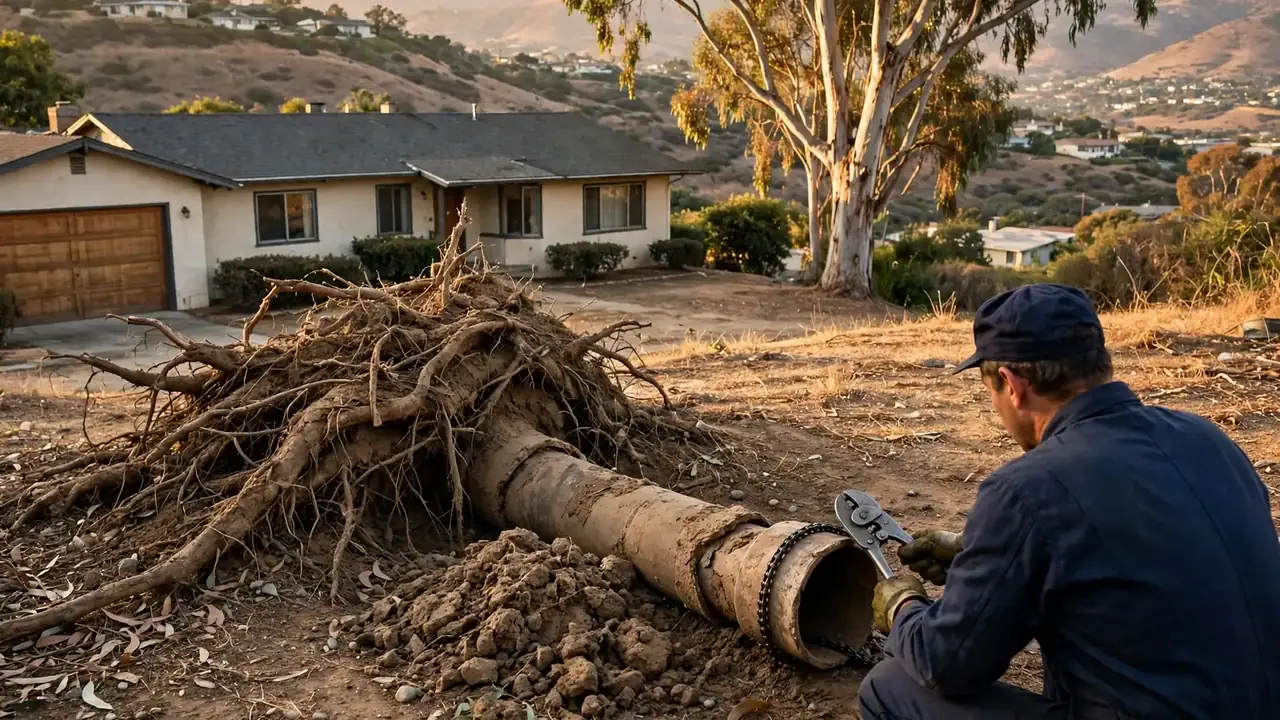
A cracked lateral beneath a landscaped hillside yard
A lateral that keeps backing up will not heal — the water keeps coming back through the lowest drain in the house.
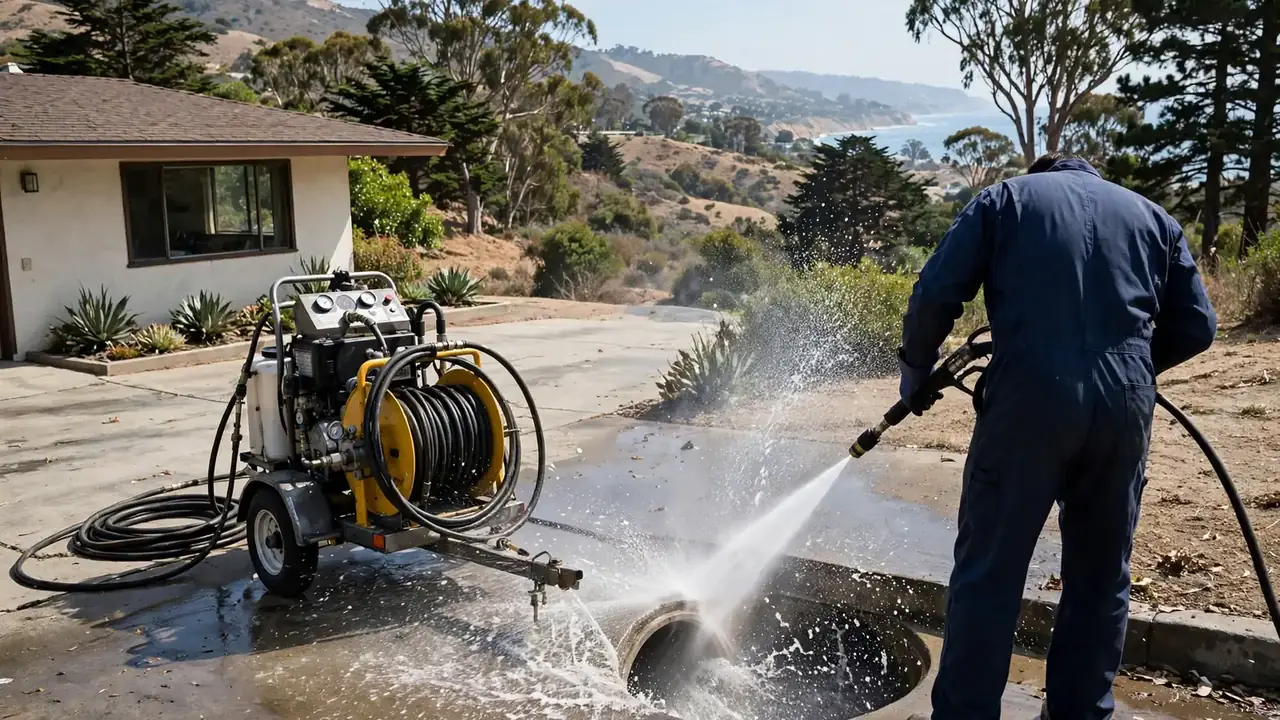
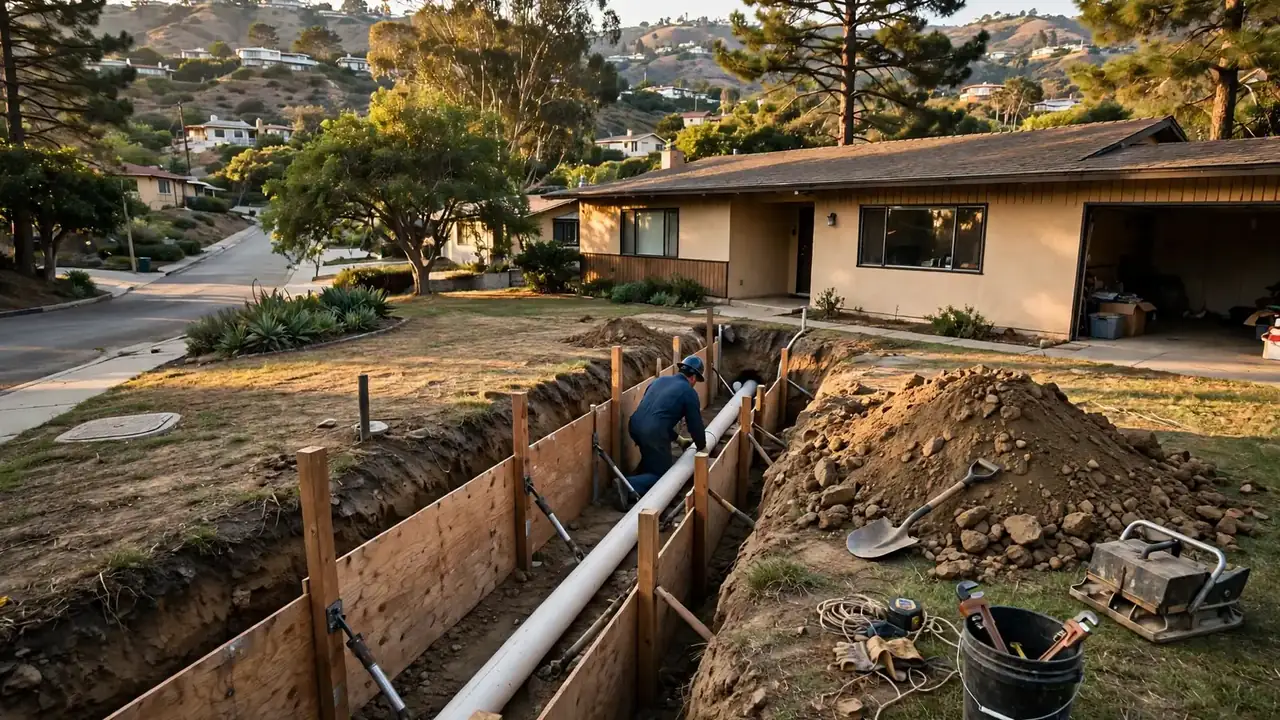
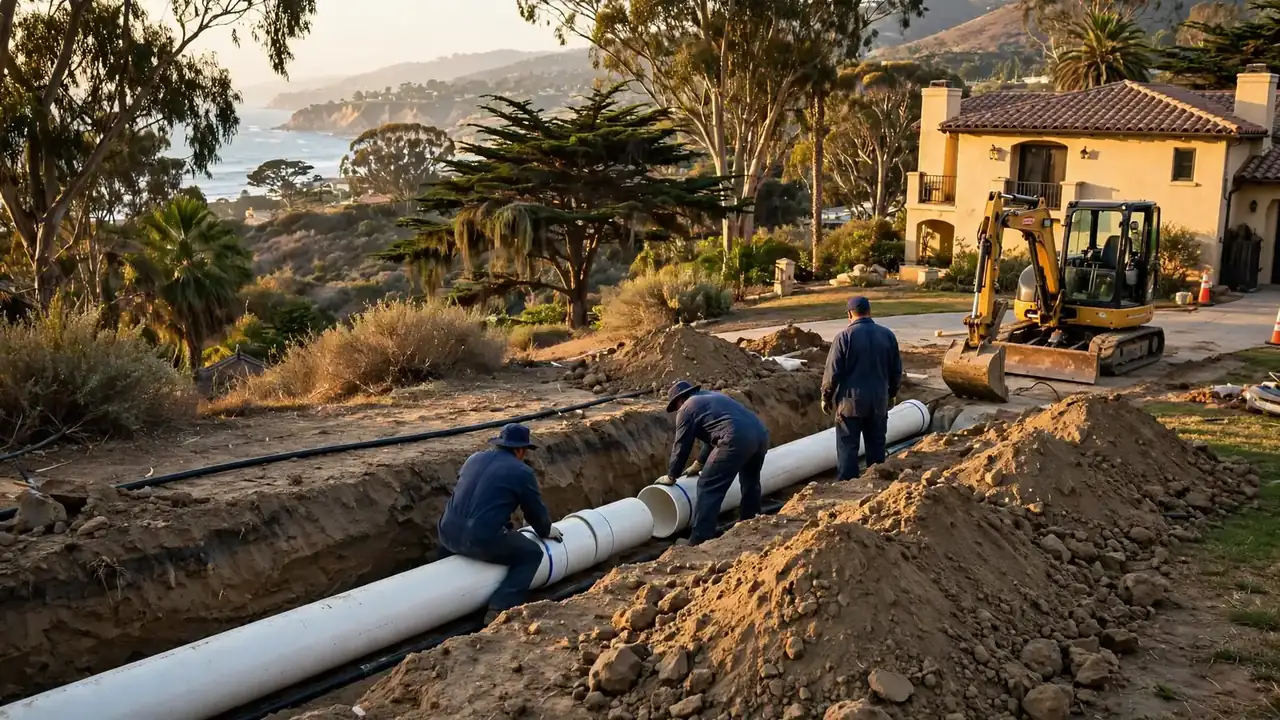
A renewed line, with the landscaping still in place
The work is checked with a camera, not a look at the surface — the new line is seen end to end before the job is called done.
Problems trenchless repair solves
- A clay tile lateral with roots at many joints, where cleaning only buys a few months.
- A cast iron line that has corroded and narrowed along its length.
- A lateral that runs under a driveway or patio, where a trench would mean demolition.
- Repeat backups from a line that is cracked in several places.
- A line with separated joints that let soil and roots in.
- A hillside lateral where an open trench would disturb the slope.
Signs trenchless repair may fit your sewer line
- The lateral runs under a driveway, a patio, a walkway, or mature trees you want to keep.
- A camera inspection shows the pipe is cracked, root-filled, or corroded — but not collapsed flat.
- The line has needed cleaning more than once, and the problem keeps returning.
- The home was built in the 1960s or 1970s and still has its original clay tile or cast iron lateral.
- You want the line repaired without a trench across the whole yard.
- The line is long, and restoring a full trench would be a job in itself.
- The lot is steep, and digging a trench down the slope would disturb the ground.
- A previous camera report already shows the length, depth, and material of the line.
Related services
Industries that use this service
Hillside & Slope Properties · HOA & Multi-Family · All industries →
Related guides
RPV Sewer Permits · Old Pipes in Rancho Palos Verdes · All guides →
Frequently asked questions
Questions people ask about trenchless sewer repair, answered plainly.
Trenchless sewer repair fixes or replaces a sewer line through small access pits instead of digging a trench along the full line. The crew digs one pit near the house and one near the street main, then replaces the pipe by bursting or renews it by lining, working underground between the two pits. The surface above the line — lawn, walkway, driveway, planting — stays in place.
Open-trench repair digs along the entire line, removes the old pipe, and lays new pipe in the open trench. Trenchless repair works between two pits and never opens the ground in between. The finished pipe is the same kind of new pipe either way; the difference is how much of the yard is disturbed to get it in, and how much restoration follows.
It depends on the collapse. A line that is cracked or partly broken can often be burst or lined, because the bursting head or the liner can still pass through. A line that has collapsed flat, with no passage left at all, will stop both methods. The camera inspection shows which case yours is, and a line that cannot be done trenchless may still need a trench for the collapsed section.
Yes, and hillside lots are one of the stronger cases for it. A trench down a steep slope disturbs a lot of ground and is hard to restore; trenchless work keeps the digging to two pits. The camera inspection still has to show a line that can be pulled through, and the pit placement takes the slope and the access into account.
With pipe bursting, the old pipe is broken outward into the surrounding soil and a new pipe takes its place in the same path. With CIPP lining, the old pipe stays where it is and becomes a shell around the new liner inside it. Either way, the old pipe is never dug out of the ground.
Often, yes. That is one of the main reasons homeowners choose it. The access pits are placed on either side of the driveway, and the bursting head or the liner passes underneath it. The driveway itself is not opened. The camera inspection confirms the line is passable before the work is planned that way.
Two pits, one at each end of the line. The pits are backfilled and graded when the work is done. Everything between them — the lawn, the planting, the walkway — is left as it was. That is the whole point of the method, and it is why it suits the finished, landscaped lots across Rancho Palos Verdes.
A camera inspection decides it. The camera shows the material, the damage, the depth, and whether the line is passable. A cracked, root-filled, or corroded line that still holds its shape is usually a candidate. A line that has collapsed flat, or one with a sharp sideways offset, may not be. The inspection gives you the answer before any digging is planned.
There is no fixed figure, because the work follows the line: its length, its depth, how steep the lot is, what sits above it, and whether the camera points to bursting or to lining. A short, shallow run with clear access at both ends is the simplest case. A long run under a driveway on a steep lot takes more setup and more restoration. The camera inspection gives the measurements the plan is built from.
Sewer line trouble in your Rancho Palos Verdes home?
Call Now to reach a local sewer professional. Describe the problem, where it is, and what the line has been doing.
Call now for sewer line help
Tap Call Now to reach a local sewer professional. Tell them where the problem is, what the line has been doing, and whether wastewater is coming into the home.
Hours: Mon–Fri 7:00 AM–10:00 PM PT · Sat 8:00 AM–10:00 PM PT · Sun 7:00 AM–9:00 PM PT
Before you call
- Stop using water if the line is backing up.
- Keep people and pets away from any wastewater.
- Note which drains are slow, and which one backs up first.
- Note whether the problem happens in heavy rain, or all the time.
- Have the age of the home ready, if you know it.