Sewer Camera Inspection Rancho Palos Verdes, CA
A sewer camera inspection shows what is actually wrong inside your line — the material, the damage, and the location — so the fix matches the problem instead of the guess.
Need help with your sewer line?
Call Now to reach a local sewer professional. Describe the problem, where it is, and what the line has been doing.
Hours: Mon–Fri 7:00 AM–10:00 PM PT · Sat 8:00 AM–10:00 PM PT · Sun 7:00 AM–9:00 PM PT
What this service does
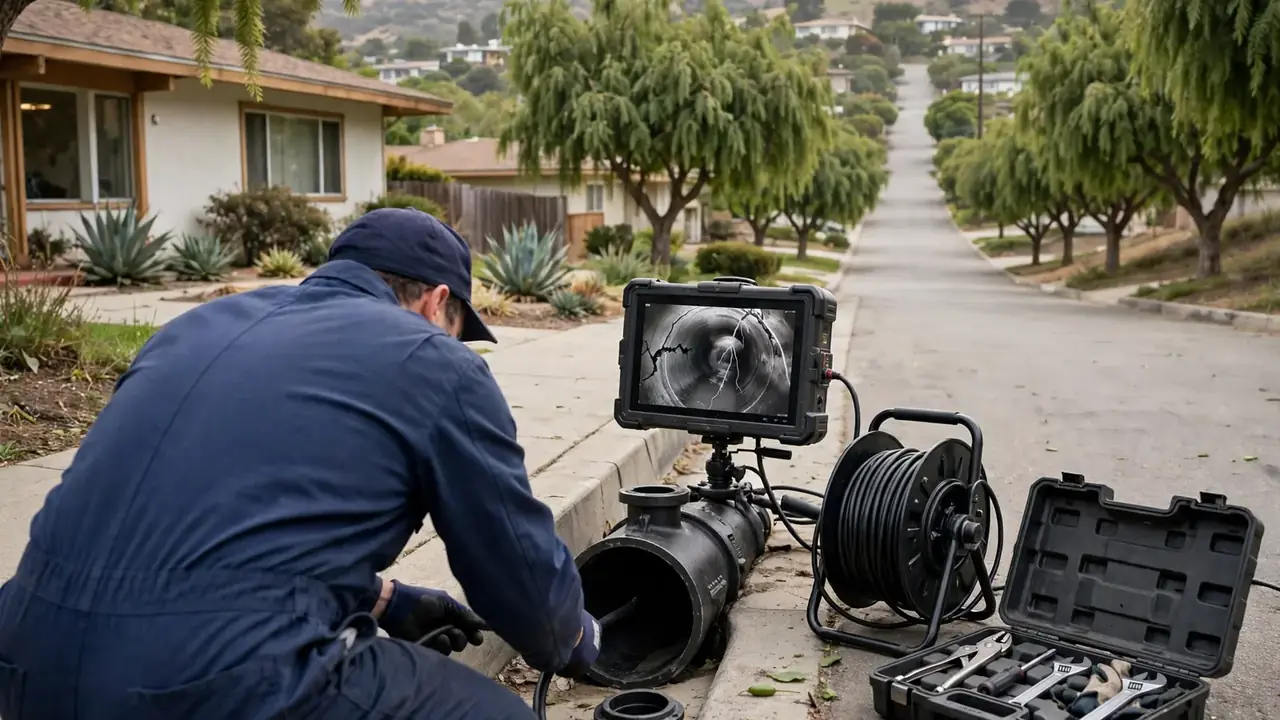
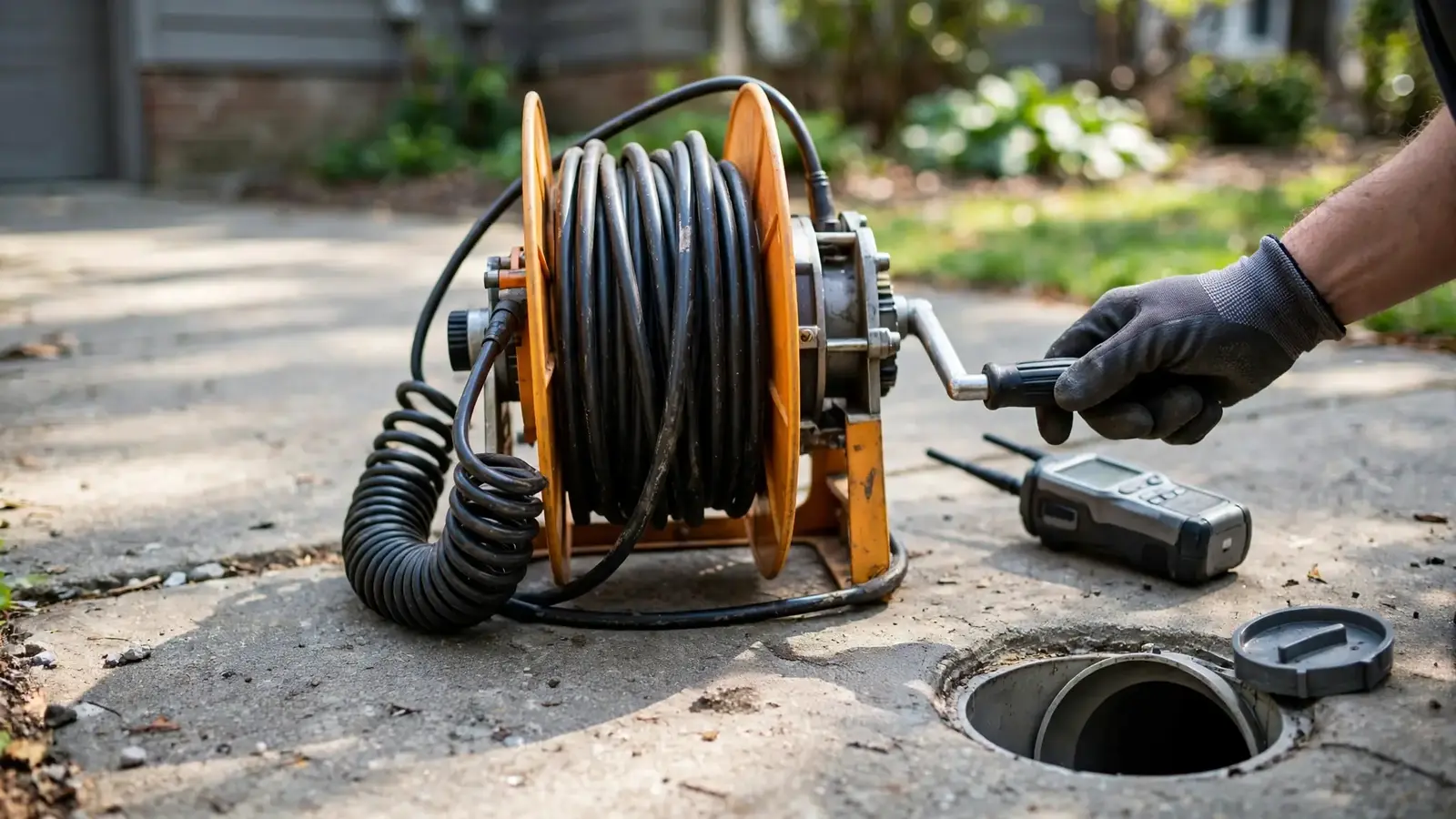
A sewer camera inspection is the step that turns a guess into a fact. A waterproof camera on a push cable is fed into the line through a cleanout or a pulled toilet, and the inside of the pipe appears on a monitor in real time. The operator sees the pipe material, every joint, every crack, every root, every low spot — and the distance and depth of each one, marked by the camera's locator beacon. Nothing about the line stays hidden once the camera has run its length. The camera also records the footage, so the condition of the line is documented rather than described from memory. That record is useful when a repair is planned, when a buyer asks about the line, and when the same line is inspected again years later and the two pictures are compared. A line with a documented history is a line whose problems can be tracked instead of guessed at.
In Rancho Palos Verdes, a camera inspection is the right first step for most sewer problems, because the city's laterals are old and the symptoms overlap. Slow drains, repeat backups, and sewer smells can come from a root mat, a belly, a collapse, or a problem at the street connection — and each of those has a different fix. Without a camera, the crew is guessing at the cause. With one, the fix is chosen from evidence, and the digging goes to the right spot the first time. The same inspection also shows whether the problem is in the lateral at all. A backup that seems to come from the house can turn out to be a problem at the street connection, or a main that is surcharging during heavy rain, and the camera is what separates those cases. Knowing which side of the connection the problem sits on decides who handles it and what the fix looks like.
An inspection is also the way to buy a home here with confidence. A Rancho Palos Verdes home built in the 1960s or 1970s may still have its original clay tile lateral, and that lateral may be near the end of its life without any symptom showing yet. The City of Rancho Palos Verdes recommends a lateral inspection or repair on transfer of ownership when no inspection or replacement has happened in the prior ten years. A camera inspection before a purchase shows the condition of the line, so the buyer knows what they are taking on. The ten-year recommendation is not a formality. A lateral that has not been inspected or replaced in a decade has had ten years for roots to grow into the joints, for the ground to shift, and for cast iron to corrode from the inside, all without any symptom the seller would have noticed. The camera inspection is the only way to see that history before the purchase is final.
Before you call
- Stop using water if the line is backing up.
- Keep people and pets away from any wastewater.
- Note which drains are slow, and which one backs up first.
- Note whether the problem happens in heavy rain, or all the time.
- Have the age of the home ready, if you know it.
What a sewer camera shows — and what it cannot
A camera shows the inside of the pipe: the material — clay tile, cast iron, bituminous fiber, or plastic — and its condition. It shows joints and whether they have separated. It shows roots, and how much of the pipe they fill. It shows cracks, breaks, and collapses. It shows bellies — low sections where water stands instead of flowing. It shows the connection at the street main, and whether the line is clear all the way through to the main. The camera also shows the slope of the line, because a belly shows up on the monitor as a section where water stands instead of flowing past. A belly is a low spot, and the camera shows how deep it is and how long it runs, which is the information a repair plan needs. A short, shallow belly and a long, deep one are different jobs.
The camera also locates the problem. A locator beacon in the camera head lets the operator mark the exact spot on the surface, with the depth. That matters when the fix involves digging: the crew digs at the defect, not along the whole line. A camera report that says the collapse is twelve feet from the house at four feet deep is a very different job from one that says the damage is at the street. The locate turns a vague problem into a marked spot on the ground. The depth matters as much as the location. A defect four feet down is a different dig from a defect eight feet down, and the locator gives the crew both numbers before the work is planned. The marks on the surface also show the homeowner exactly where the digging will happen, so there are no surprises when the crew arrives with equipment.
What a camera cannot do is see through the pipe wall, or see the soil around the pipe. It cannot tell whether the ground outside the pipe is washed out, or whether a section is about to collapse. It also cannot inspect a line that is full of water or blocked solid — the camera needs a path, so a badly blocked line is usually cleared first, then inspected. A line with no access point cannot be inspected until one is created, usually a cleanout or a pulled toilet. A camera also cannot tell the age of a pipe, only its condition. A clay tile line from the 1960s and a clay tile line from the 1980s can look similar on the monitor, and the difference is in the home records rather than in the picture. What the camera can tell is whether the pipe in front of it is sound, cracked, bellied, or collapsed, and that is the information the fix is chosen from.
What the service includes
Full-length camera run
The camera is run from the access point to the street main, so the whole lateral is seen — not just the first few feet. A partial look can miss the real problem, which often sits near the street end of the line.
Locator marking
The camera's beacon marks the path of the line and the location of each defect on the surface, with the depth. The crew knows where to dig before a shovel is lifted, and the homeowner sees the marks on the ground.
Pipe material and condition
The inspection records the material of the line — clay, cast iron, bituminous fiber, or plastic — and its condition section by section, so the fix is matched to the pipe rather than to a guess about it.
Written findings in plain language
The findings are explained without jargon: what was found, where it is, how serious it is, and what the options are. The camera footage is the record of the inspection, and the written findings are the explanation of it.
Repair recommendation
Based on what the camera found, the crew explains the options — cleaning, spot repair, lining, bursting, or full replacement — and which one fits the condition of the line. The recommendation follows the evidence, not a preset answer.
Pre-purchase inspection
For a home buyer, the inspection gives a clear picture of the lateral's condition before the purchase is final, so there are no surprises after moving in. In a city where eight in ten homes predate 1980, that picture is worth having.
How the work runs
Describe the symptoms
Slow drains, backups, smells, or a home purchase — and whether there is a cleanout, and where the lowest drain in the house is. The lowest drain that backs up tells the crew a lot about where the trouble sits.
Access the line
The camera enters through a cleanout if one exists, or through a pulled toilet. If the line is blocked solid, it is cleared first so the camera can pass and see the pipe itself.
Camera run to the street
The camera is pushed through the line to the street main, with the operator watching the monitor and noting every defect, joint, and change in material along the way.
Locate defects on the surface
The locator marks the path of the line and the position of each defect on the surface, with the depth — the map for any digging that follows.
Explain the findings
The crew walks through what the camera found, in plain language, and explains the options that fit — cleaning, repair, lining, bursting, or replacement.
Keep the record
The footage and the findings are kept as the record of the line's condition, useful for the homeowner, for a buyer, and for any later work on the same line.
Tools and methods used
Push camera
A waterproof camera head on a flexible push cable, with lights, carries the picture from inside the pipe to the monitor. Different cable lengths cover different line lengths, and the head is sized to the pipe.
Monitor and recorder
The monitor shows the inside of the pipe live, and the recording keeps the footage as a record of the line's condition at the time of the inspection.
Locator beacon
A beacon in the camera head sends a signal that a surface locator reads, marking the line's path and the depth of each defect on the ground above.
Hydro jetter
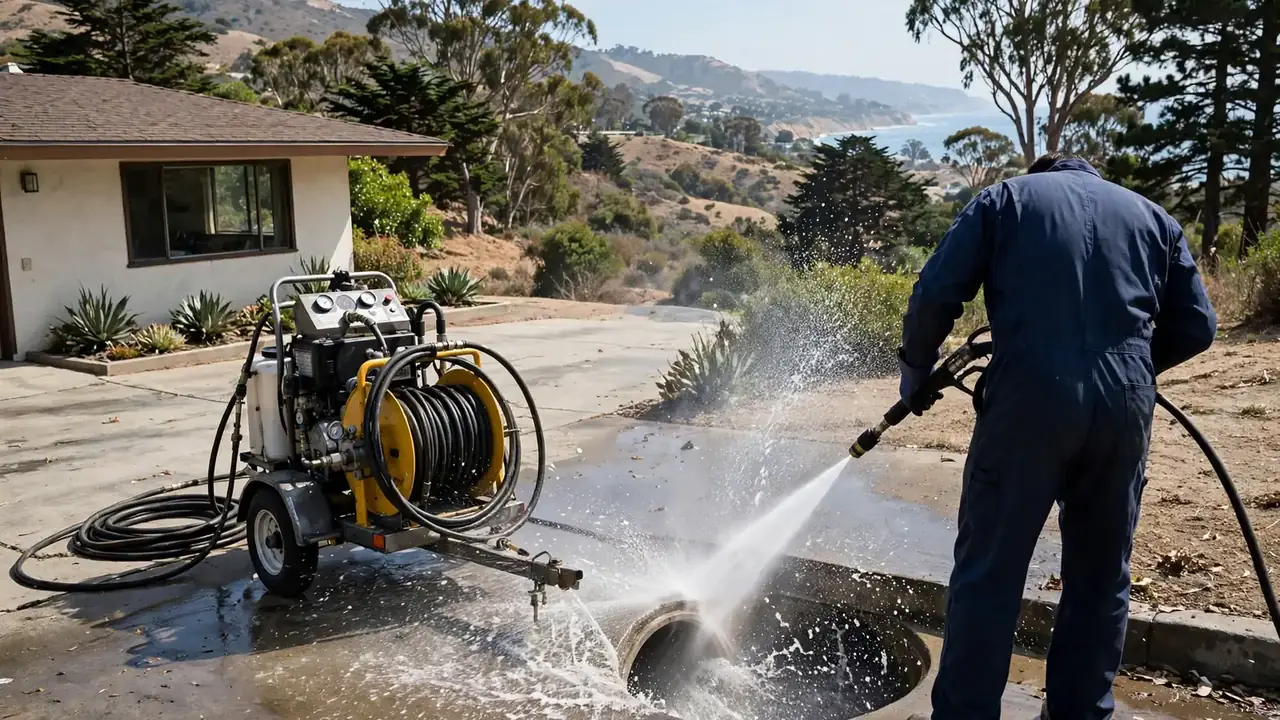
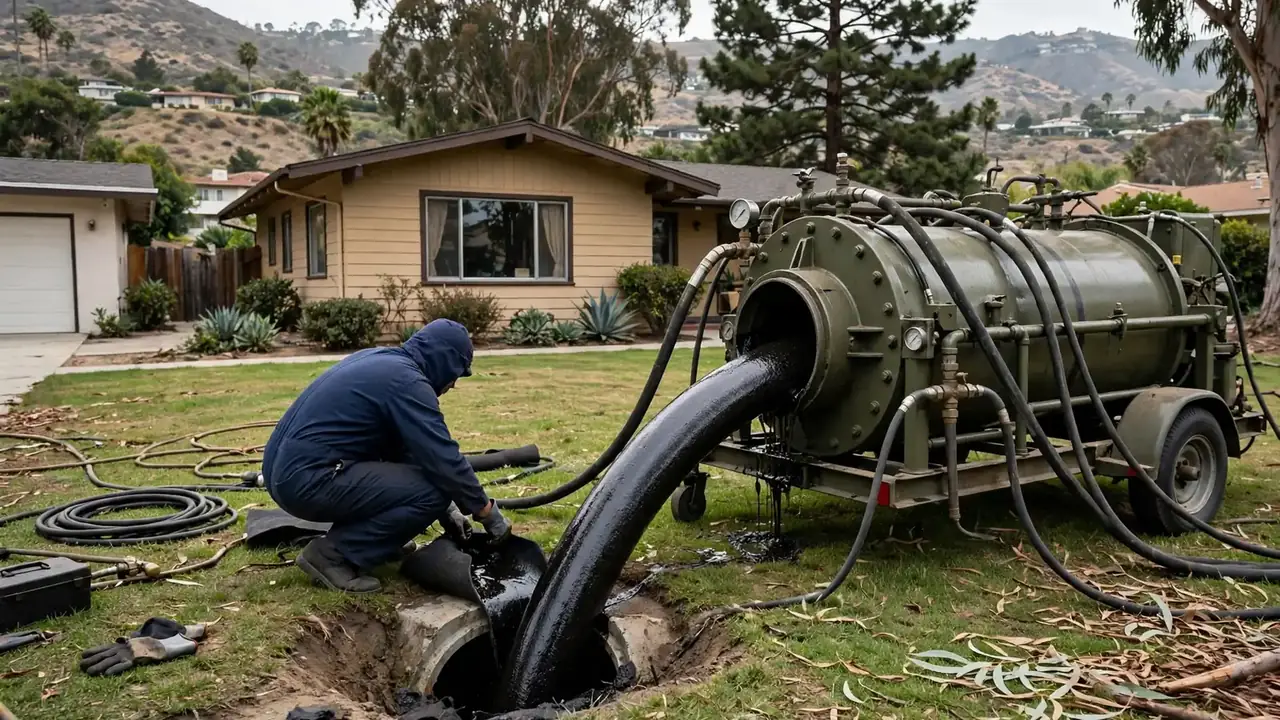
When a line is blocked solid, a hydro jetter clears it with high-pressure water first, so the camera can pass and the inspection can see the pipe rather than the blockage.
Sewer camera inspection cost: what decides it
What a camera inspection involves depends on the line it has to travel. The length of the lateral is the first driver: a short run from a house near the street takes less time than a long run from a house set far back. Access is the second: a line with a cleanout at the surface is entered directly, while a line with no access point needs one created, usually by pulling a toilet, before the camera can go in. The condition of the line is the third: a line that is blocked solid is cleared first, then inspected, because the camera needs a path. A line full of standing water is inspected differently again, since the camera sees less through water than through a clear pipe.
The inspection also decides what everything after it involves, which is why it comes first. A scope before a purchase, a scope before a repair, and a scope after a backup are the same inspection with different purposes, and the findings are what the repair plan is built from. The locate marks the path of the line and the position of each defect on the surface, with the depth, and the recording is the record the homeowner keeps. A scope that stops halfway leaves the second half unknown, and the second half is often where the worst damage is, because it is the oldest and deepest part of the line.
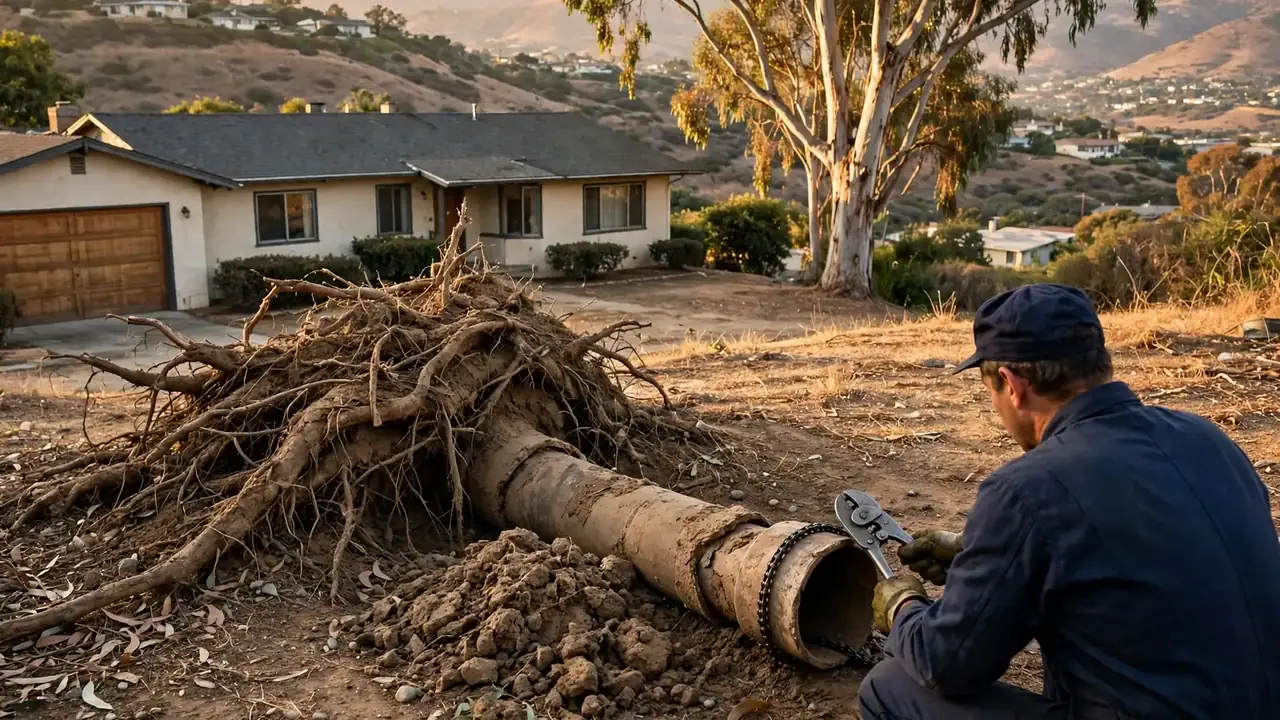
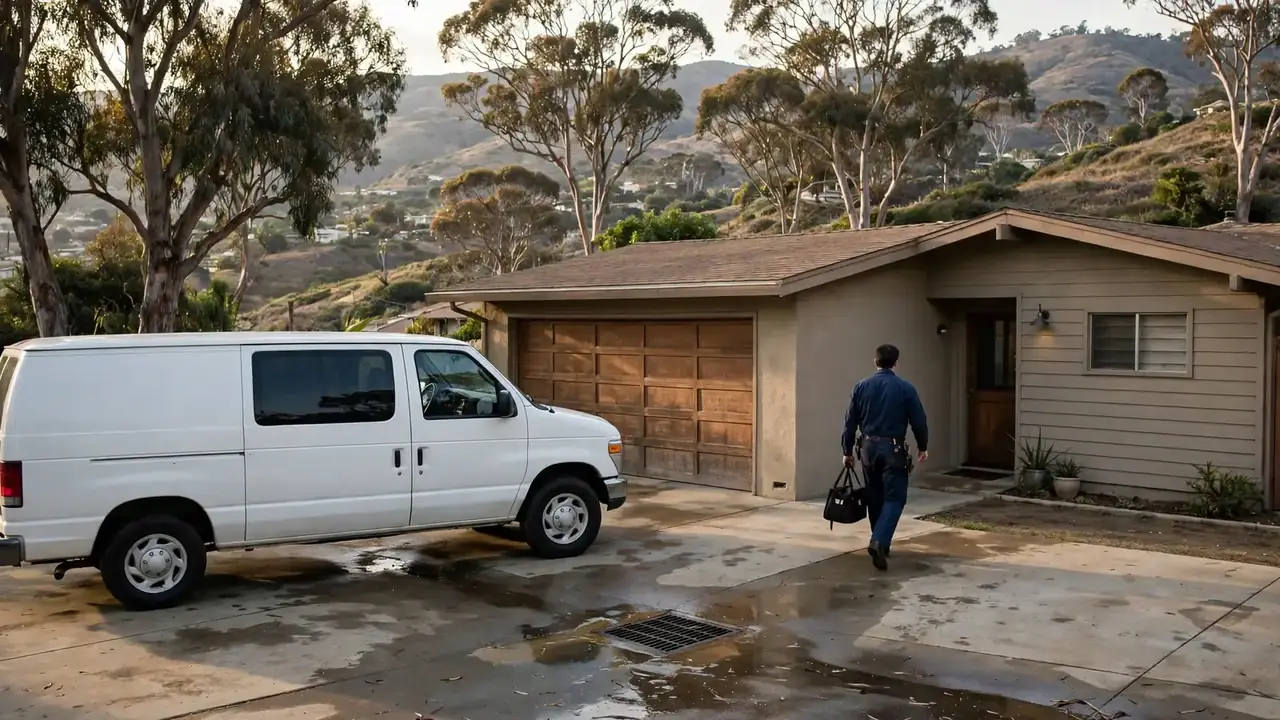
A line you cannot see into
A lateral that keeps backing up will not heal — the water keeps coming back through the lowest drain in the house.
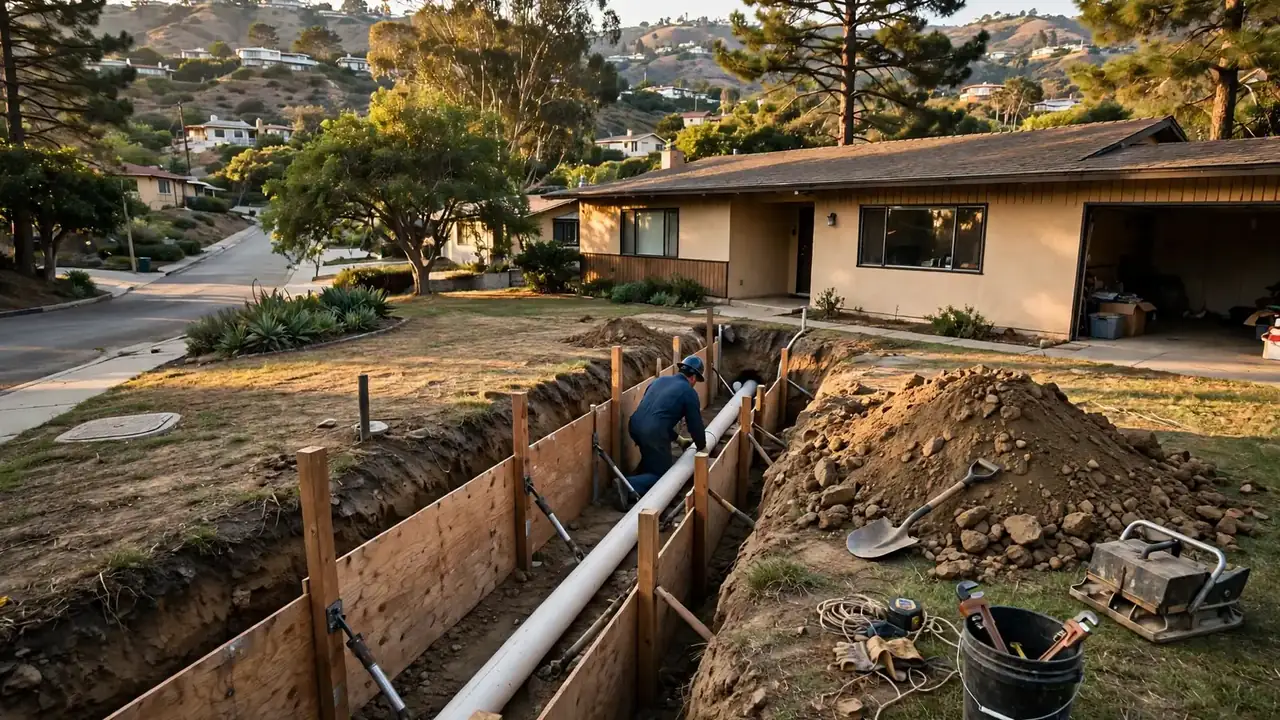
A line with a camera report and marked defects
The work is checked with a camera, not a look at the surface — the new line is seen end to end before the job is called done.
Problems a camera inspection answers
- Whether the problem is a blockage, a broken pipe, or a problem at the street connection.
- Whether the line is clay, cast iron, bituminous fiber, or plastic — and how it is holding up.
- Where the damage is, and how deep — so digging goes to the right spot.
- Whether a cleaning will hold, or the pipe itself needs work.
- Whether a home's lateral is sound before a purchase.
- Whether roots are at one joint or through the whole line.
Signs you need a camera inspection
- More than one drain in the house is slow at the same time.
- The lowest drain in the house has backed up more than once.
- A sewer smell comes from a floor drain, a basement corner, or a spot in the yard.
- The line has been cleaned before, and the problem came back.
- You are buying a Rancho Palos Verdes home built in the 1960s or 1970s.
- A replacement has been suggested, and you want to see the evidence first.
- There is a wet or unusually green patch in the yard along the line to the street.
- You need to know where the line runs before digging or building in the yard.
Related services
Industries that use this service
Buying or Selling a Home · Commercial Properties · All industries →
Related guides
Old Pipes in Rancho Palos Verdes · Who Pays for the Sewer Lateral · All guides →
Frequently asked questions
Questions people ask about sewer camera inspection, answered plainly.
It shows the inside of the pipe: the material, every joint, every crack, every root mass, every low spot where water stands, and the connection at the street main. The locator marks each defect on the surface with its depth. What it does not show is the soil outside the pipe, or a line that is blocked solid — that line has to be cleared first so the camera can pass. The footage also gives the homeowner a record to keep. When the same line is inspected again in a few years, the two recordings can be compared, and the comparison shows whether the line is holding steady or getting worse.
Every two to three years is the usual interval for a home with no known problems. If the line has had root problems before, once a year is the safer rhythm, because roots grow back into the same joints. A home with a clay tile lateral from the 1960s or 1970s is a good candidate for the shorter interval, since those joints are the ones roots find first. A line that has been jetted or cleared for roots is worth inspecting again after the work, so the camera can show the joints the roots entered through. That second look is what decides whether the line needs a repair or simply another clearing when the roots return.
It is one of the most useful inspections a buyer can order here. Most homes in the city predate 1980, and many still have their original clay tile laterals, which can be near failure without any visible symptom. The City recommends a lateral inspection or repair on transfer of ownership when no inspection or replacement has happened in the prior ten years. The inspection shows the condition of the line before the purchase is final. The inspection is also useful for a seller, because a documented camera report answers the buyer questions before they are asked. A line that is sound on camera is a fact the seller can show, and a line that is failing is a problem the sale can deal with openly.
Yes. The camera head carries a locator beacon, and a receiver on the surface reads the signal to mark the spot on the ground, with the depth. That is how the crew knows to dig at a specific point rather than along the whole line. The footage also records the distance from the access point, so the location is documented twice. The locator also marks the depth, so the crew knows how deep the digging will go before the work is planned. A defect four feet down and a defect eight feet down are different jobs, and the depth is part of the report the homeowner keeps.
That itself is a finding. If the camera stops, the line is blocked or collapsed at that point. The crew notes the distance and the depth, and the line is usually cleared first — with a jetter or a cable — so the camera can pass and show the pipe itself. If clearing does not open a path, the blockage is treated as a collapse until the camera proves otherwise. The distance the camera reached is itself useful information, because it marks the point where the line stops. The locator marks that point on the surface, so the crew knows where to dig even before the camera has seen the pipe beyond it.
No. The camera enters through a cleanout if one exists, or through a pulled toilet. No digging is needed for the inspection itself. If there is no access point at all, a cleanout can be installed, which also makes any future work on the line easier.
Ask for the recording and the written findings when the inspection is done. The footage is the record of the line's condition at that moment, and it is useful for any later work on the same line, for a buyer, or for anyone who asks about the line's condition. A report without footage is a claim; the footage is the evidence. The footage is also useful when the line is worked on later, because the crew can see what the line looked like before the repair and compare it with the camera check after the work. The before and after pictures are the record that the repair did what it was meant to do.
The crew explains what the camera found and which options fit: cleaning, a spot repair, lining, bursting, or a full replacement. The choice follows the condition of the pipe — a blockage gets cleaning, a cracked section gets a repair or a liner, a collapsed line gets a replacement. The locator marks stay on the ground, so any digging that follows goes to the right spot.
It depends on the length of the lateral, whether there is a cleanout to enter through, whether the line needs clearing before the camera can pass, and whether the locate and the written findings are part of the visit. A short line with easy access is the simplest case. A long line with no access point, or one that is blocked solid, takes more work before the camera can do its job.
Sewer line trouble in your Rancho Palos Verdes home?
Call Now to reach a local sewer professional. Describe the problem, where it is, and what the line has been doing.
Call now for sewer line help
Tap Call Now to reach a local sewer professional. Tell them where the problem is, what the line has been doing, and whether wastewater is coming into the home.
Hours: Mon–Fri 7:00 AM–10:00 PM PT · Sat 8:00 AM–10:00 PM PT · Sun 7:00 AM–9:00 PM PT
Before you call
- Stop using water if the line is backing up.
- Keep people and pets away from any wastewater.
- Note which drains are slow, and which one backs up first.
- Note whether the problem happens in heavy rain, or all the time.
- Have the age of the home ready, if you know it.