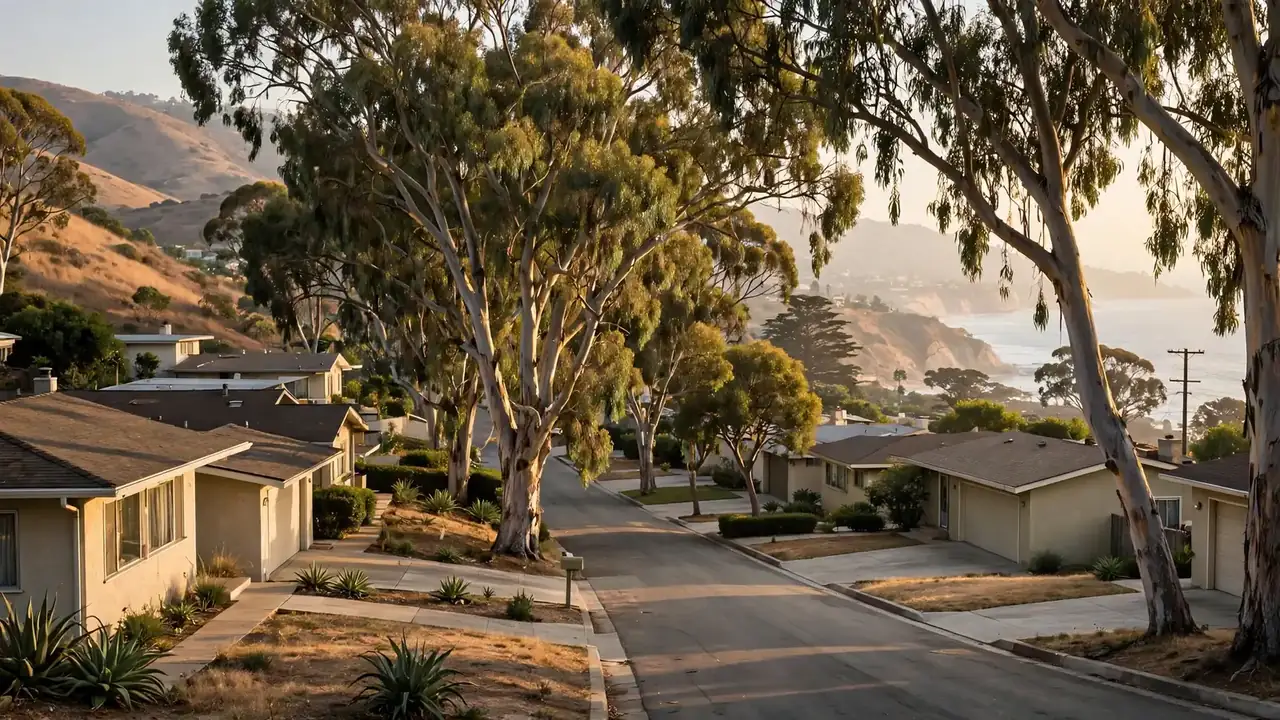
Sewer Line Repair Monaco, Rancho Palos Verdes CA
Monaco is a mid-century ridge neighborhood in the center of Rancho Palos Verdes, near Crest Road and the Mesa tract, and it was already standing when the Mesa homes were built in the early 1960s. Its laterals are clay and cast iron from the same era, now past the age those materials were made to last.
Need help with your sewer line?
Call Now to reach a local sewer professional. Describe the problem, where it is, and what the line has been doing.
Hours: Mon–Fri 7:00 AM–10:00 PM PT · Sat 8:00 AM–10:00 PM PT · Sun 7:00 AM–9:00 PM PT
Sewer line repair in Monaco
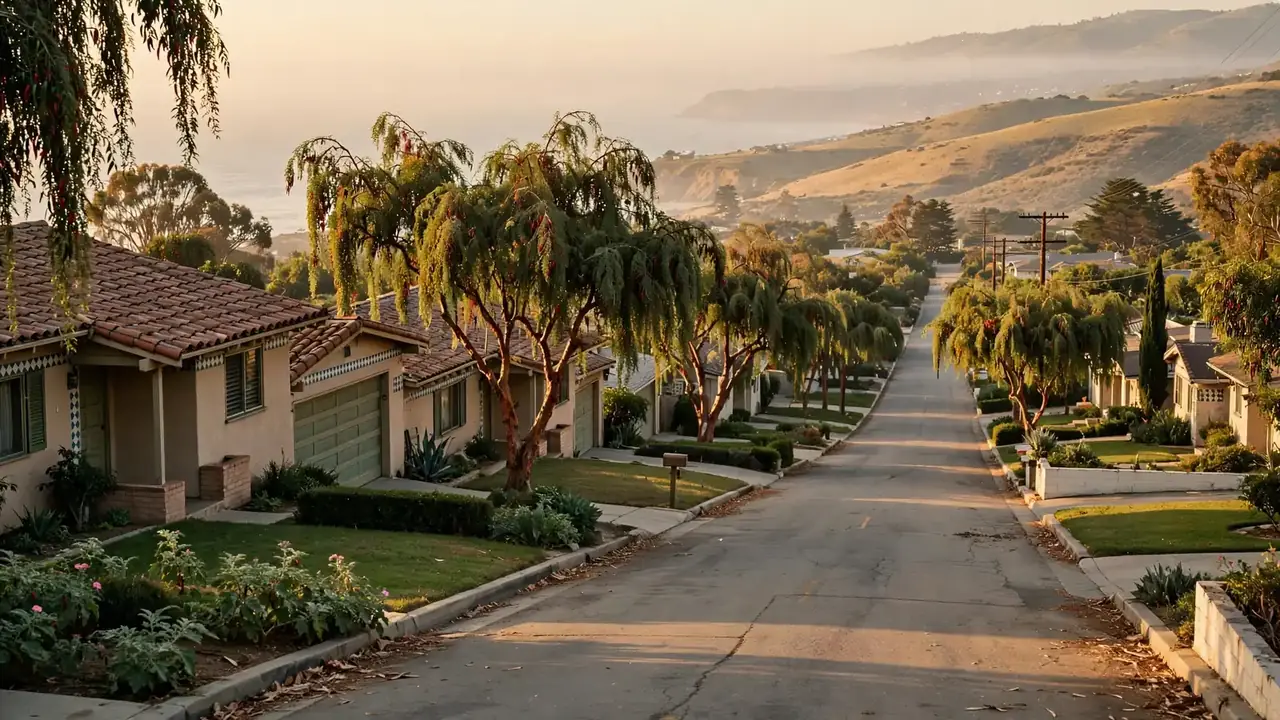
Monaco sits on the high ground in the center of the peninsula, near Crest Road and the Mesa tract, and the history of Mesa gives Monaco its date. When Ray Watt acquired the Mesa land in the fall of 1962 and graded an entrance off Crest Road in January 1963, the account of the tract names what already stood around it: Crestridge, Saint John Fisher Church and school, Del Cerro Park, Northrop Research Center, Monaco, bean fields, and an old farm house and barn. Monaco was already an established neighborhood before the Mesa tract of 423 homes was built out over five years. Its homes are mid-century homes on the ridge, with the larger lots and the mature trees that mark the older central neighborhoods.
A lateral laid when a Monaco home was built in the mid-century era is now sixty or more years old. Clay tile generally lasts about fifty to sixty years, so a Monaco lateral is at or past the age the material was made to last. The joints, short clay sections joined with mortar, open with age and ground movement, and roots from the mature trees find every opening. Cast iron, used for the indoor drains and the first stretch outside the foundation, corrodes from the inside and narrows until the line barely passes water. The first sign is usually a slow drain, a gurgling toilet, or a backup at the lowest drain in the house, and the pattern repeats because the joints stay open after the roots are cleared.
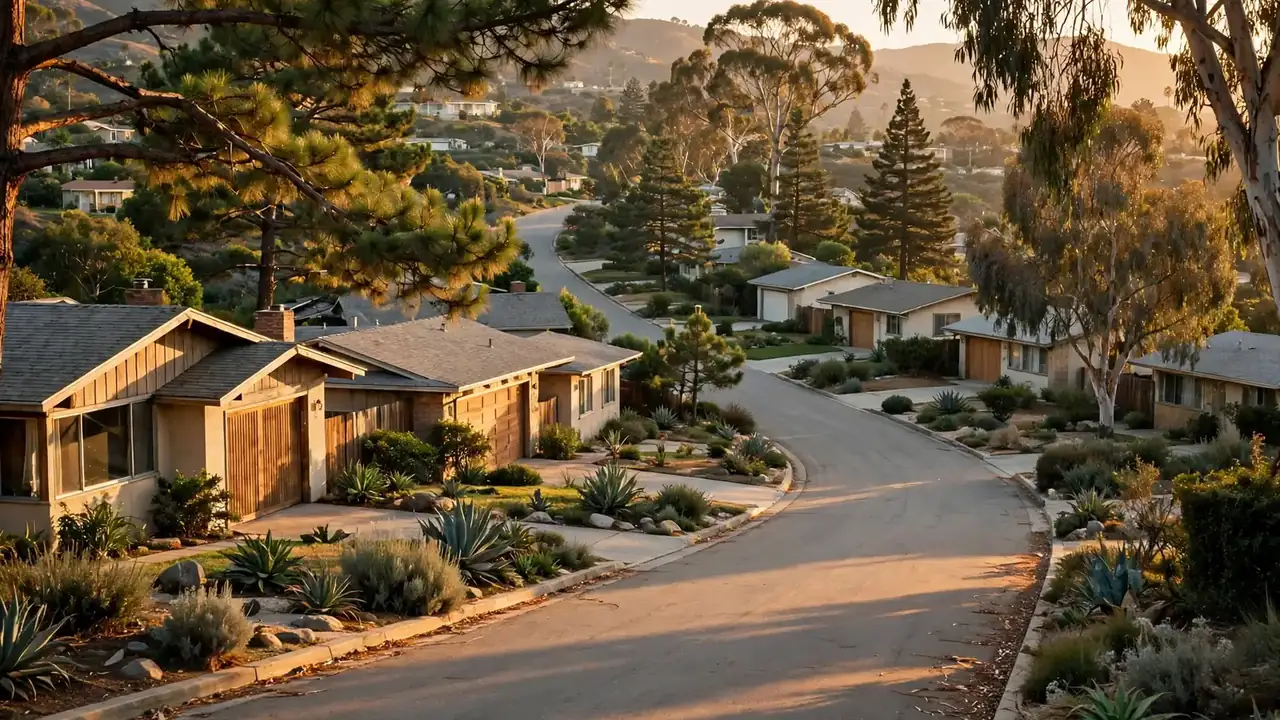
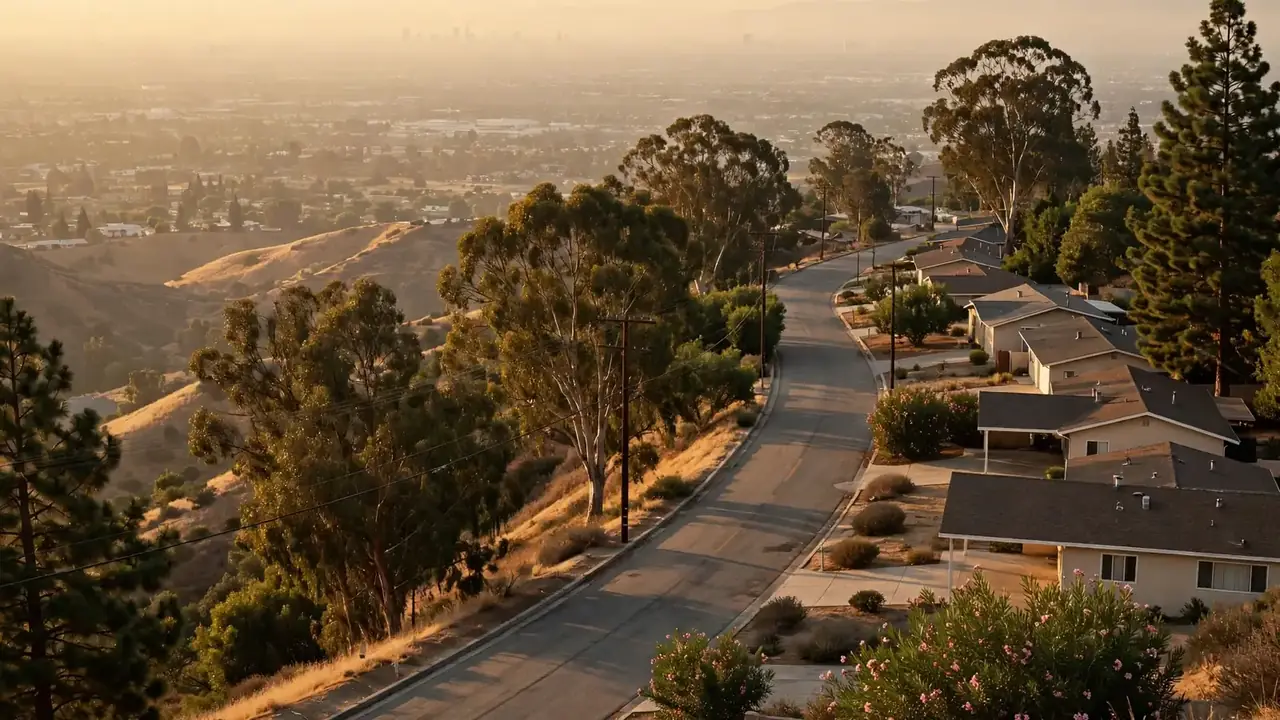
The ridge ground in Monaco shapes the failure pattern. The neighborhood sits on high ground, and the laterals run downhill from the houses to the mains in the lower streets. A lateral on a slope is more likely to settle into a belly or separate at a joint as the ground moves downhill over time, and the fall of the line depends on the ground holding its shape. When the ground shifts, the fall changes, and the line backs up at the lowest drain. The camera inspection measures the depth and the grade along the run, so the crew knows where the line is shallow, where it is deep, and where it has bellied.
Local note
Monaco was already an established neighborhood when the Mesa tract was graded in 1962 to 1963, and its homes are mid-century ridge homes near Crest Road. A lateral from that era is now sixty or more years old, and a camera inspection shows its condition before the next backup.
How sewer lines fail in Monaco
Depth changes along the run in Monaco, because the ground falls away from the ridge houses toward the lower streets. A line can be shallow near the house and deep at the main, and the work has to be planned for both: a shallow section is reached through a small excavation, while a deep section needs a larger dig and more care. The slope also changes how water moves. A steep section carries waste quickly, while a settled section holds it. The camera inspection measures the depth along the run, so the crew knows where the line is shallow, where it is deep, and where it has bellied, before any method is chosen.
When a Monaco lateral is replaced, the slope is the detail that matters most. The new line has to hold the correct grade from the house to the street main, even as the ground continues to move downhill over time. That means careful bedding and compaction under the pipe, so the slope stays true after the trench is closed. A line laid without that care will belly again within a few years. Trenchless methods suit Monaco well where the line is still round and continuous, because they replace the lateral through small pits instead of opening a trench across a landscaped front yard. The finished line is camera-checked before the work is called done, and the check shows the slope as well as the joints.
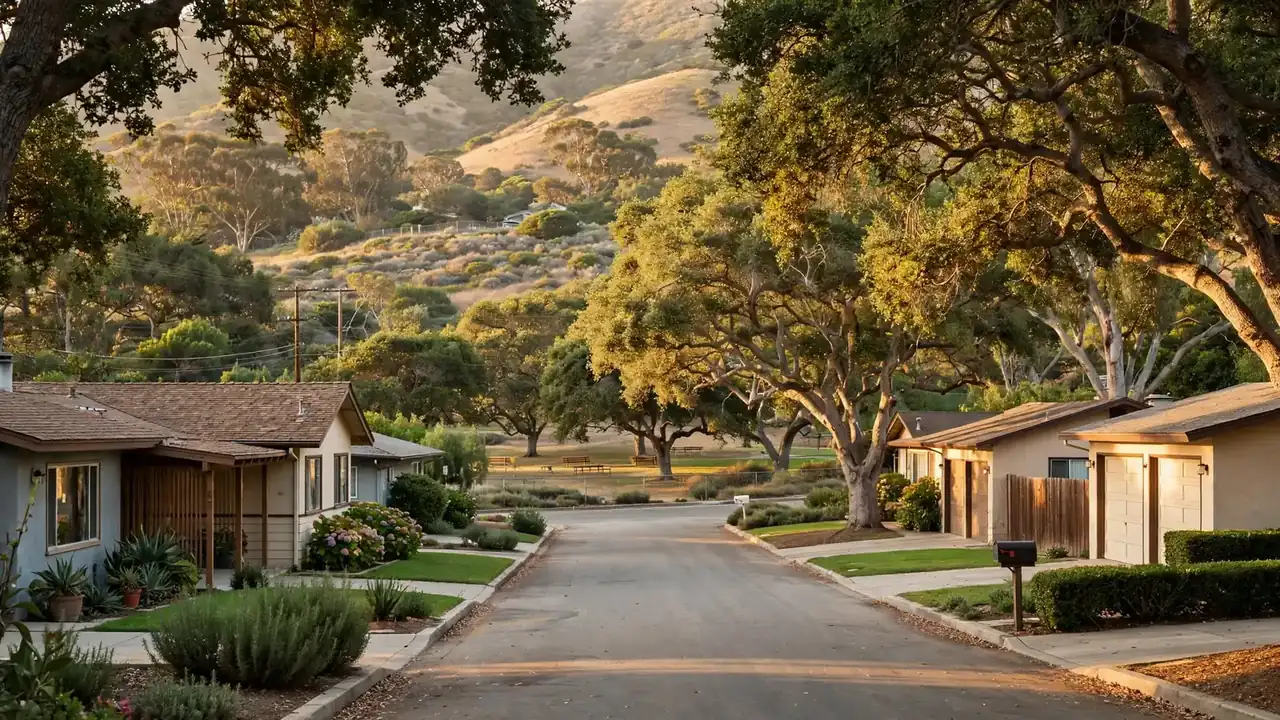
The mature trees in Monaco are part of the ridge character and part of the sewer problem. Their roots seek the moisture at an open clay joint, and a line with roots at many joints has failed along its length. In Monaco the root pattern is worth watching across the seasons, because the ridge soil dries out in the summer and swells again with the winter rain, and each cycle opens the clay joints a little wider. A line that was cleared in the spring can back up again by the autumn, when the roots have had months to grow back into the joints, and the backup usually appears at the lowest drain in the house first. Hydro jetting clears the roots and restores flow, but it does not close the joints, so the cycle repeats until the lateral is lined or replaced with sealed joints. A camera inspection every two to three years shows whether the roots are at one joint or at many, and that count is what decides between a clearing and a replacement. The inspection also shows the cast iron at the house end, which corrodes from the inside and narrows over the decades, and the connection at the street main, where a clay line meets the public main. All three parts of the run matter, and the inspection is the only step that shows all three at once. A camera inspection every two to three years is the usual advice for a home with a root history, and every year where the roots have already caused a backup. Homeowners here should also know the citywide rule: the property owner is responsible for the entire private sewer lateral, including the portion beyond the property line into the public right-of-way, while the county maintains only the public main.
Related reading in Monaco: Signs Your Sewer Line Is Failing · What a Camera Inspection Shows · RPV Sewer Permits
Sewer line services in Monaco
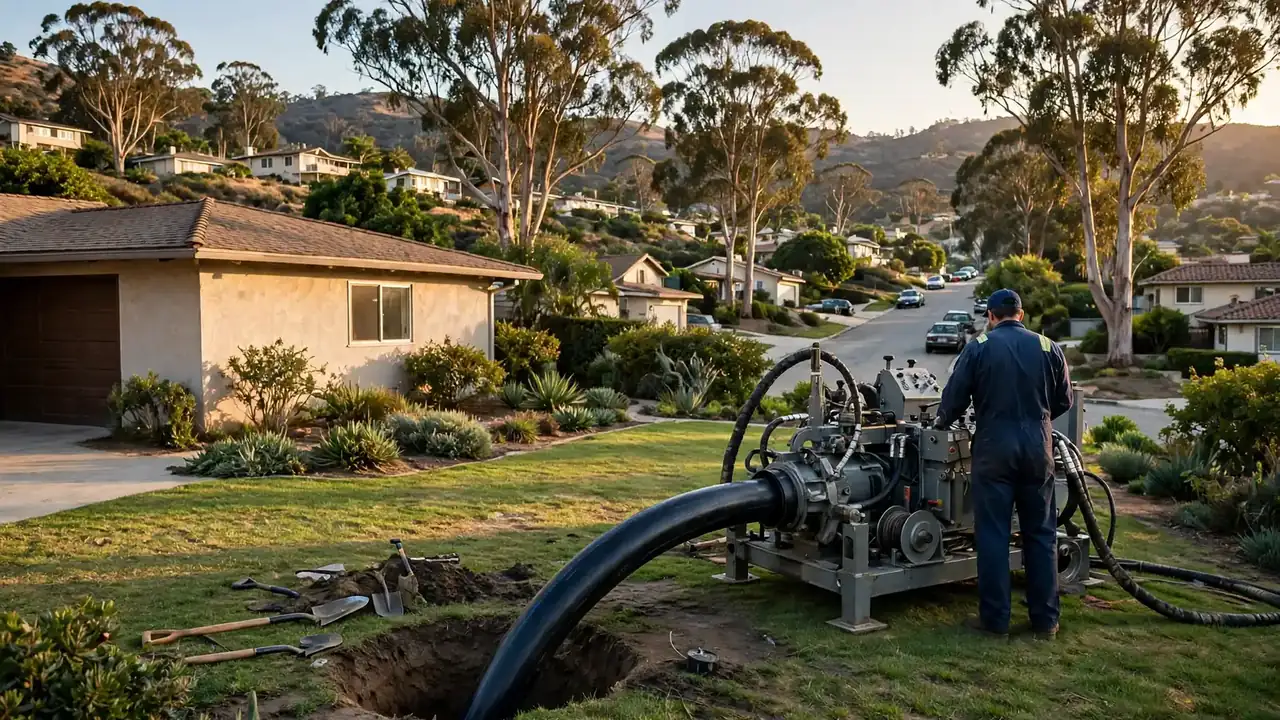 Trenchless Sewer Repair
a failed lateral renewed through small access points, with the yard left intact in Monaco.
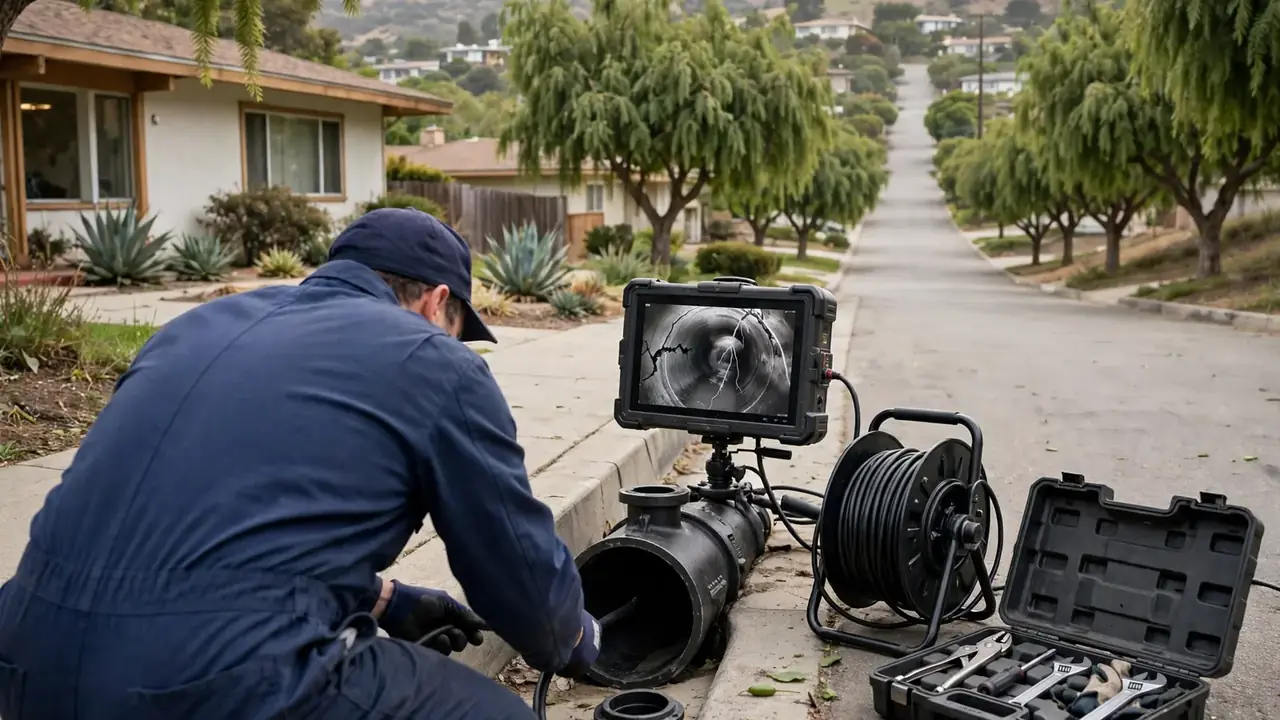 Sewer Camera Inspection
the inside of the line seen on camera, with each defect located and marked in Monaco.
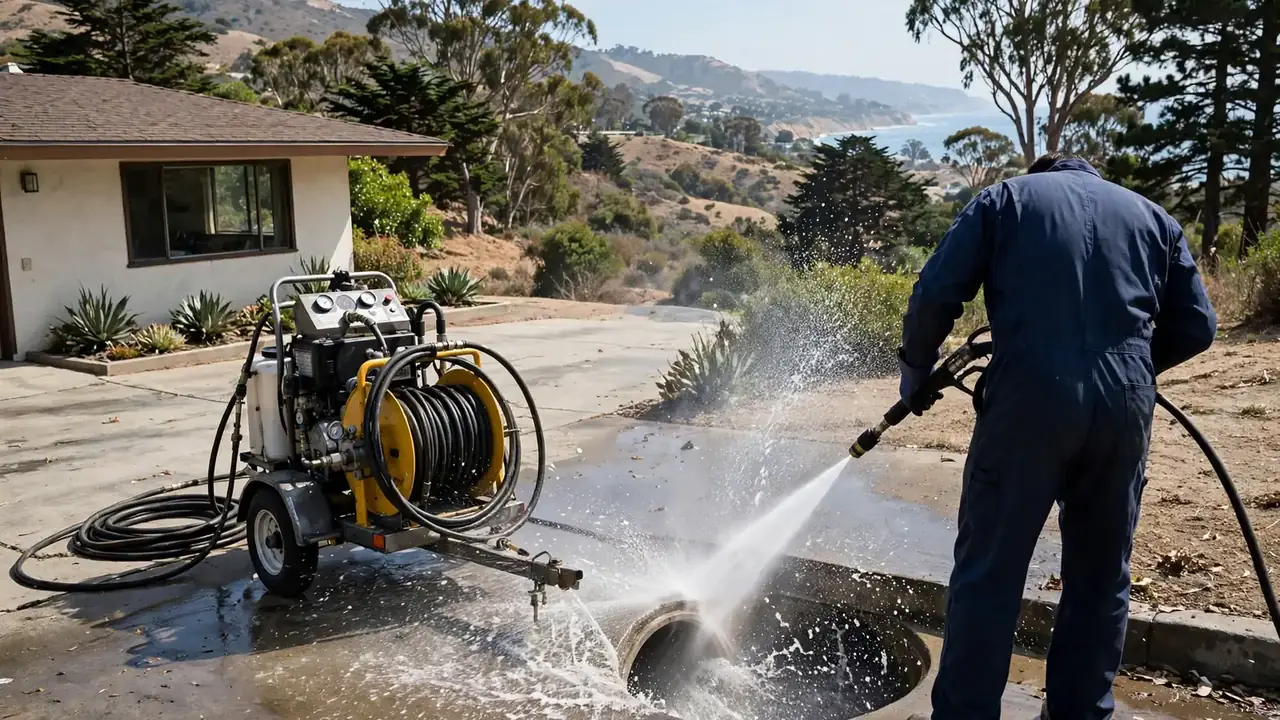 Hydro Jetting
a lateral cleared with high-pressure water, so roots and buildup are washed out in Monaco.
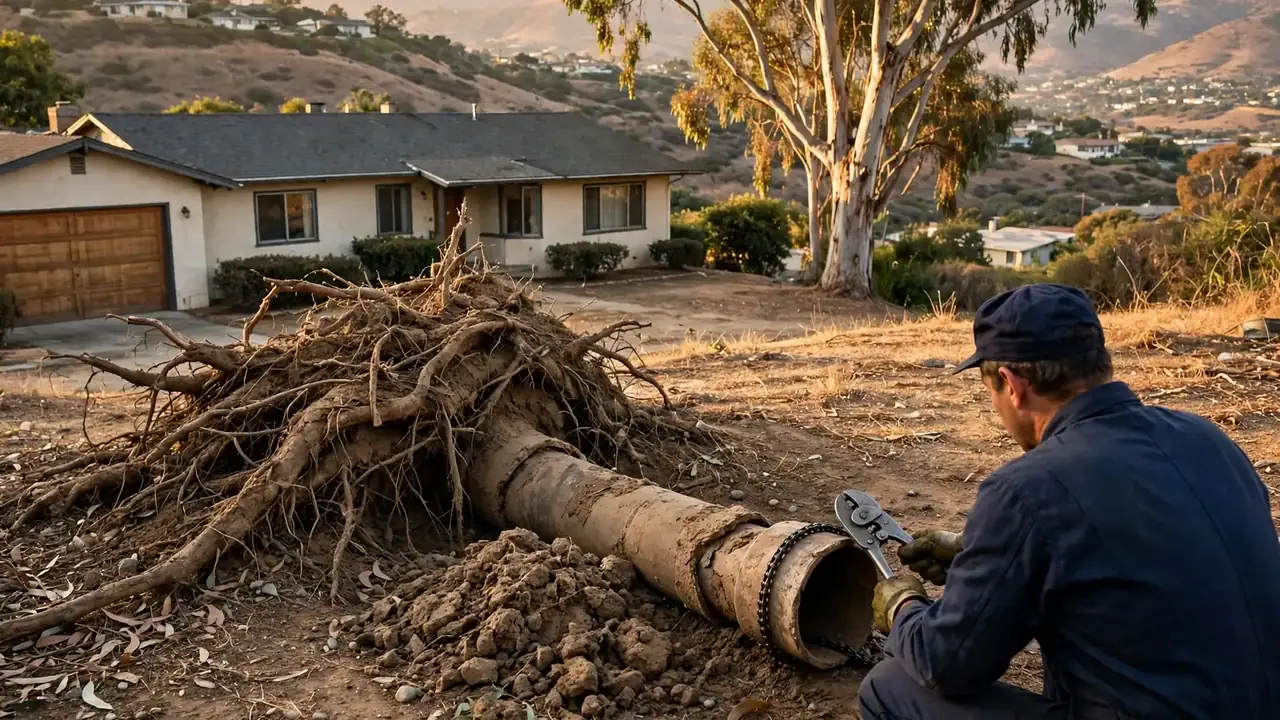 Sewer Root Removal
roots cleared from the line, with the camera showing where they entered in Monaco.
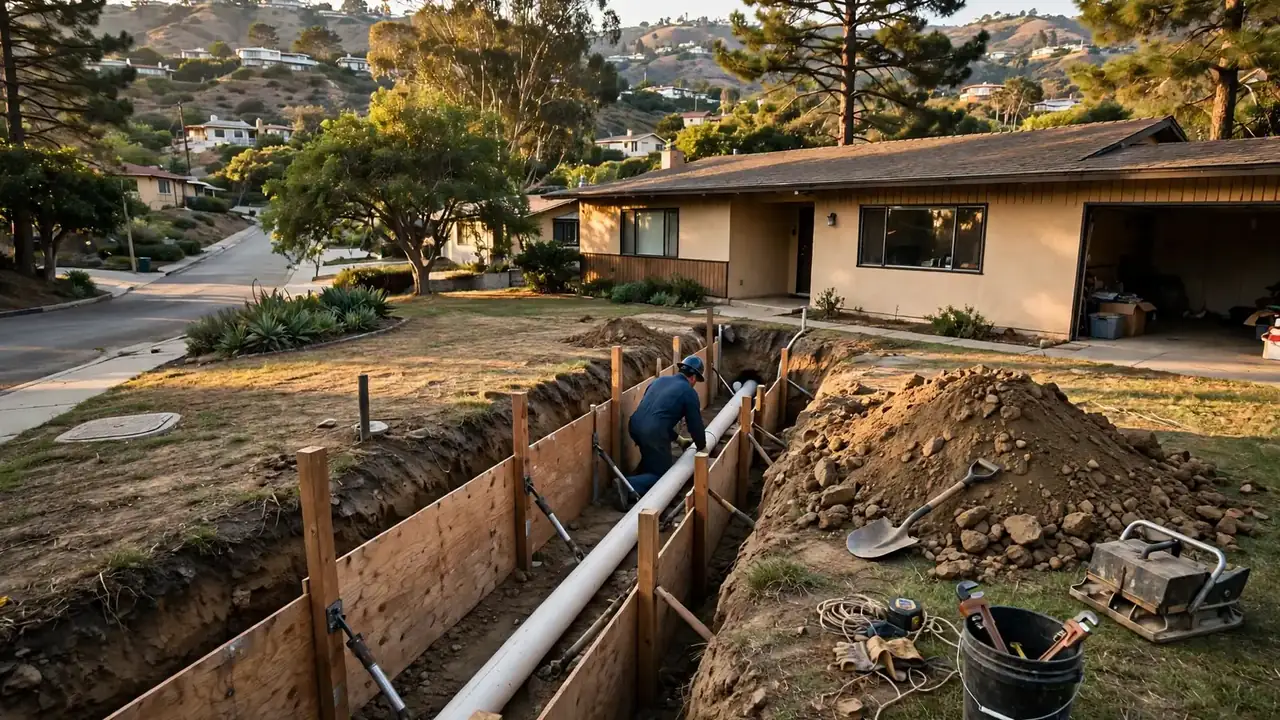 Sewer Lateral Repair
the line from the house to the street main repaired, trenchless or open-trench in Monaco.
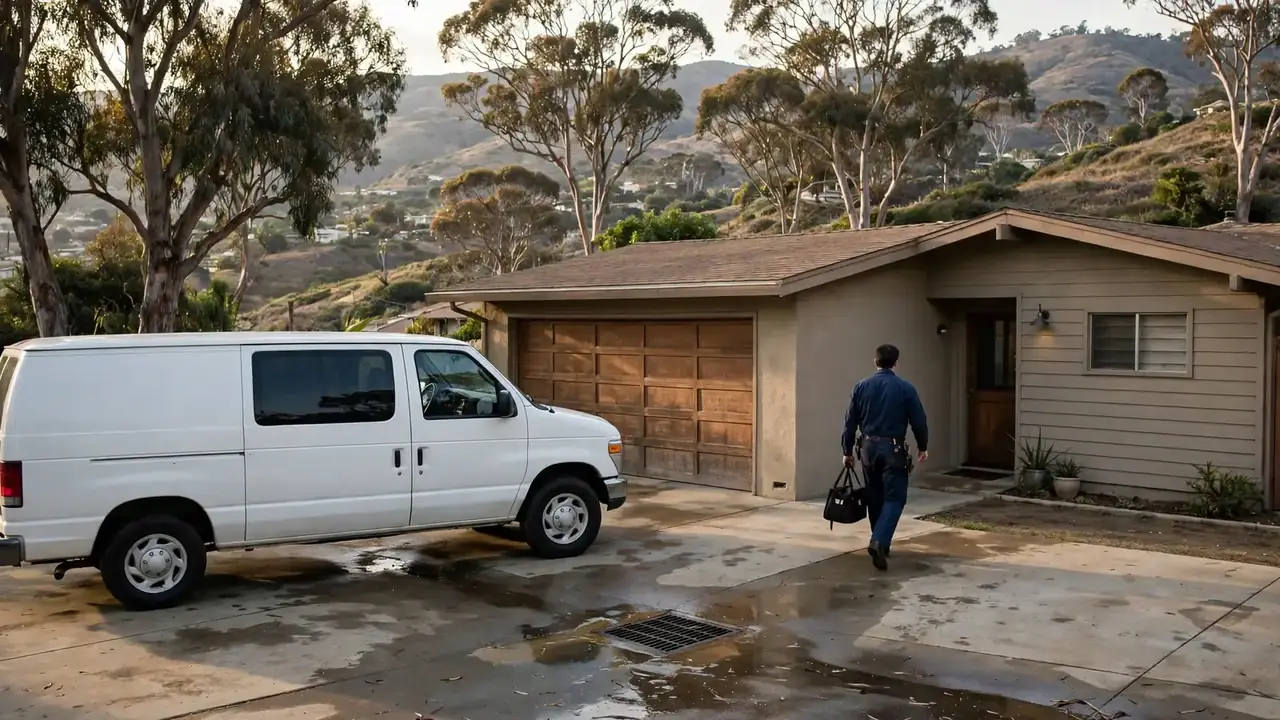 Emergency Sewer Repair
a backup in progress handled as an urgent call, with the cause found on camera in Monaco.
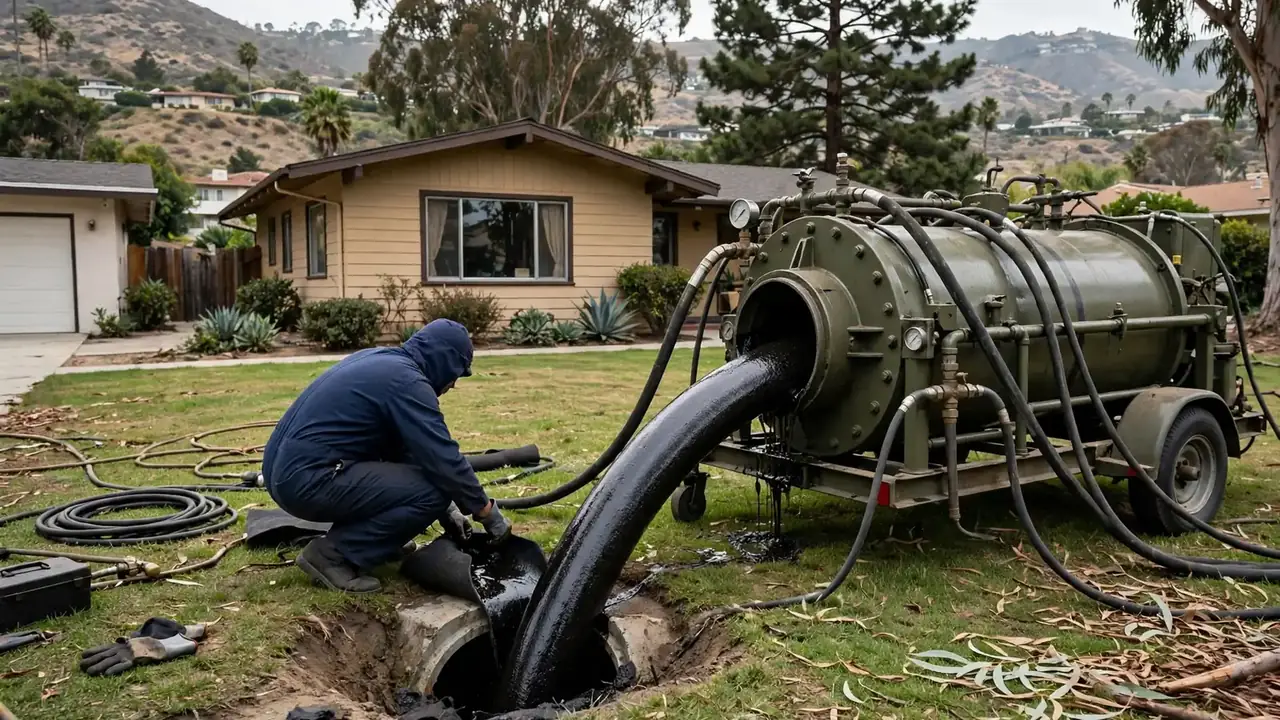 Sewer Pipe Lining
a new pipe built inside the old one, with no joints for roots to enter in Monaco.
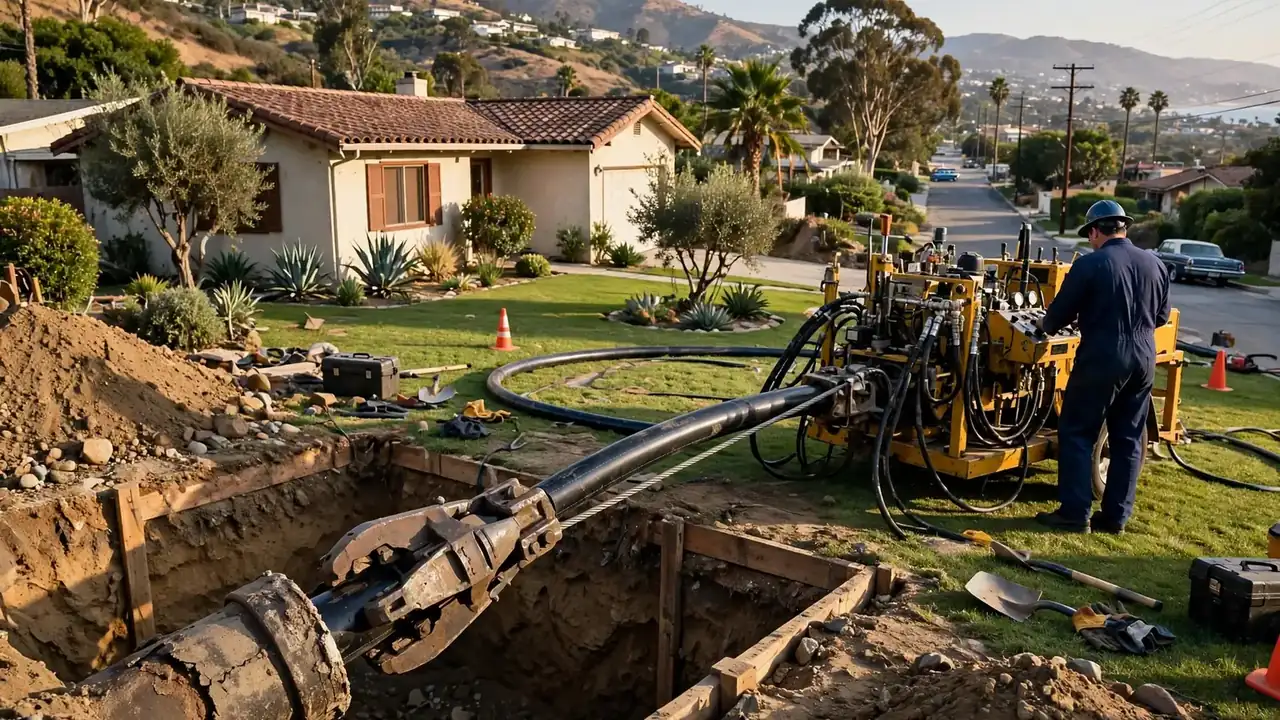 Pipe Bursting
the old pipe broken outward and a new pipe pulled into its place in Monaco.
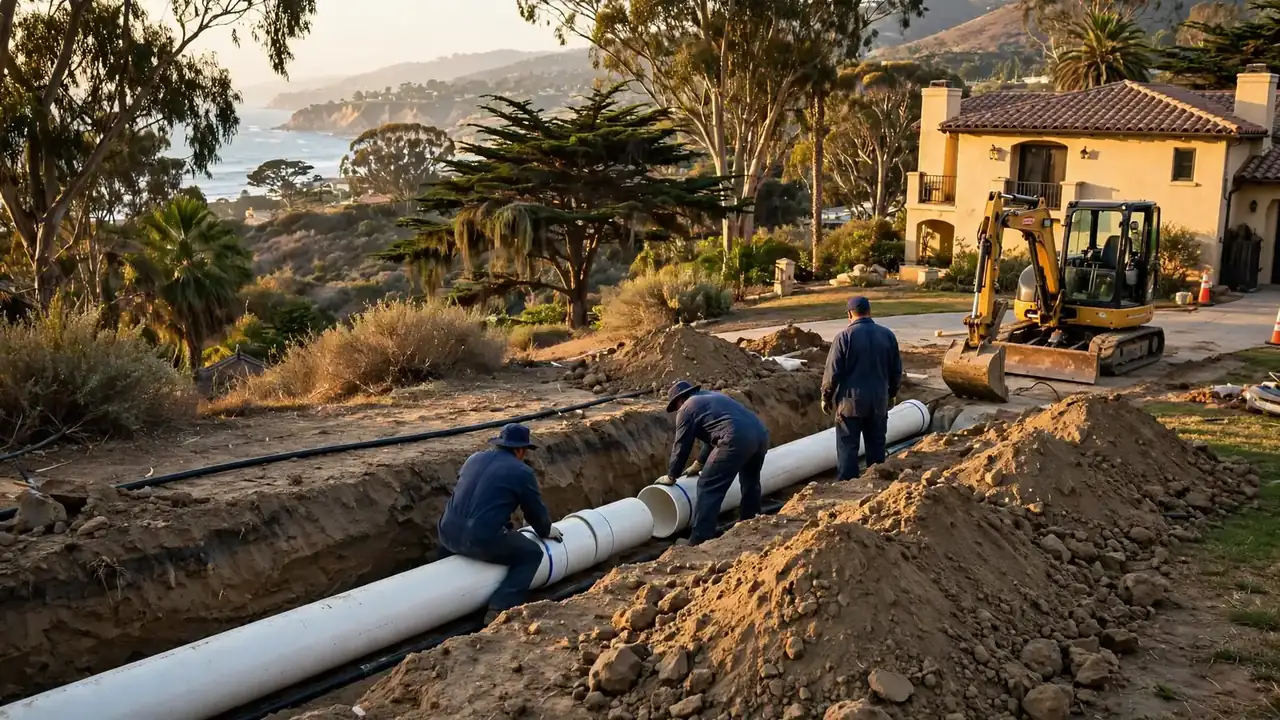 Sewer Line Replacement
a failed lateral replaced with a new line, from the house to the street main in Monaco.
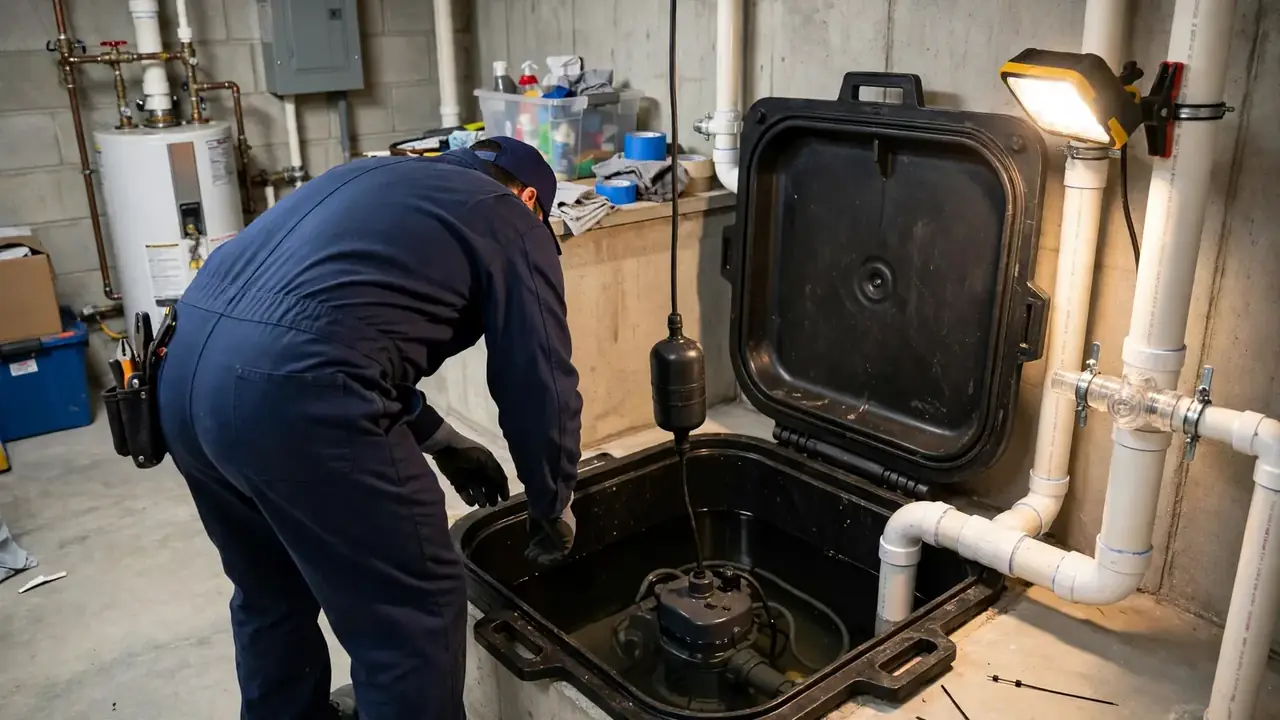 Sewage Ejector Pump Repair
a sewage ejector or grinder pump repaired so below-grade fixtures drain again in Monaco.
Sub-areas covered in Monaco
- Crest Road side — homes near the ridge road through the center of the city.
- Mesa border — homes toward the Mesa tract, with mid-century laterals.
- Ridge-top streets — homes on the high ground, with laterals running downhill.
- Streets near Saint John Fisher — homes in the central ridge area.
- North side — streets toward the Peninsula Center area.
- South side — homes toward the La Cresta area.
- Tree-lined streets — homes with mature trees over the laterals.
- Large-lot streets — homes on the bigger ridge lots, with longer lateral runs.
ZIP codes served








Frequently asked questions
Questions people in Monaco ask about sewer lines, answered plainly.
Monaco was already an established neighborhood when the Mesa tract was graded in 1962 to 1963. The account of the Mesa build names Monaco among the places already standing around the new tract, alongside Crestridge, Saint John Fisher Church and school, and Del Cerro Park. Its homes are mid-century ridge homes, and their laterals date from the same era.
The neighborhood sits on high ground, and the laterals run downhill to the mains in the lower streets. Over time the ground moves downhill, a section of pipe settles or separates at a joint, and a belly forms where the fall changes. The camera inspection measures the grade along the run, so a belly or a separated joint is found by measurement rather than by guesswork.
Mostly clay tile and cast iron from the mid-century era. Clay tile fails at the joints, which open with age and let roots in. Cast iron corrodes from the inside and narrows. A camera inspection identifies the material section by section, so the repair plan matches what is actually in the ground.
Where the camera shows the line is still round and continuous, pipe bursting or lining replaces it through small pits, which fits a ridge lot with a landscaped front yard. The ridge grade is the limit to watch: a section that has settled into a deep belly keeps that belly after lining, because the liner takes the shape of the old pipe. That section has to be opened and re-laid at the correct grade, and the finished line is camera-checked before the work is called done.
It changes along the run, because the ground falls away from the ridge houses toward the lower streets. A line can be shallow near the house and deep at the main. The camera inspection measures the depth along the run, so the crew knows where the line is shallow, where it is deep, and where it has bellied before any method is chosen.
Yes. Monaco homes are mid-century homes, and their laterals are now sixty or more years old, past the working life of clay tile. A lateral at the end of its life may show no symptom at all until it backs up. The inspection shows the condition of the line and the connection at the street main before the purchase is final.
Sewer line trouble in Monaco?
Call Now to reach a local sewer professional serving Monaco and Rancho Palos Verdes.
Call now for sewer line help in Monaco
Tap Call Now to reach a local sewer professional. Tell them where the problem is, what the line has been doing, and whether wastewater is coming into the home.
Hours: Mon–Fri 7:00 AM–10:00 PM PT · Sat 8:00 AM–10:00 PM PT · Sun 7:00 AM–9:00 PM PT
Before you call
- Stop using water if the line is backing up.
- Keep people and pets away from any wastewater.
- Note which drains are slow, and which one backs up first.
- Note whether the problem happens in heavy rain, or all the time.
- Have the age of the home ready, if you know it.