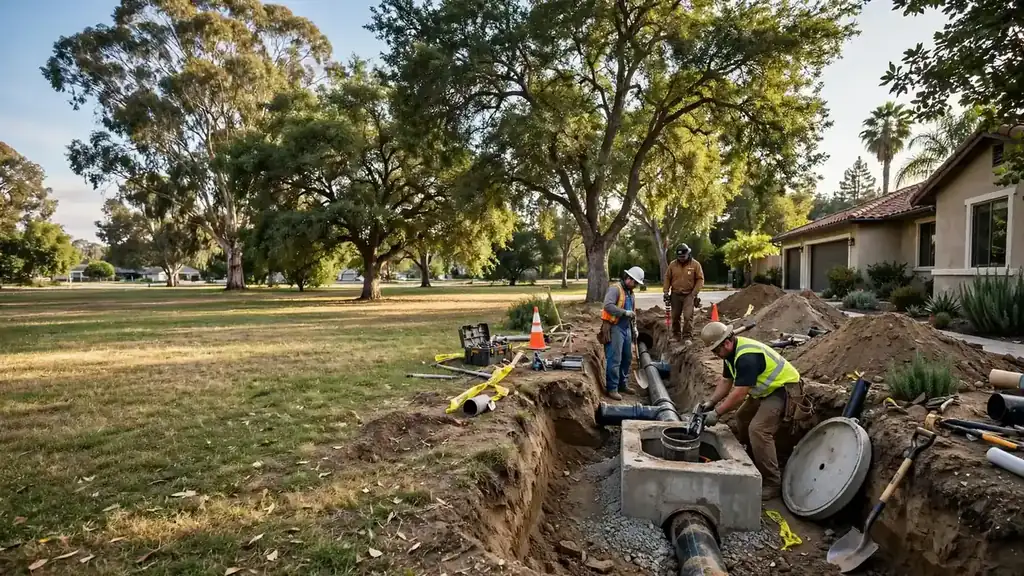
Septic to Sewer Conversion in Rancho Palos Verdes, CA
Most of Rancho Palos Verdes is on the public sewer system. Some pockets are still on private septic, and converting one of those homes to sewer is a project with its own path.
Need help with your sewer line?
Call Now to reach a local sewer professional. Describe the problem, where it is, and what the line has been doing.
Hours: Mon–Fri 7:00 AM–10:00 PM PT · Sat 8:00 AM–10:00 PM PT · Sun 7:00 AM–9:00 PM PT
Where septic still exists in Rancho Palos Verdes
Most of Rancho Palos Verdes is served by the public sewer system, maintained by the LA County Consolidated Sewer Maintenance District, with the Abalone Cove system as the one City-owned and operated system. Some areas of the city are not in any sewer maintenance district plan and remain on private septic systems. Those pockets are scattered rather than grouped in one place, and they tend to be lots where the public main never reached, or where the ground, the grade, or the distance made a connection impractical when the area was built. A home on septic in Rancho Palos Verdes is the exception, not the rule, and the owner of such a home has a different set of responsibilities from a neighbour on the public system.
A septic system is a self-contained system: a tank that separates solids from liquid, and a leach field or similar dispersal area where the liquid soaks into the ground. It works when it is maintained, pumped on schedule, and sized for the household, and it fails when it is not pumped, when the field clogs, or when the household grows beyond what the system was built for. The signs of a failing septic system look familiar — slow drains, gurgling toilets, a smell near the tank or the field, wet ground above the field — but the cause and the fix are different from a sewer lateral problem, because there is no public main to connect to and no shared system to fall back on.
The first question for a septic homeowner is whether a public sewer main is available to connect to at all. Availability depends on the distance from the lot to the nearest public main, the grade between the lot and the main, and whether the main has capacity for the connection. A lot that sits close to a main on a downhill grade is a straightforward conversion. A lot that sits far from the main, uphill from it, or across ground that cannot be trenched easily is a harder conversion, and may need a pump system to lift the wastewater to the main. The City and the County are the sources for that answer, and the conversion starts with asking them, not with digging. County records are the starting point for the availability question. The Department of Public Works holds the maps of the public mains, with their location, depth, and capacity, and a records search shows the nearest main to the lot and the route a connection would take. The homeowner should request that search early, because the distance and the grade it shows decide whether the conversion is straightforward or difficult, and the design cannot be drawn until the main is located. A conversion planned without the County records is a conversion planned on a guess about where the main is.
Why homeowners convert from septic to sewer
Homeowners convert for several reasons, and the reasons often arrive together. A septic system that is failing — a tank that needs replacing, a field that no longer absorbs, a system that backs up after heavy rain — is a strong reason, because the cost of rebuilding a septic system can be close to the cost of converting, and the converted home no longer has a tank to pump or a field to maintain. A homeowner who is remodelling or adding to the house may find that the existing septic system cannot serve the larger household, and the conversion is part of the larger project. A homeowner who is selling may find that a buyer prefers a home on the public system, and the conversion removes a question from the sale.
The public system also changes the daily routine. A home on septic needs the tank pumped on schedule, needs care about what goes down the drains, and needs the field kept clear of traffic, paving, and deep-rooted planting. A home on the public system has none of those chores: the wastewater leaves the property through the lateral to the public main, and the maintenance of the main belongs to the County. That change is the quiet reason many homeowners convert, even when the septic system is still working. The conversion trades a system the owner maintains for a system the County maintains, and the lateral becomes the owner's only sewer responsibility.
There are also regulatory reasons. A septic system that is failing can affect groundwater and neighbouring lots, and the County health and public works agencies can require a repair or a conversion when a system is found to be failing. A homeowner who is already dealing with a failing system should ask the County what the options are, because the conversion may be the required fix rather than one choice among several. The conversion is also a long-term investment in the property: a home on the public sewer system is a simpler home to sell, to insure, and to remodel, because the sewer question has a single answer. A remodel is the moment many septic owners convert. A homeowner adding a bedroom, a bathroom, or an accessory unit may find that the existing septic system cannot serve the larger household, and the County will not approve the remodel on a system that is too small for it. The conversion becomes part of the remodel, with the new lateral designed alongside the new rooms, and the permits for the two filed together. A homeowner planning a remodel on septic should ask about the sewer connection at the same time as the remodel design, because the answer decides whether the remodel can proceed as drawn.
The conversion path, step by step
A conversion starts with information, not with excavation. The homeowner, or a professional working for the homeowner, asks the City and the County whether a public main is available, where it is, how deep it is, and what the connection requirements are. The answer includes the distance from the lot to the main, the grade, and any easements or right-of-way issues along the route. The homeowner also needs to know the condition of the existing septic system, because the tank has to be dealt with as part of the conversion, and the County health agency has rules for how a tank is abandoned.
The design comes next. The new lateral is designed from the house to the public main, with the correct grade, the correct pipe, and the correct connection at the main. If the house sits below the main, or the grade will not carry wastewater by gravity, the design includes a pump — an ejector or grinder pump inside the house, or a pump station outside it — that lifts the wastewater to the main. The design also covers the abandonment of the septic tank: the tank is pumped, cleaned, and filled or removed under the County's rules, so that it does not collapse later and leave a void under the yard. The design is submitted for approval, and the work cannot start until the permits are in hand.
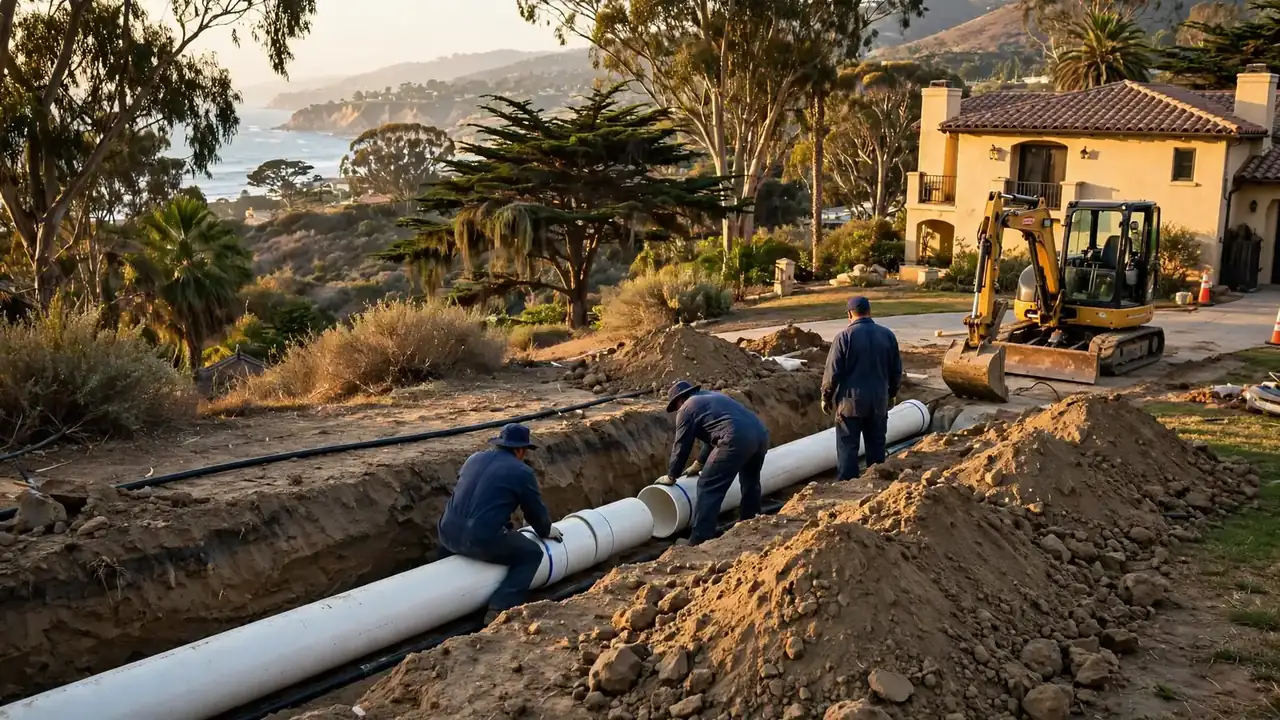
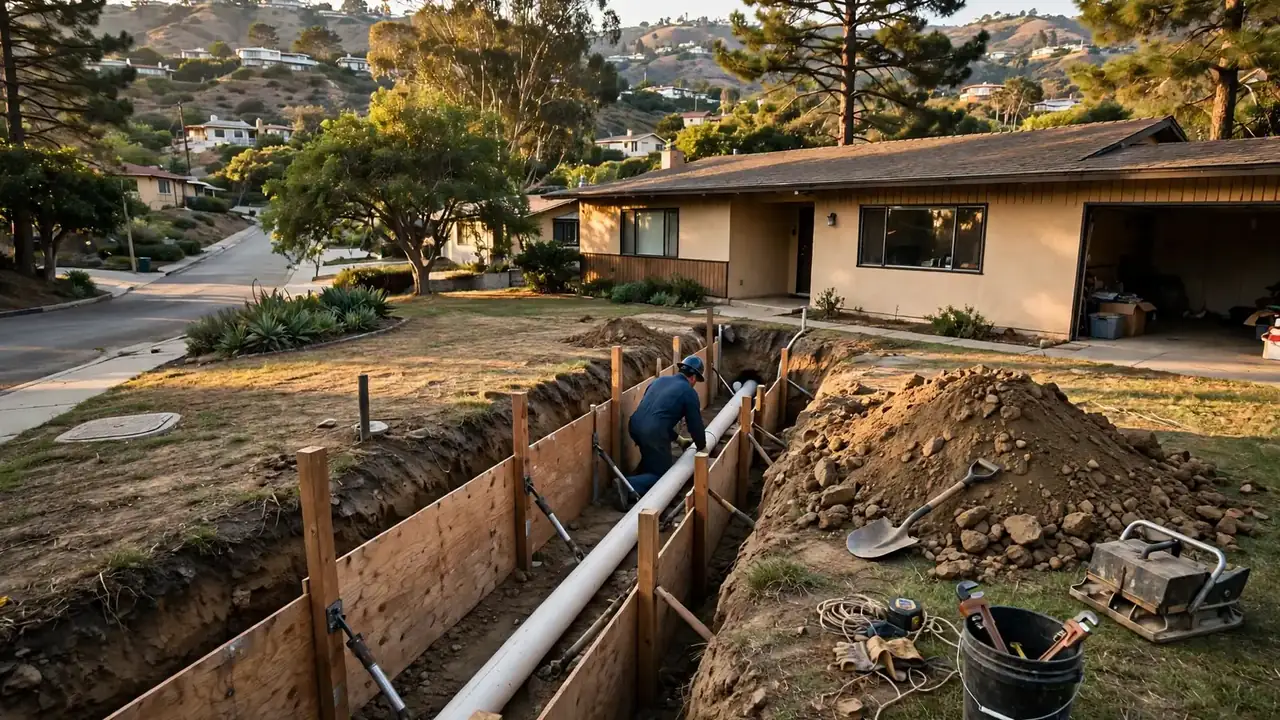
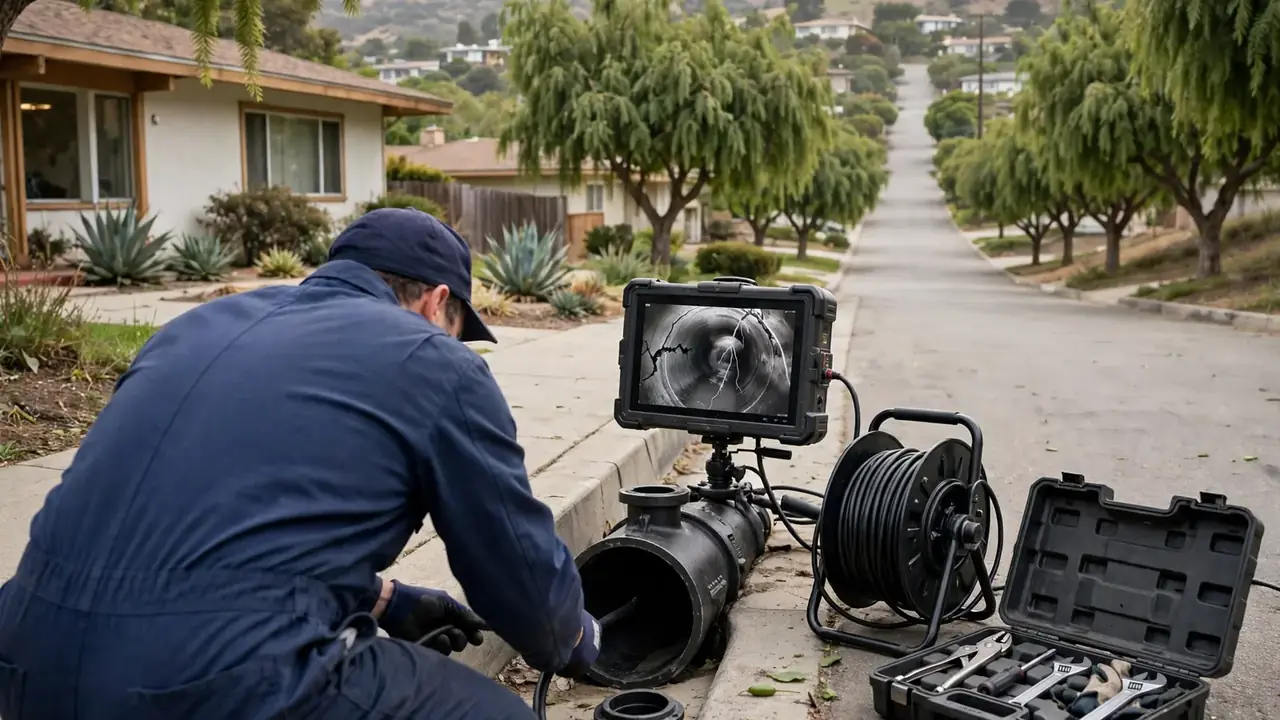
The work itself follows the design. The new lateral is laid from the house to the main, the connection at the main is made, the line is inspected and tested, and the septic tank is abandoned. The house drains are connected to the new lateral, and the septic system is taken out of service. The work is inspected at the stages the permit requires, and the final inspection closes the permit. The homeowner should keep the permit, the inspection records, and the camera footage of the finished lateral, because those records show that the home is now on the public system, and they are useful for the next owner, for the insurer, and for any later work on the line. Testing closes the conversion. After the new lateral is laid and connected, the line is tested for leaks and for flow, and the camera run shows the pipe, the grade, and the connection at the main. The septic tank abandonment is inspected too, so the County can confirm that the tank was pumped, cleaned, and filled or removed as required. The inspections happen at the stages the permit states, and the final inspection closes the permit. A conversion that ends with a closed permit and a camera check is a conversion that is done, and the homeowner should keep the records that prove it.
The City and County process
More than one agency is involved in a conversion, and each has its own part. The City of Rancho Palos Verdes handles the building and plumbing permits for the work inside the city, through its eTrakit system, and the City's permit rules apply — including the rule that permit fees are tripled when work requiring a permit has been started before the permit is obtained. The LA County Department of Public Works handles the public sewer main and the connection to it, and the LA County Consolidated Sewer Maintenance District maintains most of the system the home will join. The County health agency handles the septic side, including the abandonment of the tank and the field.
The homeowner should expect the process to take time, and should plan for it. Permit processing, main-connection approval, and inspection scheduling each take their own time, and the work cannot start until the permits are in hand. A conversion that starts before the permits are issued risks a Stop Work Notice and tripled fees, and a connection made without County approval risks being ordered removed. The schedule should be built around the permits, not around the digging, and the homeowner should ask at the start how long each step takes, so the household can plan around the work.
The fees and charges for a conversion are set by the agencies, and they depend on the distance to the main, the depth of the connection, the permits required, and the work needed to abandon the tank. The homeowner should get the fee schedule from the City and the County at the start, and should keep the receipts and the permit records with the house file. The conversion is a permanent change to the property, and the records of it are part of the property's history. A home that has converted from septic to sewer has a story that the next buyer will want to see, and the permit file tells it. Timelines vary by agency and by season, and the homeowner should ask for them at the start. Permit processing, main-connection approval, and inspection scheduling each take their own time, and the total can stretch across weeks or months, especially when the connection needs a design check or when the main is deep. The fee schedule should be requested at the same time, so the homeowner knows the charges for the permits, the connection, and the inspections before the work begins. A schedule built around the agencies' timelines is a schedule that holds, and a schedule built around the digging alone is a schedule that slips.
Living with the new sewer connection
Once the conversion is complete, the home works like any other home on the public system. The drains run to the lateral, the lateral runs to the public main, and the County maintains the main. The homeowner's responsibility is the private lateral from the house to the main, including the portion beyond the property line in the public right-of-way, and the homeowner should know where that lateral runs and where the cleanout is. A camera inspection every few years shows the condition of the line while it is still working, and a later inspection can be compared against the footage from the conversion to show whether the line is stable.
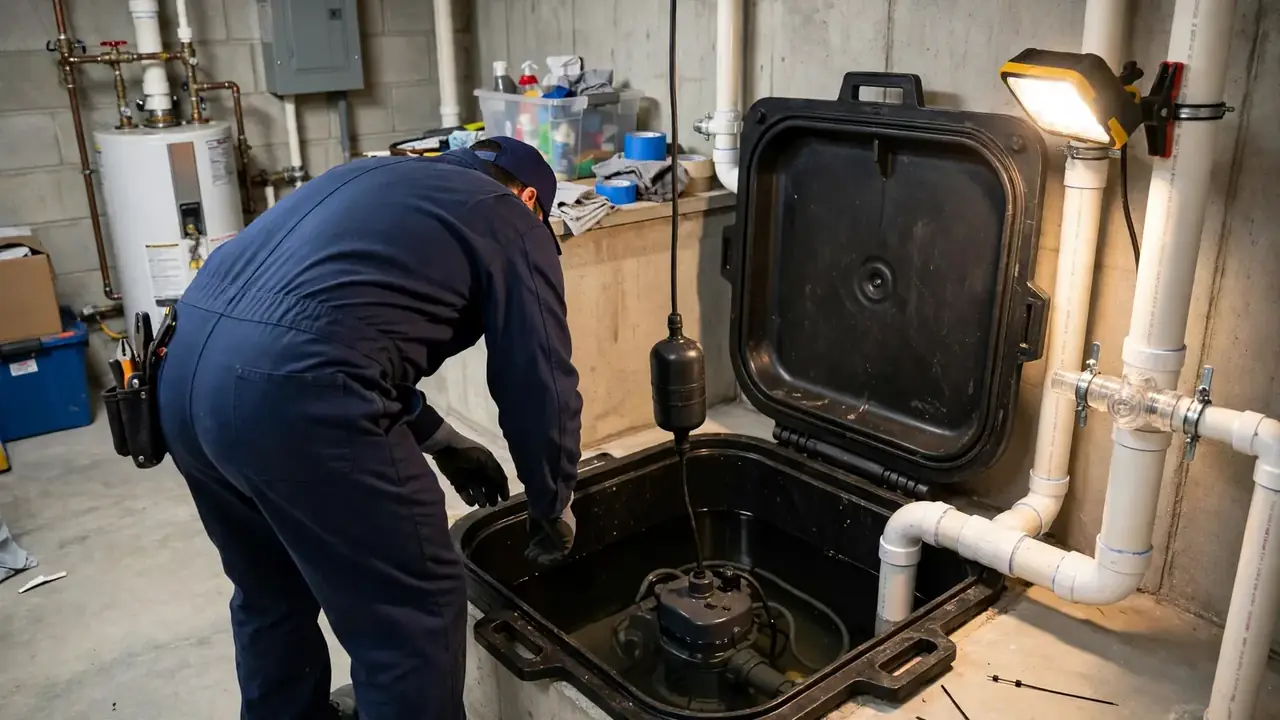
A home with a pump needs a little more attention. A pump that lifts wastewater to the main has moving parts, a control, and an alarm, and the homeowner should know what the alarm sounds like, what it means, and what to do when it sounds. The pump should be checked on a schedule, and the homeowner should know where the pump is and how to reach it. A pump that fails will back up the house, and the alarm is the warning that gives the household time to stop using water and call for help before the backup arrives.
The old septic field needs care too, even after the tank is abandoned. The field area should not be paved, built on, or driven over, because the ground there is disturbed and the abandoned tank and field can settle. The homeowner should keep the record of where the tank and the field were, so that any later digging on the lot stays clear of them. The conversion ends the septic system's working life, but the ground remembers where it was, and the record is what keeps the next project on the lot from digging into it. The alarm is the pump owner's early warning, and it should be tested. A homeowner with a pump should know what the alarm sounds like, should test it on a schedule, and should confirm that the light works and the sound carries into the house. A pump that fails silently is a pump that backs up the house without warning, while a pump whose alarm works gives the household time to stop using water and call for help. The control panel, the alarm, and the pump itself should be checked together, and the check should be recorded with the date, so the household knows when the system was last confirmed working.
Services for septic-to-sewer conversion
Where we work
Eastview · Miraleste · West Palos Verdes · Los Verdes · Monaco · La Cresta · Del Cerro · Mesa Palos Verdes · Mira Catalina · Ladera Linda · Crestridge · Seaview · Portuguese Bend · Abalone Cove · Island View
Services used most
Sewer Line Replacement · Sewer Lateral Repair · Sewer Camera Inspection · Sewage Ejector Pump Repair
Frequently asked questions
Questions people ask about sewer lines in septic-to-sewer conversion, answered plainly.
Yes. Most of the city is on the public sewer system, but some areas are not in any sewer maintenance district plan and remain on private septic. Those pockets are scattered, and they tend to be lots where the public main never reached or where the grade or distance made a connection impractical when the area was built.
Start with the City and the County. They can say where the nearest public main sits, how deep it is, and what a connection there requires. The distance from the lot, the fall between lot and main, and the main's spare capacity decide whether the job is simple or needs a pump.
The tank is pumped, cleaned, and filled or removed under the County health agency rules, so that it does not collapse later and leave a void under the yard. The abandonment is part of the conversion design and is inspected as part of the permitted work.
More than one agency. The City handles the building and plumbing permits, the County Department of Public Works handles the public main and the connection to it, and the County health agency handles the septic side, including the abandonment of the tank and the field.
It depends on the grade. If the house sits below the public main, or the grade will not carry wastewater by gravity, the design includes a pump that lifts the wastewater to the main. The camera and survey work for the design shows whether gravity alone will work.
File the permit with its inspection sign-offs and the camera recording of the finished line, plus the note of where the old tank and field were. Those papers prove the home now drains to the public system, and they tell the next owner, and anyone digging on the lot later, exactly what was done and where.
Sewer line trouble in your Rancho Palos Verdes home or business?
Call Now to reach a local sewer professional. Describe the problem, where it is, and what the line has been doing.
Call now for sewer line help
Tap Call Now to reach a local sewer professional. Tell them where the problem is, what the line has been doing, and whether wastewater is coming into the home.
Hours: Mon–Fri 7:00 AM–10:00 PM PT · Sat 8:00 AM–10:00 PM PT · Sun 7:00 AM–9:00 PM PT
Before you call
- Stop using water if the line is backing up.
- Keep people and pets away from any wastewater.
- Note which drains are slow, and which one backs up first.
- Note whether the problem happens in heavy rain, or all the time.
- Have the age of the home ready, if you know it.