How Often to Camera-Inspect Your Sewer Line in Rancho Palos Verdes, CA
A camera inspection every two to three years is a reasonable check for an old Rancho Palos Verdes lateral — annually if roots have been a problem, and always before a purchase or after a backup.
Rancho Palos Verdes Sewer Line Pros · 2026-11-17 · Guides
The short version
Problem: Every two to three years is a reasonable check for an old lateral, and annually where roots have been a problem.
What to do: Always inspect before buying a home, and always after a backup, so the cause is found while it can still be fixed.
When to call: Call Now if the line has backed up, or have it inspected to see its condition while it is still working.
Every two to three years for an old lateral
A camera inspection every two to three years is a reasonable check for a Rancho Palos Verdes home with an original lateral. The median year homes here were built is 1967, and more than four in five homes date from before 1980. Those laterals were laid in clay, cast iron, or bituminous fiber, and each of those materials fails gradually, not all at once. An inspection every few years catches the failure while it is still a crack or a root entry, not a collapse. A lateral laid in clay, cast iron, or bituminous fiber fails gradually, not all at once, and an inspection every few years catches the failure while it is still a crack or a root entry.
The interval is a guide, not a rule. A lateral that was inspected two years ago and found to be sound, with tight joints and a clear bore, does not need another inspection next year. A lateral that was found to have roots at several joints, or a belly that is deepening, needs watching more closely, because the next inspection may show the problem has grown. The findings from the last inspection set the interval for the next one. A lateral that was found sound two years ago does not need another inspection next year, but one that was found to have roots at several joints needs watching more closely.
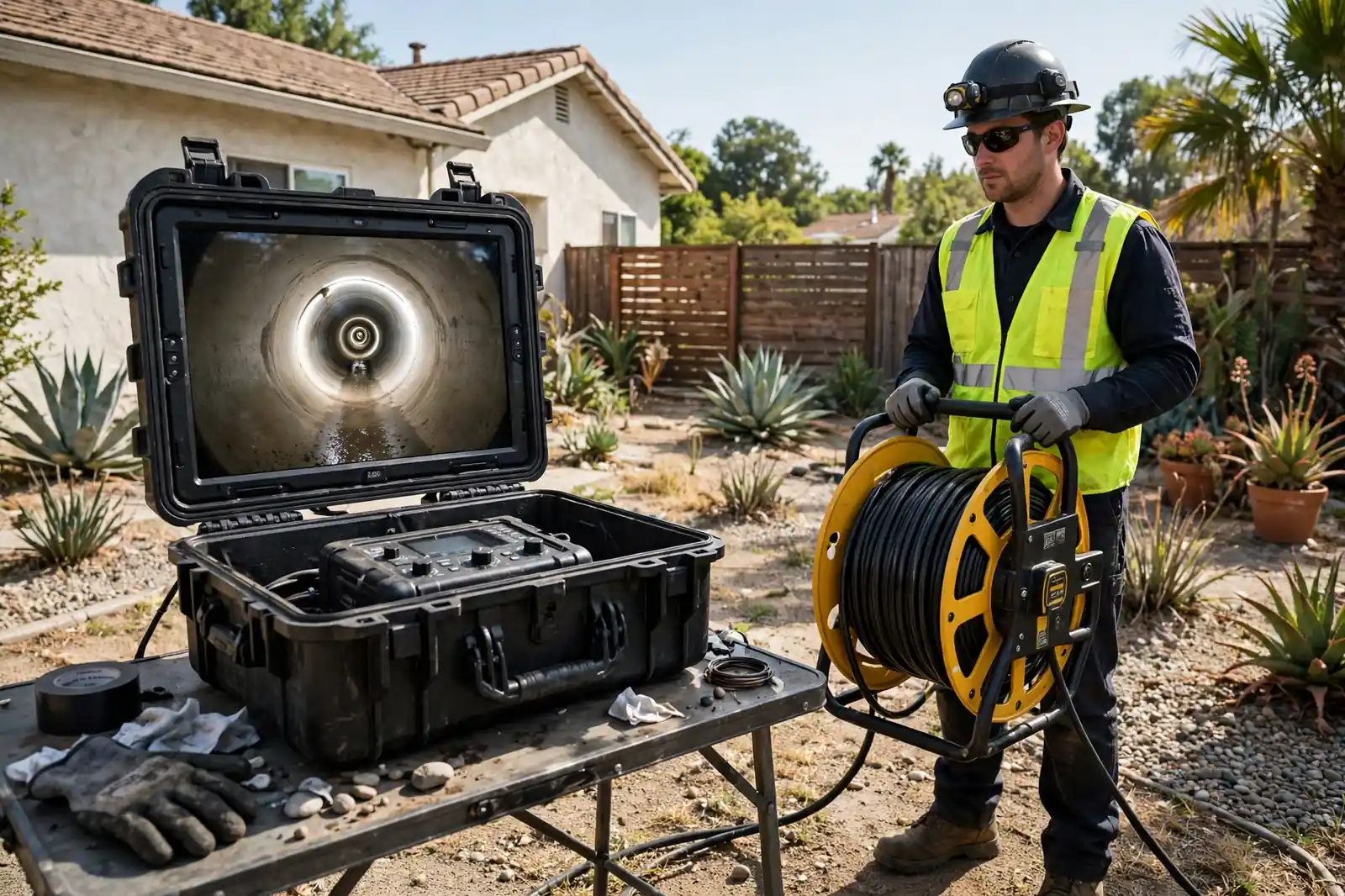
The inspection is quick work on site, usually well under an hour once the camera is in the line, and the findings are the record of the line's condition at that point in time. A later inspection can be compared against the earlier one, and the comparison shows whether the line is stable or failing. A line that has been inspected is a known quantity. A line that has not been inspected is a guess. The findings from the last inspection set the interval for the next one, and the comparison between inspections shows whether the line is stable or failing over time.
Annually where roots have been a problem
Where roots have been a problem, the interval shortens to every year. Roots grow back through the same open joints, and a line that was cleared for roots last year may be root-filled again this year. An annual inspection shows how fast the roots are coming back, and whether the joints are opening further, so the homeowner can see the cycle and decide when to fix the pipe rather than clear it again. Roots grow back through the same open joints, and a line that was cleared for roots last year may be root-filled again this year, which is why the interval shortens where roots have been a problem.
Eucalyptus and pepper trees are common across Rancho Palos Verdes, and their roots seek the moisture that leaks from an opened clay joint. A home in Miraleste or Eastview, with mature trees over the lateral, is a home where an annual inspection makes sense, especially if the line has been cleaned for roots more than once. The inspection shows the count of joints involved, and the count is what decides between a spot repair, lining, and replacement. A home in Miraleste or Eastview, with mature eucalyptus and pepper trees over the lateral, is a home where an annual inspection makes sense, especially if the line has been cleaned for roots more than once.
An annual inspection is also worth doing where the line has been lined or replaced, for the first few years after the work. The inspection shows the finished pipe holding up, the joints sealed, and the flow clear. After a few sound inspections, the interval can lengthen again, because the new pipe has no joints for roots to enter, and the risk has fallen. An annual inspection after lining or replacement shows the finished pipe holding up, and after a few sound inspections the interval can lengthen again, because the new pipe has no joints for roots to enter.
Always before buying a home
A camera inspection before buying a Rancho Palos Verdes home is one of the most useful inspections a buyer can order. Many homes still have their original laterals, and a lateral at the end of its life may show no symptom at all until it backs up. The drains work, the lowest level is dry, and the first backup comes after the purchase. The inspection shows the condition of the line before the purchase is final. A lateral at the end of its life may show no symptom at all until it backs up, and the drains work and the lowest level stays dry until the first backup comes after the purchase.
The City recommends a lateral inspection on transfer of ownership where no inspection or replacement has taken place in the prior ten years, and the inspection is the step that gives the buyer the information the recommendation is pointing to. If the inspection finds a failing lateral, the buyer and seller can deal with it as part of the purchase, the same way they would deal with a roof or a furnace at the end of its life. The City recommends a lateral inspection on transfer where no inspection or replacement has taken place in the prior ten years, and the inspection gives the buyer the information that recommendation points to.
Ask for the camera footage and the written findings when the inspection is done. The footage is the record of the lateral's condition, and it is useful for any later work on the line, and for a future buyer who asks about the sewer. A lateral that has been inspected is a known quantity, and the inspection belongs in the buying decision, not discovered afterwards. If the inspection finds a failing lateral, the buyer and seller can deal with it as part of the purchase, the same way they would deal with a roof or a furnace at the end of its life.
Always after a backup
A backup is a sign that the line has failed, and the inspection after the backup is what finds the cause. The urgent work is to clear the line and restore flow, so the house can be used again. The lasting fix starts with a camera inspection, once flow is restored, because the camera shows whether the cause was a one-off blockage, a root mat, a collapse, a belly, or a problem at the street main. A backup is a sign the line has failed, and the inspection after the backup finds the cause, whether it was a one-off blockage, a root mat, a collapse, a belly, or a problem at the street main.
An inspection after a backup is not optional. A line that has backed up once will back up again unless the cause is found and fixed, because the cause is still there. The camera shows the cause, and the locator marks where it sits, so the fix goes to the right place. A backup that is cleared without an inspection is a backup waiting to happen again. A line that has backed up once will back up again unless the cause is found and fixed, because the cause is still there, and a clearing without an inspection is a backup waiting to happen again.
The inspection after a backup also shows whether the line is clear to the street main. A problem at the connection can cause a backup just as a problem in the middle of the line can, and the camera is the only way to see it. The findings are kept as the record of the line's condition, useful for any later work and for a future buyer. The inspection after a backup also shows whether the line is clear to the street main, because a problem at the connection can cause a backup just as a problem in the middle of the line can.
When the interval should shorten
The interval should shorten when the symptoms change. Drains that were fine last year and slow this year, a toilet that has started gurgling, a smell that has appeared at the lowest drain, or a wet patch in the yard above the line are all signs that the line has changed, and the inspection should come sooner than the calendar says. The symptoms are the line telling the homeowner that something has moved. Drains that were fine last year and slow this year are a sign the line has changed, and the inspection should come sooner than the calendar says, because the symptoms are the line talking.
The interval should also shorten after a storm that caused a backup, or after ground movement near the home. A backup that happened only in heavy rain points to the street side or to storm water entering the lateral, and the inspection after the rain is what separates a lateral problem from a street-side one. Ground movement can open a joint or belly a section, and the camera shows the shape of the line after it. A backup that happened only in heavy rain points to the street side or to storm water entering the lateral, and the inspection after the rain is what separates the two causes.
A home that is about to be sold, or a home where work is planned in the yard, is another case for an earlier inspection. A buyer will ask about the sewer, and a homeowner who is about to dig, build, or plant in the yard should know where the lateral runs. The camera and locator map the line, so the digging stays clear of it, and the inspection gives the buyer the record they will ask for. A home that is about to be sold, or a home where work is planned in the yard, is another case for an earlier inspection, because a buyer will ask about the sewer and digging should stay clear of the line.
Related: RPV Sewer Permits · Sewer Camera Inspection · sewer line repair across Rancho Palos Verdes
Related guides
 Guides
What a Sewer Camera Inspection Shows in Rancho Palos Verdes, CA
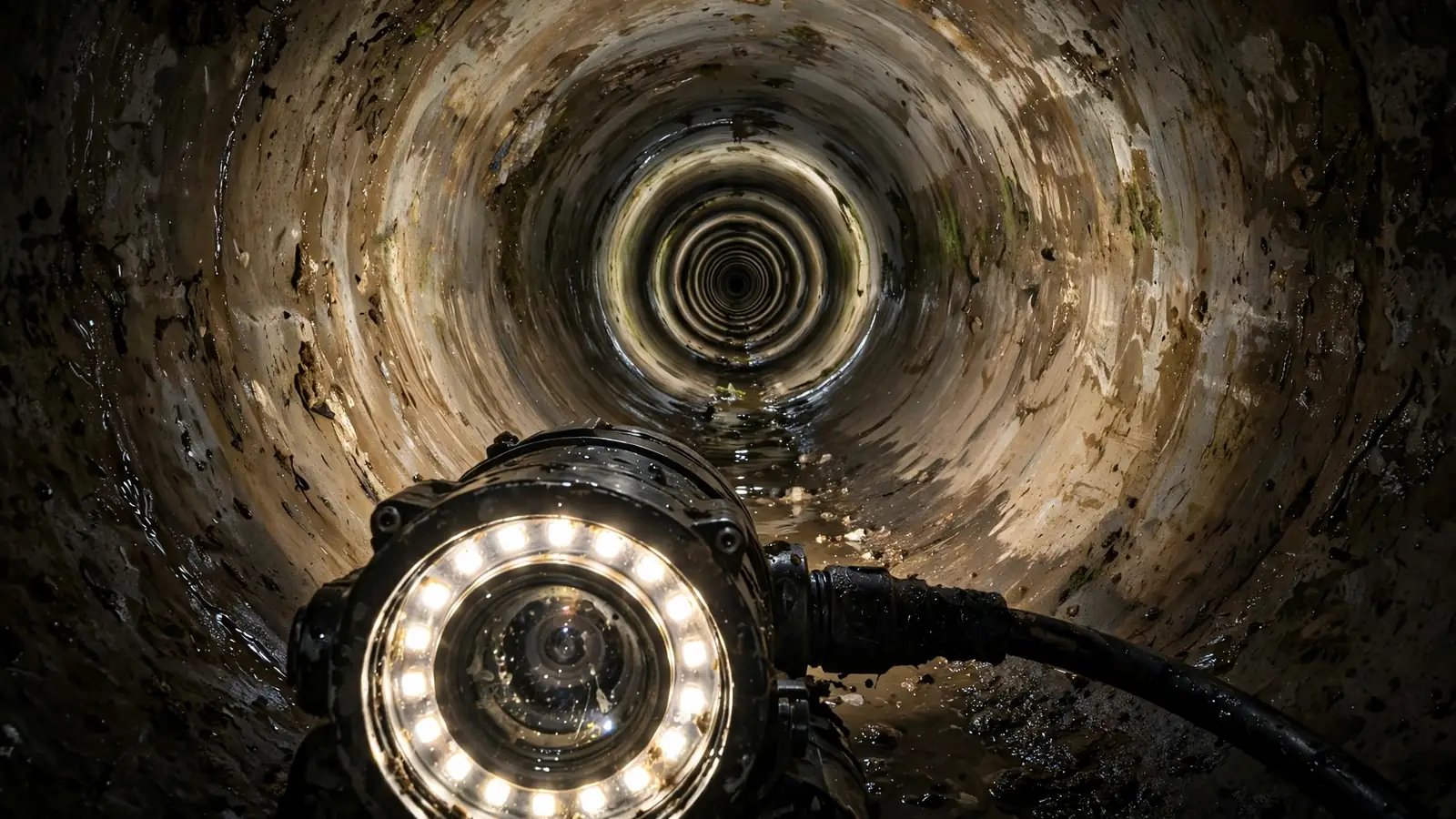
A camera inspection shows the inside of your lateral — the material, the damage, and the location — so the fix matches the problem instead of the guess.
 Signs & Symptoms
Signs Your Sewer Line Is Failing in Rancho Palos Verdes, CA
Most Rancho Palos Verdes laterals were laid decades ago in clay, cast iron, or bituminous fiber. These are the signs that yours is failing — and what a camera inspection shows before any work starts.
 Guides
How Long Does CIPP Lining Last in Rancho Palos Verdes, CA
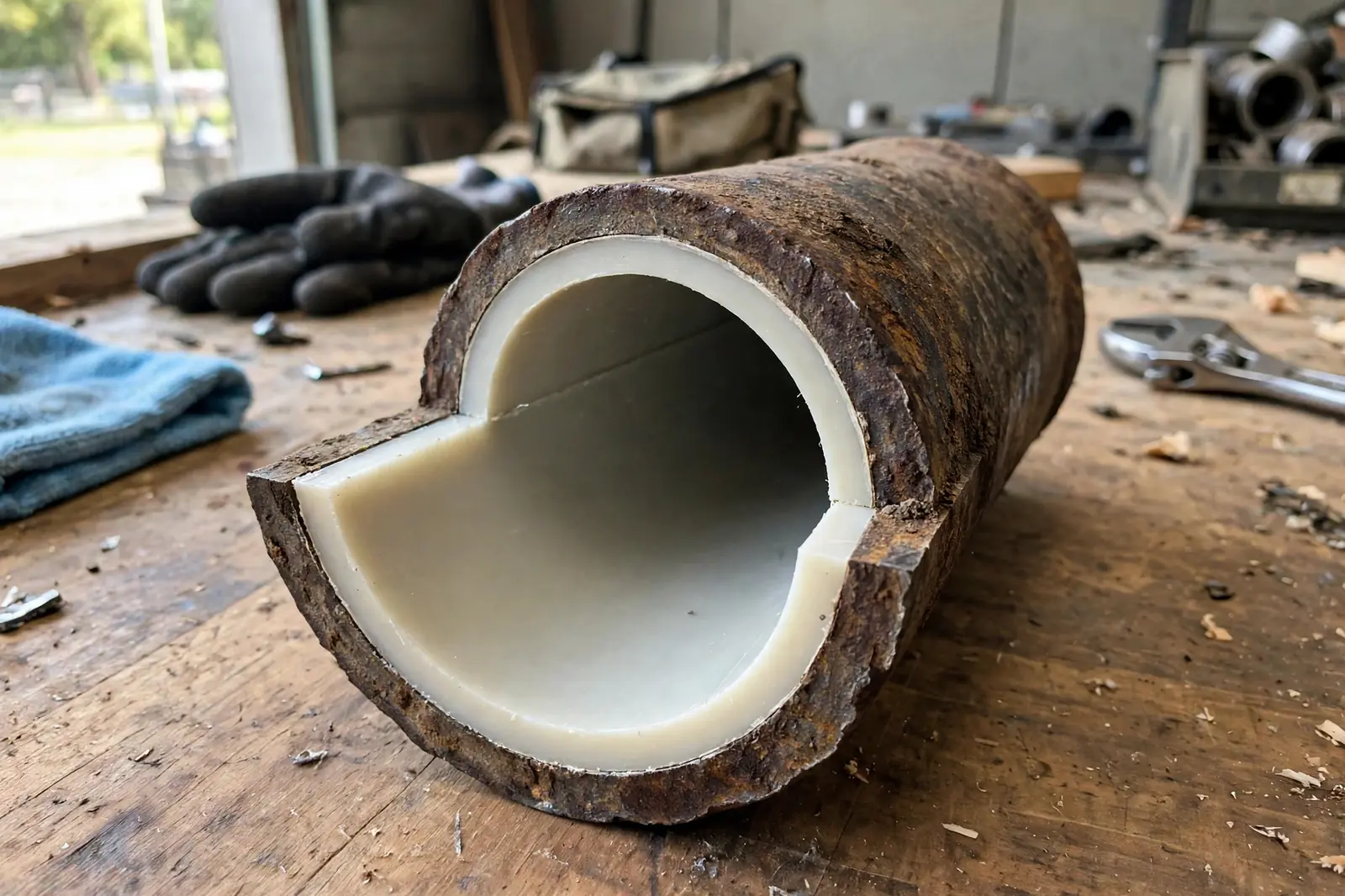
Cured-in-place lining is designed for a long service life, with a 50-year design life as the standard reference. What affects it is the pipe it goes into, the ground it sits in, and the work that installs it.
Frequently asked questions
Questions people ask about this topic, answered plainly.
Every two to three years is a reasonable check for an old lateral in Rancho Palos Verdes. Where roots have been a problem, the interval shortens to every year. Always inspect before buying a home, and always after a backup, so the cause is found while it can still be fixed.
Yes. A lateral at the end of its life may show no symptom at all until it backs up. The drains work, the lowest level stays dry, and the first backup comes without warning. An inspection every few years shows the condition of the line while it is still working.
Yes, where roots have been a problem. Roots grow back through the same open joints, and an annual inspection shows how fast they are coming back and whether the joints are opening further. The count of joints involved is what decides between a spot repair, lining, and replacement.
It is one of the most useful inspections a buyer can order in Rancho Palos Verdes. Many homes still have their original laterals, and the City recommends an inspection on transfer where none has taken place in the prior ten years. The inspection shows the condition of the line before the purchase is final.
Most residential inspections take well under an hour of work on site, once the camera is in the line. A long line, a line that needs clearing first, or a line with no easy access point takes longer, and the written findings and the video take a little more time after the camera comes out.
A sound line does not need another inspection next year. The findings from the last inspection set the interval for the next one, and a line that was sound two years ago can usually wait another year or two. A line that was found to have roots at several joints needs watching more closely.
Still have questions?
Call Now to reach a local sewer professional — describe the problem and what the line has been doing.
Call now for sewer line help
Tap Call Now to reach a local sewer professional. Tell them where the problem is, what the line has been doing, and whether wastewater is coming into the home.
Hours: Mon–Fri 7:00 AM–10:00 PM PT · Sat 8:00 AM–10:00 PM PT · Sun 7:00 AM–9:00 PM PT
Before you call
- Stop using water if the line is backing up.
- Keep people and pets away from any wastewater.
- Note which drains are slow, and which one backs up first.
- Note whether the problem happens in heavy rain, or all the time.
- Have the age of the home ready, if you know it.