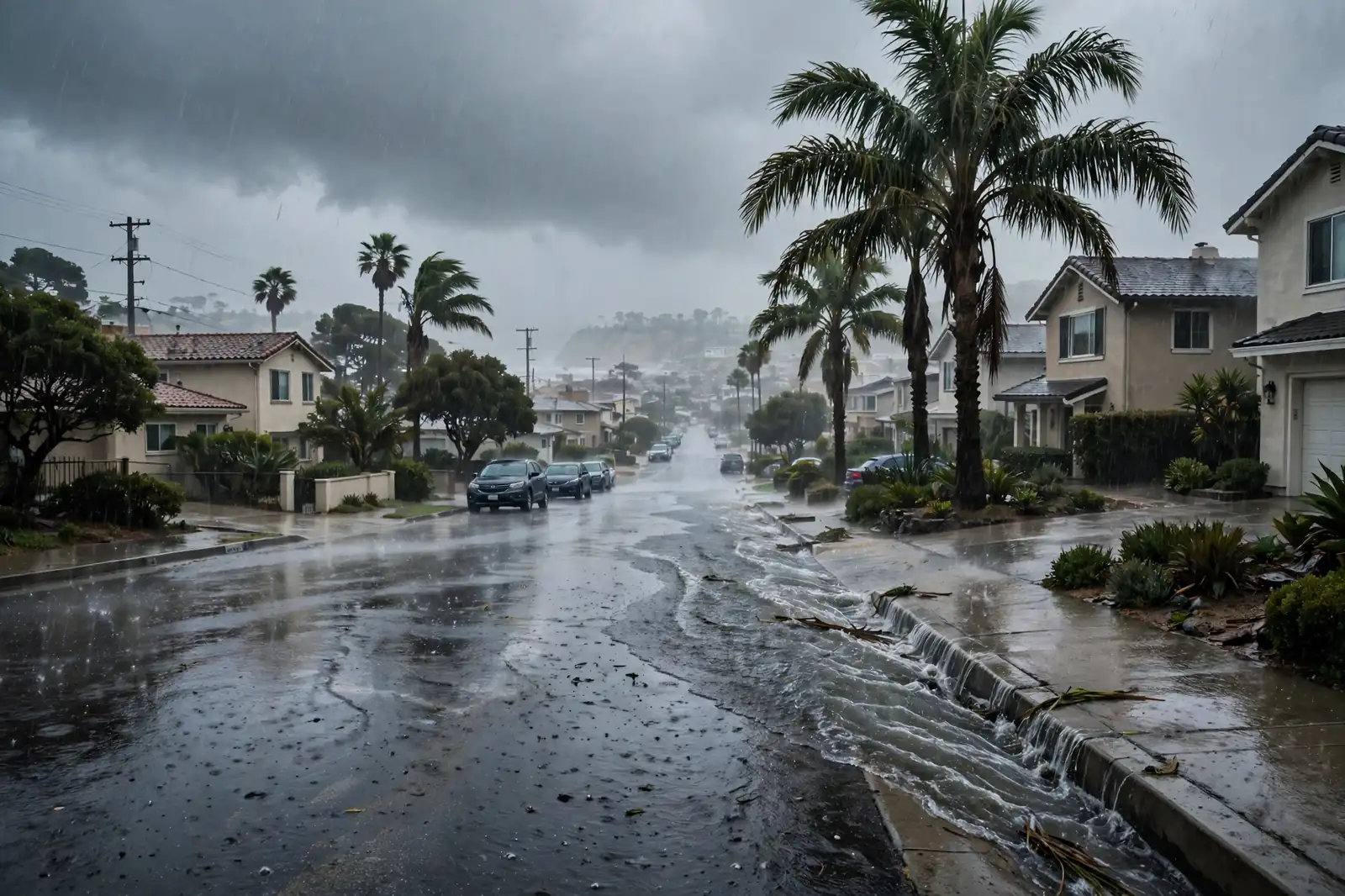
Rain and Sewer Backups in Rancho Palos Verdes, CA
A backup that happens only when it rains is a different problem from one that happens in dry weather. It points to the street side, or to storm water getting into the lateral — and the camera inspection after the rain finds which one.
Rancho Palos Verdes Sewer Line Pros · 2026-11-17 · Guides
The short version
Problem: A backup that happens only in heavy rain points to the street side or to storm water entering the lateral.
What to do: A surcharged main, a shared older sewer, or downspouts tied into the lateral can overwhelm a line that handles normal flow.
When to call: Call Now if wastewater is coming into the home, or have the line inspected after the rain to find the cause.
Rain-only backups are a different problem
A backup that happens only when it rains, and clears when the rain stops, is a different problem from a backup that happens in dry weather. A lateral that is blocked by roots or a collapse will back up whenever water is used, rain or not. A lateral that handles normal flow and fails only in a storm is a lateral that is being overwhelmed, either by water coming back from the street, or by storm water getting into the line. A lateral blocked by roots will back up whenever water is used, rain or not, while a lateral that handles normal flow and fails only in a storm is being overwhelmed by water from elsewhere.
The distinction matters, because the fix is different. A blocked lateral is fixed in the pipe. A rain-only backup may need a fix at the street, or a fix to the storm water entering the lateral, or a backwater valve where the layout allows it. The history of when the backups happen is part of the diagnosis, and it is worth noting the dates, the rainfall, and whether the backup cleared when the rain stopped. A backup that happens only in heavy rain may need a fix at the street, or a fix to the storm water entering the lateral, or a backwater valve where the layout allows it.
Note the details. A backup that starts during the heaviest rain and clears within hours points to the street side. A backup that starts after the rain has stopped, and lasts longer, points to a lateral that is slow to drain. A backup that affects several homes on a street points to the street side. A backup that affects only one home points to that home's lateral. The pattern is the first clue, and the camera inspection after the rain is what confirms it. A backup that starts during the heaviest rain and clears within hours points to the street side, while one that starts after the rain and lasts longer points to a lateral that is slow to drain.
Surcharged mains and shared sewers
A surcharged main is a street sewer that is full. In heavy rain, the flow into the main rises, and if the main cannot carry it, the water level in the main rises until it pushes back into the laterals that feed it. The water comes back through the lowest drain in the house, because that drain is the lowest opening in the system. A surcharged main is a street-side problem, and it affects the homes on that street together. A surcharged main is a street sewer that is full, and in heavy rain the flow into the main rises until the water level pushes back into the laterals that feed it.
Older shared sewers add a further pattern. In a common-trench sewer, the laterals from several homes share a trench, and heavy rain can surcharge the shared sewer and push water back toward the homes on it. The pattern is the same: a backup that happens only in heavy rain, that affects several homes, and that clears when the rain stops. The camera inspection after the rain, together with the history, is what separates a lateral problem from a street-side one. The water comes back through the lowest drain in the house, because that drain is the lowest opening in the system, and a surcharged main affects the homes on that street together.
The City's trunk sewer work is part of the picture in Rancho Palos Verdes. The County Sanitation Districts maintain the trunk lines, and lining work on the trunk sewer in the city has been running through the year. A trunk line under repair, or a trunk line that is being bypassed, can change the flow in the street sewers, and a homeowner who sees a rain-only backup during that work should note the timing, because the street work may be part of the story. In a common-trench sewer the laterals from several homes share a trench, and heavy rain can surcharge the shared sewer and push water back toward the homes on it.
Storm water in the lateral
Storm water can enter a lateral in several ways. Roof downspouts tied into the lateral send rainwater straight into the pipe, and a heavy storm can send more water into the lateral than the line was made to carry. A sump pump discharging into the lateral does the same, and groundwater entering through cracked joints adds more. A lateral that handles normal flow can fail under storm flow, because the storm flow is many times the normal flow. The County Sanitation Districts maintain the trunk lines, and lining work on the trunk sewer in the city has been running through the year, which can change the flow in the street sewers.
The downspouts are worth checking. A downspout that discharges into the lateral, or into a drain that feeds the lateral, is a source of storm water that the lateral was never made to carry. Redirecting a downspout to discharge onto the ground, away from the house, takes that water out of the lateral, and the line is left to carry only the wastewater it was made for. The crew explains what they find, and the homeowner decides what to change. Roof downspouts tied into the lateral send rainwater straight into the pipe, and a heavy storm can send more water into the lateral than the line was made to carry.
Groundwater is harder to see. A cracked lateral lets groundwater in, and the inflow rises in wet weather, when the soil around the pipe is saturated. The camera shows the cracks, and the inspection after the rain shows the inflow, because the water entering through a crack is visible on the monitor. A lateral that takes in groundwater in wet weather is a lateral that needs the cracks fixed, not just the blockage cleared. A sump pump discharging into the lateral does the same, and groundwater entering through cracked joints adds more, so a lateral that handles normal flow can fail under storm flow.
What to do during a rain backup
Stop using water in the house. Every flush, every shower, every load of laundry adds water to a line that cannot take it, and the water will keep rising as long as water is being used upstairs. Turn off the washing machine and the dishwasher, and tell everyone in the house not to run taps or flush toilets until the backup clears and help arrives. Redirecting a downspout to discharge onto the ground, away from the house, takes that water out of the lateral, and the line is left to carry only the wastewater it was made for.
Keep people and pets out of the water. Wastewater is treated as contaminated water, and it belongs in the pipe. Do not walk through it, do not let children or pets near it, and do not try to mop it up with household tools. If the water is near electrical outlets, switches, or appliances, stay out of the room entirely, because water and electricity together are a hazard that needs a professional. Turning off the washing machine matters during a backup, because a single load can send a large volume of water into a blocked line, and that water has nowhere to go but back through the lowest drain.
Note the timing. Note when the backup started, how heavy the rain was, whether neighbours had the same problem, and when the backup cleared. Those notes are the record the crew needs, because a rain-only backup is diagnosed from its pattern as much as from the camera, and the notes turn a vague complaint into a description the crew can work from. Wastewater near an electrical outlet is a hazard that needs a professional, because water and electricity together can injure anyone who steps into the room to mop it up.
How the cause is found after the rain
The camera inspection after the backup is cleared is the step that finds the cause. The camera runs the full lateral to the street main, showing whether the line is cracked, bellied, root-filled, or clear, and whether the connection at the main is sound. A lateral that is sound and clear points the search to the street side, while a lateral that is cracked and taking in water points to the pipe itself. The camera inspection after the backup is cleared finds the cause, and it is worth doing soon after the storm, while the evidence is fresh and the inflow is still visible on the monitor.
The inspection after the rain is worth doing soon after the storm, while the evidence is fresh. A lateral that takes in groundwater will show the inflow on the monitor, and a line that is clear after the rain may still show the cracks that let the water in. The locator marks where each defect sits, so any digging goes to the right place, and the findings are kept as the record of the line's condition. A lateral that takes in groundwater will show the inflow on the monitor, and a line that is clear after the rain may still show the cracks that let the water in.
After the inspection, the crew explains what the camera found, and what the options are. A cracked section may be a spot repair. Roots at many joints may call for lining. A lateral that is sound may call for a backwater valve, where the layout allows it, to stop water coming back from the street. The rain is the trigger, and the camera is what turns it into a diagnosis the homeowner can act on. After the inspection the crew explains what the camera found, and a cracked section may be a spot repair, while a sound lateral may call for a backwater valve where the layout allows it.
Related: Portuguese Bend Landslide and Your Sewer Line · Emergency Sewer Repair · sewer line repair across Rancho Palos Verdes
Related guides
 Signs & Symptoms
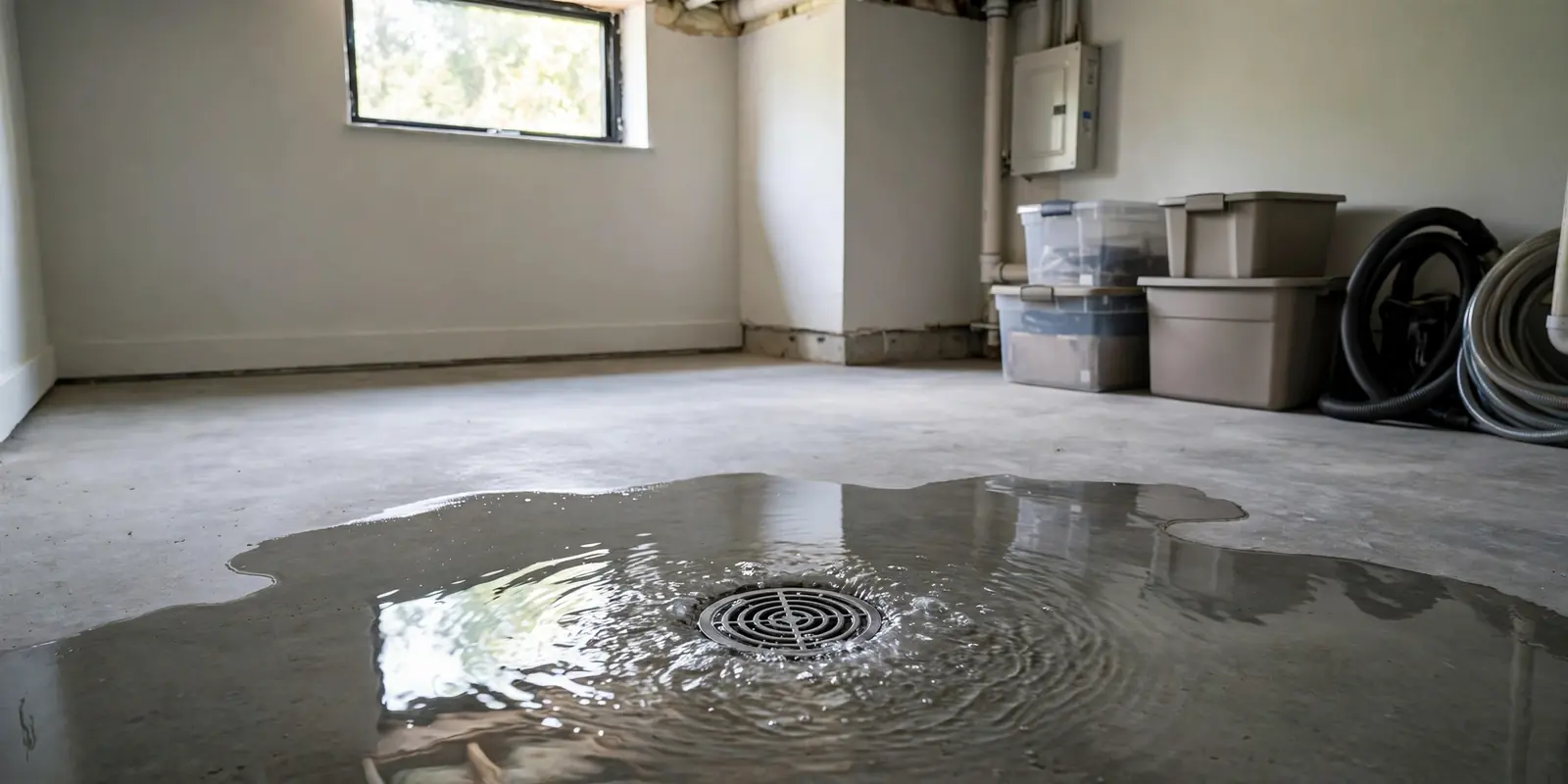
Sewage Backup in the Lowest Drain in Rancho Palos Verdes, CA
Wastewater coming up through the lowest drain is an urgent problem. Stop using water, keep away from the wastewater, and call for help — then have the cause found on camera.
 Signs & Symptoms
Slow Drains vs Main Line Problem in Rancho Palos Verdes, CA
One slow drain is usually a local clog. Several slow drains at once mean the lateral. Here is how to tell the difference in a Rancho Palos Verdes home — and what to do next.
 Signs & Symptoms
Signs Your Sewer Line Is Failing in Rancho Palos Verdes, CA
Most Rancho Palos Verdes laterals were laid decades ago in clay, cast iron, or bituminous fiber. These are the signs that yours is failing — and what a camera inspection shows before any work starts.
Frequently asked questions
Questions people ask about this topic, answered plainly.
A backup that happens only in heavy rain points to the street side or to storm water entering the lateral. A surcharged main, a shared older sewer, or downspouts tied into the lateral can overwhelm a line that handles normal flow. The camera inspection after the rain is what separates a lateral problem from a street-side one.
A surcharged main is a street sewer that is full. In heavy rain, the flow into the main rises, and if the main cannot carry it, the water level rises until it pushes back into the laterals that feed it. The water comes back through the lowest drain in the house, and it affects the homes on that street together.
Yes. Roof downspouts tied into the lateral send rainwater straight into the pipe, and a heavy storm can send more water into the lateral than the line was made to carry. Redirecting a downspout to discharge onto the ground, away from the house, takes that water out of the lateral.
Yes, soon after the storm, while the evidence is fresh. The camera shows whether the line is cracked, bellied, root-filled, or clear, and whether the connection at the main is sound. A lateral that takes in groundwater will show the inflow on the monitor, and the findings decide the fix.
A backwater valve is a one-way valve in the lateral that lets wastewater flow out but closes when water tries to flow back in from the street. It helps where backups come from the street side in heavy rain. Whether one fits a home depends on the layout of the lateral and where the lowest drain sits.
A backup that affects several homes on a street points toward the street side, such as a surcharged main or a shared older sewer. A backup that affects only one home points to that home's lateral. Note whether neighbours had the same problem, because the pattern across the street is part of the diagnosis.
Still have questions?
Call Now to reach a local sewer professional — describe the problem and what the line has been doing.
Call now for sewer line help
Tap Call Now to reach a local sewer professional. Tell them where the problem is, what the line has been doing, and whether wastewater is coming into the home.
Hours: Mon–Fri 7:00 AM–10:00 PM PT · Sat 8:00 AM–10:00 PM PT · Sun 7:00 AM–9:00 PM PT
Before you call
- Stop using water if the line is backing up.
- Keep people and pets away from any wastewater.
- Note which drains are slow, and which one backs up first.
- Note whether the problem happens in heavy rain, or all the time.
- Have the age of the home ready, if you know it.